
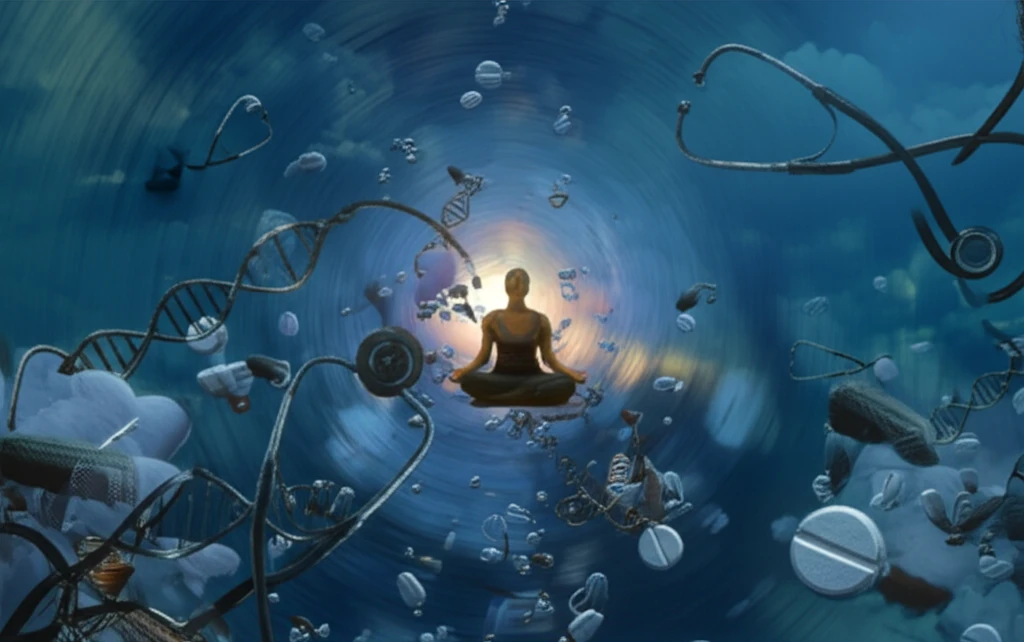
Person meditating calmly amidst a storm of health news, symbolizing resilience and critical thinking.

Navigating Health Hysteria: How to Stay Grounded in the Face of Public Panic

"Unpacking the fine line between vigilance and alarm during health crises, and how to maintain a balanced perspective."


In an era defined by instant information and global connectivity, the spread of health-related news and advice can be both a blessing and a curse. While timely updates and vital information can empower us to make informed decisions, the rapid dissemination of sensationalized or inaccurate reports can trigger widespread panic and anxiety. Understanding how to navigate this landscape is crucial for maintaining personal well-being and contributing to a more rational public discourse.

The original article, penned by Mike Fitzpatrick, touches upon the delicate balance between heeding public health advice and succumbing to fear-mongering during health crises. It critiques how easily public perception can be swayed by alarming narratives and questions the role of experts and authorities in shaping public opinion. In today's world, where health anxieties are amplified by social media and 24-hour news cycles, Fitzpatrick's insights are more relevant than ever.

This article aims to explore the themes raised by Fitzpatrick, providing a guide on how to stay grounded, think critically, and make informed decisions during times of health-related uncertainty. We'll delve into practical strategies for evaluating information, questioning narratives, and cultivating a balanced perspective, empowering you to navigate health hysteria with confidence and resilience.

The Anatomy of a Health Scare: Why We Panic

Person meditating calmly amidst a storm of health news, symbolizing resilience and critical thinking.

Health scares often begin with a genuine concern – a new virus, a worrying trend, or an emerging health risk. However, several factors can amplify these concerns into full-blown panic:

Understanding these mechanisms is the first step in mitigating their impact.

  • Information Overload: The sheer volume of information, often conflicting, can be overwhelming, making it difficult to discern fact from fiction.
  • Sensationalism: Media outlets often prioritize sensational headlines and dramatic narratives to capture attention, exaggerating risks and fueling anxiety.
  • Lack of Trust: Declining trust in institutions and experts can lead people to seek alternative sources of information, which may be unreliable or biased.
  • Social Contagion: Fear and anxiety can spread rapidly through social networks, as people share alarming reports and reinforce each other's concerns.
  • Cognitive Biases: Our brains are wired with cognitive biases that can distort our perception of risk, such as the availability heuristic (overestimating the likelihood of events that are easily recalled) and the negativity bias (paying more attention to negative information).
Recognizing the psychological underpinnings of health scares is crucial for developing coping strategies. When we understand why we panic, we're better equipped to manage our reactions and make more rational decisions.

Staying Sane in an Anxious World

In an era of constant connectivity and information overload, maintaining a sense of calm and perspective is an ongoing challenge. By cultivating critical thinking skills, seeking out reliable sources of information, and prioritizing your mental and emotional well-being, you can navigate health scares with greater confidence and resilience. Remember, informed decisions are empowered decisions.

About this Article -

This article was crafted using a human-AI hybrid and collaborative approach. AI assisted our team with initial drafting, research insights, identifying key questions, and image generation. Our human editors guided topic selection, defined the angle, structured the content, ensured factual accuracy and relevance, refined the tone, and conducted thorough editing to deliver helpful, high-quality information.See our About page for more information.

Everything You Need To Know

1

What are the key factors that contribute to health scares and how do they amplify public anxiety?

Several factors can amplify health concerns into full-blown panic. These include information overload, where the sheer volume of often-conflicting information makes it difficult to discern fact from fiction. Sensationalism by media outlets, which prioritizes dramatic narratives to capture attention, exaggerates risks and fuels anxiety. Declining trust in institutions and experts leads people to seek alternative, unreliable information sources. Social contagion spreads fear through social networks, and cognitive biases, such as the availability heuristic and negativity bias, distort risk perception, all playing a role in amplifying public anxiety during health crises.

2

How does information overload specifically contribute to the spread of health hysteria, and what strategies can one use to combat its effects?

Information overload contributes to health hysteria by overwhelming individuals with a vast amount of information, often conflicting or inaccurate, making it challenging to distinguish reliable sources from misinformation. To combat this, individuals should cultivate critical thinking skills, focusing on verifying information from multiple trusted sources, evaluating the credibility of the sources, and being wary of sensationalized headlines or dramatic narratives. Prioritizing information from established institutions and experts can help to navigate the overwhelming flow of information and make more informed decisions.

3

Why is it important to question narratives during a health crisis, and how does this relate to the ideas presented by Mike Fitzpatrick?

Questioning narratives during a health crisis is crucial because it allows individuals to critically evaluate the information they receive, especially when it is sensationalized or biased. Mike Fitzpatrick's insights emphasize the importance of being aware of how easily public perception can be swayed by alarming narratives. By questioning these narratives, individuals can avoid succumbing to fear-mongering and make more rational decisions based on verified facts, rather than being swayed by emotionally charged stories that may not be fully accurate.

4

What are the benefits of understanding the 'anatomy of a health scare,' and how does this empower individuals to make better decisions?

Understanding the 'anatomy of a health scare,' which includes factors like information overload, sensationalism, lack of trust, social contagion, and cognitive biases, provides a crucial advantage. Recognizing these elements helps individuals understand why they panic and how their perception of risk can be distorted. This knowledge empowers them to develop coping strategies, seek reliable information, and make rational decisions based on facts, rather than being driven by fear or misinformation. It cultivates a more balanced perspective and enhances resilience during times of health-related uncertainty.

5

How can individuals cultivate a balanced perspective and maintain their mental well-being during a health crisis, especially in the context of constant connectivity and social media influence?

In an era of constant connectivity and social media influence, maintaining a balanced perspective and mental well-being requires several strategies. Prioritize critical thinking skills to evaluate information from various sources, focusing on identifying credible sources. Seek out reliable information from established institutions and experts to avoid being overwhelmed by misinformation. Limit exposure to sensationalized content and social media if it exacerbates anxiety. Furthermore, practice self-care activities like mindfulness, exercise, and connecting with supportive networks. This approach enables informed decisions and enhances resilience, providing the ability to navigate health scares with confidence and promoting a sense of calm amid uncertainty.

Newsletter Subscribe

Subscribe to get the latest articles and insights directly in your inbox.