
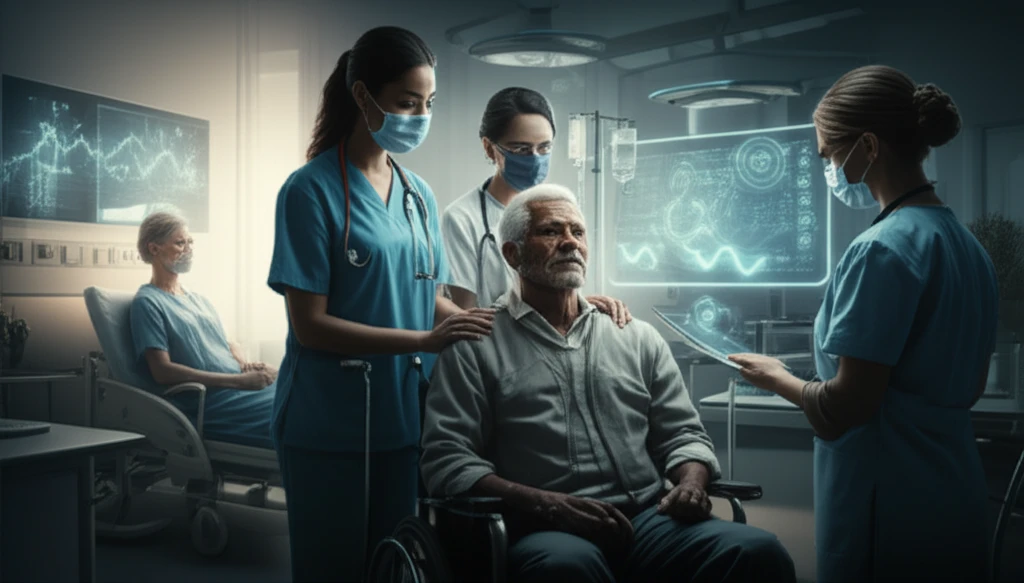
A veteran receiving concurrent cancer care, surrounded by a supportive medical team and advanced medical technology

Navigating Cancer Care: How Concurrent Hospice and Treatment Can Improve Veteran Outcomes

"Discover how the VA's approach to concurrent cancer care—combining hospice with treatments like chemo—is reshaping end-of-life experiences for veterans, offering hope and preserving vital relationships."


For individuals battling advanced cancer, the decision between pursuing hospice care and continuing treatments like chemotherapy or radiation presents a significant dilemma. The Veterans Health Administration (VA) is pioneering a different approach: concurrent care. This model allows veterans to receive both hospice services and cancer treatments, provided the care is coordinated and non-duplicative. While data is limited, recent trends suggest an increase in concurrent care within the VA, driven by the expansion of hospice services.

Outside the VA, opportunities for concurrent care are rare, with the exception of the Medicare Care Choices Model, which remains in a demonstration phase. Studies suggest that many people desire concurrent care, highlighting its potential to improve outcomes. However, a deeper understanding is needed regarding how care is coordinated across different settings and clinicians, especially given the absence of standardized models for care coordination.

This article explores the findings of a qualitative study aimed at understanding the factors influencing the provision of concurrent cancer care within the VA system. By examining the perspectives of clinicians and staff at VA medical centers and community hospices, this study sheds light on the benefits, challenges, and implications of this integrated approach to end-of-life care for veterans.

Concurrent Care: Preserving Hope and Relationships

A veteran receiving concurrent cancer care, surrounded by a supportive medical team and advanced medical technology

The study revealed that clinicians and staff view concurrent care as a valuable option for veteran cancer patients. Hospice services are recognized for their ability to improve quality of life through expert symptom management and increased health security, often facilitated by frequent home visits from hospice staff. In some instances, staff members even provide veterans with their personal phone numbers to prevent unnecessary emergency room visits.

Concurrent care helps maintain continuity by keeping veterans connected to their existing VA cancer-care clinicians. This is particularly important for veterans who equate hospice with "giving up" or "losing hope." Concurrent care allows them to continue treatments while receiving the comfort and support of hospice services.

  • Honoring Patient Values: Concurrent care respects the treatments patients value, easing the transition to comfort-focused care as veterans and their families evaluate the benefits and burdens of chemotherapy/radiation.
  • A Humane Approach: Participants see concurrent care as a more humane approach to care, as veterans and families consider effects of chemotherapy/radiation on quality of life.
  • Maintaining Access: Concurrent chemotherapy patients can still feel like they can access us [VA] when they need to.
In contrast to traditional models where patients sever ties with long-term clinicians upon entering hospice, concurrent care preserves these vital relationships, easing the transition to hospice services. By remaining involved, clinicians can provide ongoing support and ensure veterans do not feel abandoned.

The Future of Concurrent Care

The study highlights the critical role of dedicated liaisons within VAMCs to facilitate concurrent care and educate hospices. These individuals, often nurse managers, oncologists, or palliative care physicians, serve as points of contact, ensuring seamless coordination between the VA and community hospices.

Despite its benefits, concerns about compliance with Medicare hospice regulations remain a significant barrier to the widespread adoption of concurrent care. Differing interpretations of guidelines and anxieties regarding payment responsibility for chemotherapy/radiation can lead to hesitancy among hospices.

As concurrent care models gain traction in alternative payment systems, addressing these challenges is essential for refining end-of-life care delivery. Clear policies, enhanced communication, and a focus on person-centered care are crucial to ensuring that veterans have access to the full range of services they deserve.

About this Article -

This article was crafted using a human-AI hybrid and collaborative approach. AI assisted our team with initial drafting, research insights, identifying key questions, and image generation. Our human editors guided topic selection, defined the angle, structured the content, ensured factual accuracy and relevance, refined the tone, and conducted thorough editing to deliver helpful, high-quality information.See our About page for more information.

This article is based on research published under:

DOI-LINK: 10.1007/s00520-018-4552-z, Alternate LINK

Title: The Experience Of Providing Hospice Care Concurrent With Cancer Treatment In The Va

Subject: Oncology

Journal: Supportive Care in Cancer

Publisher: Springer Science and Business Media LLC

Authors: Leah M. Haverhals, Chelsea E. Manheim, Vincent Mor, Mary Ersek, Bruce Kinosian, Karl A. Lorenz, Katherine E. Faricy-Anderson, Risha A. Gidwani-Marszowski, Cari Levy

Published: 2018-11-22

Everything You Need To Know

1

What exactly is concurrent care in the context of cancer treatment for veterans?

Concurrent care, within the Veterans Affairs (VA) system, allows veterans with advanced cancer to simultaneously receive hospice services and continue cancer treatments, such as chemotherapy or radiation. This approach contrasts with traditional models where patients typically choose between the two. It is important because it improves the quality of life and care coordination for veterans. The implications include preserving vital relationships with existing VA clinicians, offering hope, and ensuring veterans don't feel they are giving up.

2

Why are hospice services considered important for veterans receiving concurrent care?

Hospice services are valuable because they improve the quality of life through expert symptom management and increased health security, often facilitated by frequent home visits from hospice staff. Concurrent care preserves vital relationships with existing VA clinicians. The implications are that this approach respects the treatments patients value, easing the transition to comfort-focused care. Veterans and families can evaluate the benefits and burdens of chemotherapy and radiation while receiving support.

3

Where is concurrent care primarily available, and why is this important?

The Veterans Health Administration (VA) is pioneering concurrent care. While outside the VA, opportunities for concurrent care are rare, with the exception of the Medicare Care Choices Model, which remains in a demonstration phase. It is significant because studies suggest that many people desire concurrent care, highlighting its potential to improve outcomes. The implication is the need for a deeper understanding of how care is coordinated across different settings and clinicians, especially given the absence of standardized models for care coordination.

4

What is the focus of the studies mentioned concerning concurrent cancer care?

The factors influencing the provision of concurrent cancer care within the VA system are explored through a qualitative study examining the perspectives of clinicians and staff at VA medical centers and community hospices. It is important because it sheds light on the benefits, challenges, and implications of this integrated approach to end-of-life care for veterans. The implication is that understanding these factors can lead to better implementation and coordination of concurrent care, improving veteran outcomes.

5

Who plays a key role in coordinating concurrent care, and why is this important?

Dedicated liaisons within VAMCs (VA Medical Centers) facilitate concurrent care and educate hospices. These individuals, often nurse managers, oncologists, or palliative care physicians, serve as points of contact, ensuring seamless coordination between the VA and community hospices. This role is critical for maintaining access and support for veterans undergoing both treatments and hospice care. The implication is that it ensures a more coordinated and supportive experience for veterans, preventing them from feeling abandoned and maximizing the benefits of both hospice and cancer treatments.

Newsletter Subscribe

Subscribe to get the latest articles and insights directly in your inbox.