
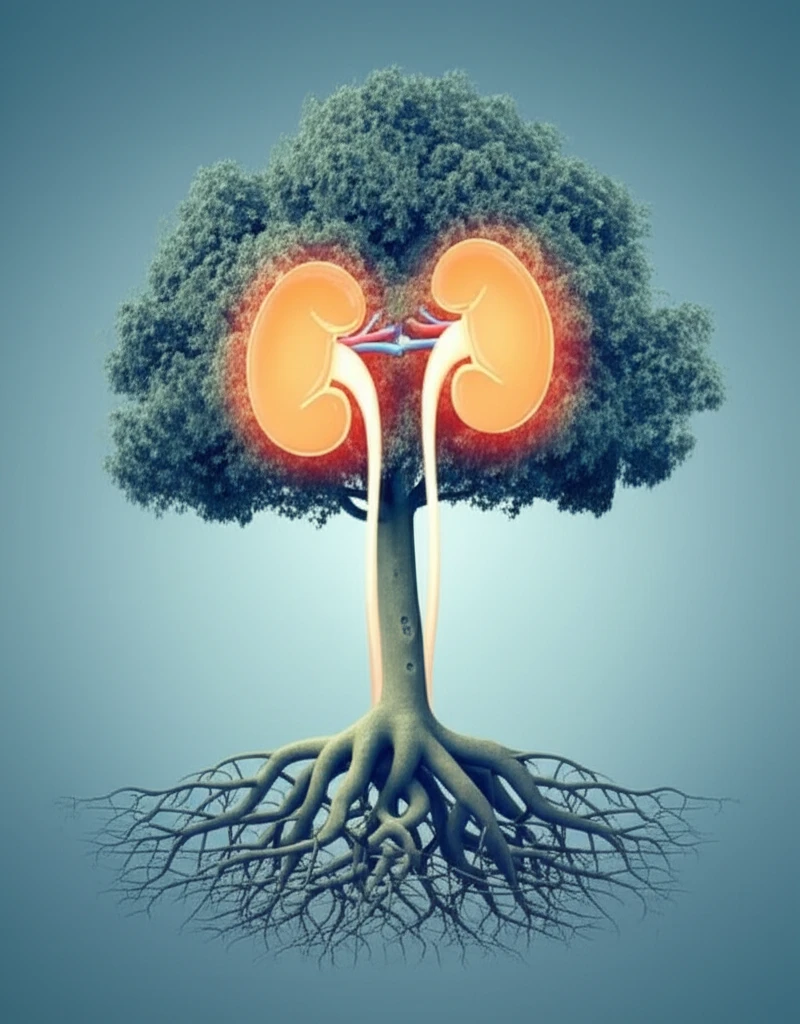
Healthy kidneys growing from an aorta tree

Navigating Aortic Surgery: What You Need to Know About Potential Renal Issues

"Concerned about kidney problems after aortic surgery? Learn about the risks, recovery, and how to protect your renal health."


Open aortic surgery (OAS) is a major procedure, but sometimes it's the best option for treating serious aortic conditions. If you're facing this surgery, understanding the potential complications is crucial for a smoother recovery. One of the main concerns is the possibility of renal (kidney) issues arising after the procedure, especially when the surgery involves clamping the aorta above the renal arteries.

This article dives into a recent study published in the Journal of the Korean Surgical Society, which examined the frequency and clinical course of renal and abdominal visceral complications following OAS that required supra-renal aortic cross-clamping (SRACC). We'll break down the key findings of the study, offering you a clear and accessible overview of what to expect and how to manage potential risks.

While renal complications can occur, it’s important to remember that many resolve on their own with proper care. This guide aims to empower you with knowledge, enabling you to discuss your concerns with your medical team and actively participate in your recovery journey.

Understanding the Risk: Why Does Aortic Clamping Affect the Kidneys?

Healthy kidneys growing from an aorta tree

When surgeons perform OAS requiring SRACC, they temporarily clamp the aorta to control blood flow. While this is necessary to perform the surgery, it can temporarily reduce blood flow to the kidneys. This reduced blood flow can lead to a condition called postoperative renal insufficiency (PORI), where the kidneys don't function as efficiently as they should after the surgery.

The study reviewed 66 patients who underwent OAS with SRACC. The reasons for needing SRACC included:

  • Juxta-renal aortic occlusion (25 patients)
  • Aortic aneurysms (41 patients, including juxta-renal, supra-renal, and type IV thoraco-abdominal aneurysms)
The research team investigated several factors that could contribute to PORI, including the length of time the renal artery was clamped (renal ischemic time or RIT) and the specific location of the aortic clamp. The goal was to identify potential risk factors and understand how to minimize complications.

The Takeaway: Managing Risks and Ensuring a Smooth Recovery

While the possibility of renal issues after OAS with SRACC can be concerning, remember that most complications are temporary and resolve with appropriate medical management. By understanding the risk factors and working closely with your surgical team, you can actively participate in your care and optimize your recovery. Don't hesitate to ask questions, express concerns, and advocate for your well-being throughout the entire process.

About this Article -

This article was crafted using a human-AI hybrid and collaborative approach. AI assisted our team with initial drafting, research insights, identifying key questions, and image generation. Our human editors guided topic selection, defined the angle, structured the content, ensured factual accuracy and relevance, refined the tone, and conducted thorough editing to deliver helpful, high-quality information.See our About page for more information.

This article is based on research published under:

DOI-LINK: 10.4174/jkss.2012.83.3.162, Alternate LINK

Title: Renal And Abdominal Visceral Complications After Open Aortic Surgery Requiring Supra-Renal Aortic Cross Clamping

Subject: Surgery

Journal: Journal of the Korean Surgical Society

Publisher: The Korean Surgical Society

Authors: Shin-Seok Yang, Keun-Myoung Park, Young-Nam Roh, Yang Jin Park, Dong-Ik Kim, Young-Wook Kim

Published: 2012-01-01

Everything You Need To Know

1

What is the primary renal issue associated with Open Aortic Surgery (OAS)?

The primary renal issue associated with Open Aortic Surgery (OAS) is Postoperative Renal Insufficiency (PORI). This condition occurs when the kidneys do not function as efficiently as they should after the surgery. The risk of PORI is particularly increased when the surgery involves supra-renal aortic cross-clamping (SRACC) because this process temporarily reduces blood flow to the kidneys, which can impair their function. The study focused on patients who underwent OAS with SRACC, examining factors like the length of renal ischemic time (RIT) and clamp location to better understand and manage PORI.

2

Why is supra-renal aortic cross-clamping (SRACC) a significant factor in kidney complications during Open Aortic Surgery (OAS)?

Supra-renal aortic cross-clamping (SRACC) is a significant factor in kidney complications during Open Aortic Surgery (OAS) because it directly affects blood flow to the kidneys. When the aorta is clamped above the renal arteries during SRACC, it temporarily reduces blood supply to the kidneys. This reduction in blood flow can lead to Postoperative Renal Insufficiency (PORI). The length of time the renal arteries are clamped, known as renal ischemic time (RIT), is one of the factors studied. The study in the *Journal of the Korean Surgical Society* explored how SRACC, RIT, and other factors relate to the development of PORI in patients undergoing OAS.

3

What types of aortic conditions necessitate Open Aortic Surgery (OAS) involving supra-renal aortic cross-clamping (SRACC)?

Open Aortic Surgery (OAS) involving supra-renal aortic cross-clamping (SRACC) is often necessary for several aortic conditions. According to the study, these include juxta-renal aortic occlusion and various types of aortic aneurysms, such as juxta-renal, supra-renal, and type IV thoraco-abdominal aneurysms. These conditions often require clamping the aorta above the renal arteries to repair or address the affected area, necessitating SRACC. The study specifically examined 66 patients who underwent OAS with SRACC due to these conditions.

4

What measures can be taken to minimize the risk of kidney complications after Open Aortic Surgery (OAS) with supra-renal aortic cross-clamping (SRACC)?

While the text doesn't detail specific measures, it emphasizes the importance of understanding risk factors and working with your surgical team to manage potential complications. The study mentioned investigated factors like renal ischemic time (RIT) and the location of the aortic clamp to understand their impact on kidney function. The article highlights that most renal complications are temporary and resolve with proper medical management. Patients are encouraged to ask questions, express concerns, and actively participate in their recovery journey, including working closely with their medical team to understand and mitigate the risks associated with Open Aortic Surgery (OAS) and supra-renal aortic cross-clamping (SRACC).

5

In the context of Open Aortic Surgery (OAS), what does 'renal ischemic time' (RIT) refer to, and why is it significant?

In the context of Open Aortic Surgery (OAS), 'renal ischemic time' (RIT) refers to the length of time the renal arteries are clamped during surgery involving supra-renal aortic cross-clamping (SRACC). This is significant because it directly impacts the blood supply to the kidneys. The longer the renal arteries are clamped, the longer the kidneys are deprived of blood flow. This lack of blood flow can contribute to the development of Postoperative Renal Insufficiency (PORI). The study in the *Journal of the Korean Surgical Society* investigated RIT as a potential risk factor for renal complications following OAS with SRACC.

Newsletter Subscribe

Subscribe to get the latest articles and insights directly in your inbox.