
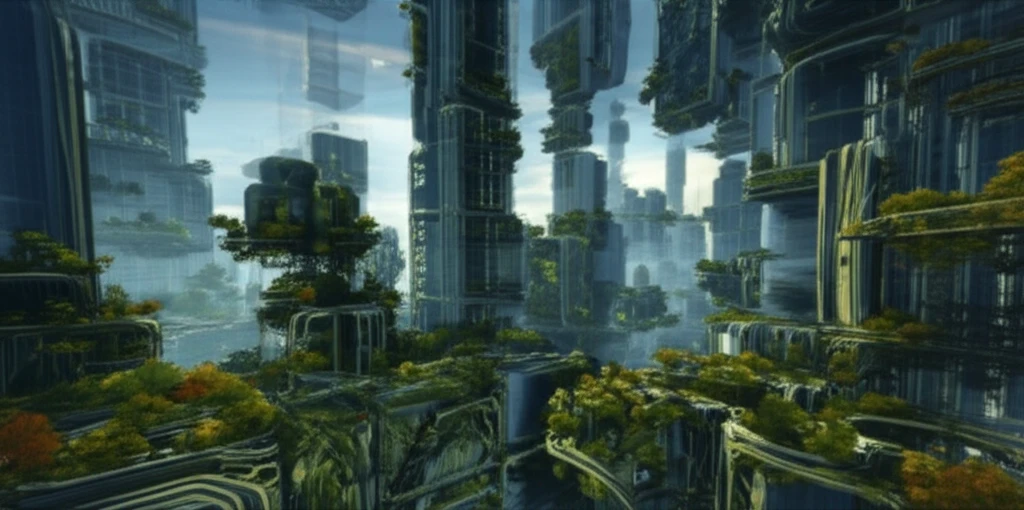
Futuristic cityscape blending technology and nature, showcasing biomimicry in architecture and design.

Nature's Blueprints: How Biomimicry is Shaping the Future of Materials

"From self-healing polymers to energy-efficient structures, learn how innovations inspired by nature are revolutionizing material science and medicine."


For billions of years, nature has been perfecting solutions to complex problems. Biomimicry, the practice of learning from and mimicking nature's strategies, offers a powerful approach to developing innovative and sustainable technologies. This interdisciplinary field examines structures and functions found in biology and translates them into novel engineering applications.

The development of bio-inspired materials and products typically involves multiple stages of abstraction and modification, starting from a biological model. Recent years have seen a surge in biomimicry, driven by the search for innovative and sustainable technologies as well as the development of advanced analytical, modeling, and manufacturing techniques.

These advancements allow scientists to quantitatively analyze the relationship between form, structure, and function in biological models, down to the molecular level. They also enable the creation of hierarchically structured technical products, built from the small scale to the large, in commercially viable quantities. This article will explore current developments in biomimetic materials, structures, and surfaces with potential applications in various fields, including medicine.

Energy-Efficient and Self-Repairing Materials: Nature's Ingenious Designs

Futuristic cityscape blending technology and nature, showcasing biomimicry in architecture and design.

The Plant Biomechanics Group at the University of Freiburg is at the forefront of translating nature's ingenuity into practical applications. Their work focuses on several key areas, including:

These innovations have implications for various fields, offering solutions that are both efficient and environmentally conscious. For instance, consider the potential of energy-dissipating materials in creating safer and more resilient structures.

  • Energy-Dissipating Materials and Structures: Mimicking natural systems that absorb and dissipate energy, such as the shock-absorbing properties of certain plant tissues.
  • Self-Repairing Materials: Inspired by plants' ability to heal themselves, these materials can automatically repair damage, extending their lifespan and reducing waste.
  • Adaptive Adhesion and Anti-Adhesion Structures: Copying the mechanisms that allow creatures to grip or release surfaces, leading to new types of adhesives and non-stick coatings.
  • Ultra-Lightweight Fiber Composite Structures: Replicating the strength and lightness of natural materials like wood, resulting in high-performance, energy-efficient designs.
  • Adaptive Elastic Structures: Creating systems that can change their shape and stiffness in response to environmental conditions, similar to how plants adjust to wind and sunlight.
One particularly promising application lies in the development of biomimetic facade shading systems. Inspired by plants that adjust their leaf orientation to optimize sunlight capture, these systems could significantly reduce energy consumption in buildings.

The Future of Innovation: Learning from Nature

Biomimicry offers a powerful pathway to create innovative and sustainable solutions across various industries. By studying and emulating nature's designs, scientists and engineers can develop materials and technologies that are more efficient, resilient, and environmentally friendly.

From medicine to architecture, the potential applications of biomimicry are vast. As we continue to face global challenges such as climate change and resource scarcity, learning from nature will become increasingly crucial.

The ongoing research and development in this field promise a future where technology and nature work in harmony, leading to a more sustainable and innovative world.

About this Article -

This article was crafted using a human-AI hybrid and collaborative approach. AI assisted our team with initial drafting, research insights, identifying key questions, and image generation. Our human editors guided topic selection, defined the angle, structured the content, ensured factual accuracy and relevance, refined the tone, and conducted thorough editing to deliver helpful, high-quality information.See our About page for more information.

Everything You Need To Know

1

What is Biomimicry and why is it important?

Biomimicry is the practice of imitating nature's designs to develop innovative and sustainable technologies. This interdisciplinary field examines structures and functions found in biology and translates them into novel engineering applications. It is important because nature has perfected solutions to complex problems over billions of years, making it a rich source of inspiration for new materials and technologies.

2

What are energy-dissipating materials, and why is this important?

Energy-dissipating materials and structures mimic natural systems that absorb and dissipate energy. This is significant because these materials can make structures safer and more resilient by reducing the impact of shocks and stresses. The implications include creating buildings and other structures that are less prone to damage and can withstand extreme conditions.

3

How do self-repairing materials work, and what are the benefits?

Self-repairing materials are inspired by plants' ability to heal themselves. These materials can automatically repair damage, extending their lifespan and reducing waste. This is a major advancement, reducing the need for replacements and contributing to a circular economy. The implications are significant, as these materials could be used in various applications, from infrastructure to medical devices, increasing their durability and sustainability.

4

How does the concept of Adaptive adhesion and anti-adhesion structures work, and what are the potential benefits?

Adaptive adhesion and anti-adhesion structures copy the mechanisms that allow creatures to grip or release surfaces. These lead to new types of adhesives and non-stick coatings. This technology has practical benefits in many areas. It has potential uses in adhesives, coatings, and other areas where controlled adhesion is needed.

5

How can biomimicry be used to improve building design?

Biomimetic facade shading systems are inspired by plants adjusting their leaf orientation to optimize sunlight capture. This is significant because it can lead to significant reductions in energy consumption in buildings. The implications are energy efficiency and sustainability, lowering the environmental impact of buildings and creating more comfortable living spaces.

Newsletter Subscribe

Subscribe to get the latest articles and insights directly in your inbox.