
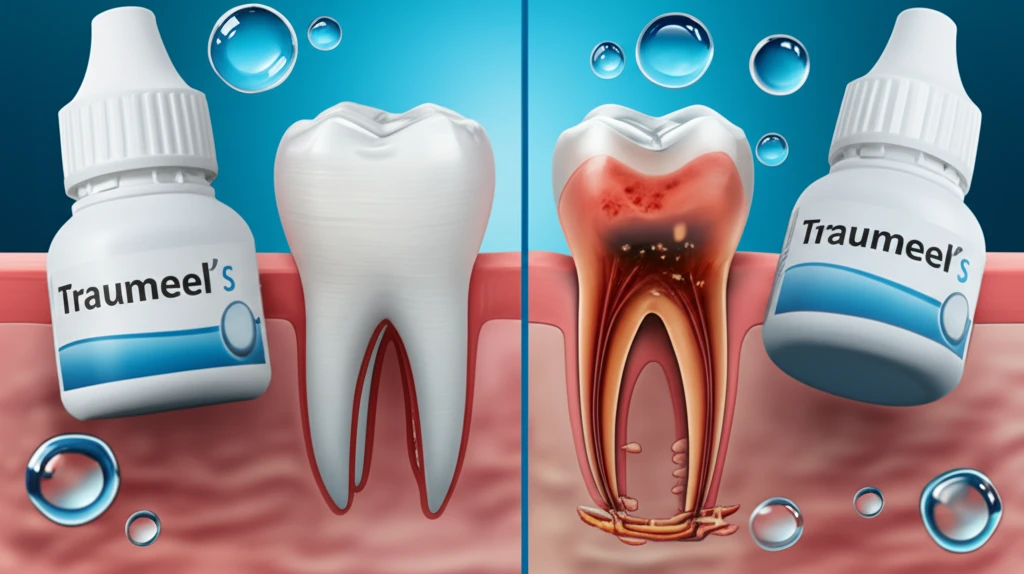
Natural Relief for Gum Disease? How Traumeel S Impacts Periodontitis

"Discover the potential of Traumeel S, a homeopathic medication, in managing oxidative stress and inflammation associated with periodontitis, offering new avenues for holistic dental care."
Periodontal diseases, commonly known as gum disease, are chronic infections primarily caused by bacteria. While bacteria are the initial instigators, the host's immune response plays a pivotal role in the progression and severity of the condition. Understanding how our bodies react to these bacterial invaders is crucial in developing effective treatments and preventive strategies.
Polymorphonuclear neutrophils (PMNs), a type of white blood cell, are among the first responders to inflammation in the gums. These cells accumulate in the gingival pocket epithelium, acting as a defense against pathogens. However, this accumulation can also lead to the release of harmful substances, including reactive oxygen species (ROS), which, while intended to combat infection, can damage surrounding tissues. This dual-edged sword highlights the delicate balance between protection and harm in periodontal disease.
Emerging research is exploring alternative treatments that can modulate the immune response without causing further damage. One such approach involves homeopathic medications like Traumeel S, which has shown promise in reducing inflammation. This article delves into the potential antioxidant effects of Traumeel S on peripheral blood neutrophils in patients with periodontitis, offering new insights into holistic dental care.
Periodontitis Prevalence and Burden
Periodontitis remains a widespread chronic inflammatory condition affecting a substantial portion of the adult population globally. While precise figures vary across studies and regions, the disease imposes significant healthcare costs and quality-of-life burdens. Prevalence tends to increase with age, and severe forms are projected to grow in coming decades. These trends underscore the need for effective prevention and management strategies.
Conventional Periodontal Therapy
Standard periodontal care typically involves mechanical debridement such as scaling and root planing, supplemented by antimicrobial adjuncts and surgical interventions for advanced cases. While these approaches can arrest disease progression, they do not fully address the host inflammatory response or guarantee tissue regeneration. Patient compliance, disease recurrence, and systemic risk factors often limit long-term outcomes. Emerging research continues to explore therapies that modulate inflammation more broadly.
Evolution of Periodontal Understanding
Evidence of periodontal disease dates back at least 100,000 years, with paleopathologists identifying bone resorption in early hominids. The condition appears not solely linked to dietary shifts such as increased carbohydrate consumption. Over the past century, the field of periodontics evolved from rudimentary descriptions of gum disease to a specialized discipline integrating microbiology, immunology, and surgical technique. Key milestones include the identification of specific bacterial pathogens, the recognition of host immune response as a primary driver of tissue destruction, and the development of both non-surgical and regenerative treatment modalities.
Can Traumeel S Reduce Oxidative Stress in Gum Disease?
A study published in Medical Science Monitor investigated the impact of Traumeel S on oxidative stress in patients with periodontitis. The research focused on how Traumeel S affects neutrophils, which are immune cells that play a key role in inflammation and tissue damage in gum disease. The study involved analyzing blood samples from 22 individuals with chronic periodontitis and 21 healthy subjects, assessing the antioxidant effects of Traumeel S on neutrophils stimulated with E. coli bacteria.
- Higher Superoxide Levels in Periodontitis: Neutrophils from periodontitis patients produced significantly higher levels of superoxide compared to healthy subjects.
- Traumeel S Reduces Superoxide Production: Traumeel S significantly reduced superoxide production in neutrophils from periodontitis patients.
- No Inhibitory Action in Healthy Subjects: Traumeel S did not inhibit ROS production in neutrophils from healthy subjects.
Emerging Research Landscape
Recent literature on periodontitis treatment reflects growing interest in host-modulation therapies, regenerative approaches, and personalized medicine. Clinical trial activity has expanded to evaluate novel biologics, laser-assisted protocols, and microbiome-targeted interventions. Systematic reviews increasingly emphasize the heterogeneity of patient responses and the need for biomarker-guided therapy. These trends suggest a shift toward more targeted, less invasive management paradigms.
Limitations and Mixed Evidence for Traumeel S
Clinical evaluations of Traumeel S in periodontitis have yielded variable results. A 2024 case report described complex therapy combining Traumeel S with Coenzyme compositum, using indices such as OHI-S, API, CPITN, and Köchke to assess outcomes. Earlier studies, including a 2019 trial of 120 patients, examined Traumeel S alongside photodynamic therapy for chronic periodontitis but did not establish clear superiority over conventional care. A randomized trial in pediatric stem cell transplant patients investigated Traumeel S for chemotherapy-induced stomatitis rather than periodontitis specifically. The overall evidence base remains limited by small sample sizes, heterogeneous protocols, and a lack of large-scale controlled trials.
Traumeel S Versus Conventional Anti-Inflammatories
Direct comparisons between Traumeel S and standard pharmaceuticals have focused on post-surgical outcomes. One study compared intramuscular dexamethasone with Traumeel S® following lower third molar extraction, measuring oral health-related quality of life. Another trial evaluated analgesic and anti-inflammatory effects of ibuprofen versus Traumeel after flap surgery, monitoring for adverse effects. These studies suggest Traumeel S may offer comparable symptom control with a potentially different safety profile, though neither established definitive superiority in periodontal contexts specifically.
Future Research and Considerations
While these findings are promising, it's important to view them in the context of a single study. More extensive research is needed to fully understand the mechanisms of action of Traumeel S and its long-term effects on periodontal health. Future studies should explore optimal dosages, treatment durations, and potential synergistic effects with other therapies. Additionally, clinical trials involving larger and more diverse populations are necessary to confirm these initial findings and establish the efficacy of Traumeel S as a complementary treatment for periodontitis.
Mechanistic Insights on Traumeel S
Research into Traumeel S has explored its effects on oxidative stress pathways relevant to periodontitis. A study published in Medical Science Monitor investigated the remedy's impact on peripheral blood neutrophils, finding it may significantly reduce superoxide anion production by both unstimulated and stimulated polymorphonuclear neutrophils in periodontitis patients. This antioxidant effect on neutrophil oxidative burst suggests a potential mechanism for modulating the exaggerated inflammatory response characteristic of periodontal tissue destruction.
Evolving Treatment Paradigms
The clinical trial landscape for periodontitis reflects a broadening scope beyond surgical restoration toward prevention, early intervention, and long-term maintenance. Epidemiological modeling projects shifting global burdens through 2050, informing targeted public health strategies. Emerging technologies including advanced imaging, point-of-care diagnostics, and host-modulation therapies are poised to reshape periodontal practice. These developments emphasize personalized risk assessment and minimally invasive management.
Periodontitis as a Systemic Disease Driver
Periodontitis affects an estimated 35–50% of adults globally and is increasingly recognized as more than a localized oral condition. It exerts systemic effects through multiple biological pathways, with established links to cardiovascular disease, diabetes mellitus, adverse pregnancy outcomes, and certain cancers. The chronic inflammatory burden from periodontal infection contributes to systemic inflammation, and periodontal treatment has demonstrated measurable effects on systemic health markers. Managing these bidirectional relationships requires integrated medical-dental approaches.
Patient-Centered Outcomes and Oxidative Stress
A study in Medical Science Monitor examined how Traumeel S affects neutrophils—immune cells central to inflammation and tissue damage in gum disease—finding it may reduce oxidative stress in periodontitis patients. This research focused on the biological mechanisms that translate to patient symptoms such as bleeding, pain, and progressive attachment loss. By targeting neutrophil-mediated oxidative burst, Traumeel S addresses a pathway directly implicated in the tissue destruction patients experience. Such mechanistic insights help bridge laboratory findings to the clinical realities of living with chronic periodontitis.