
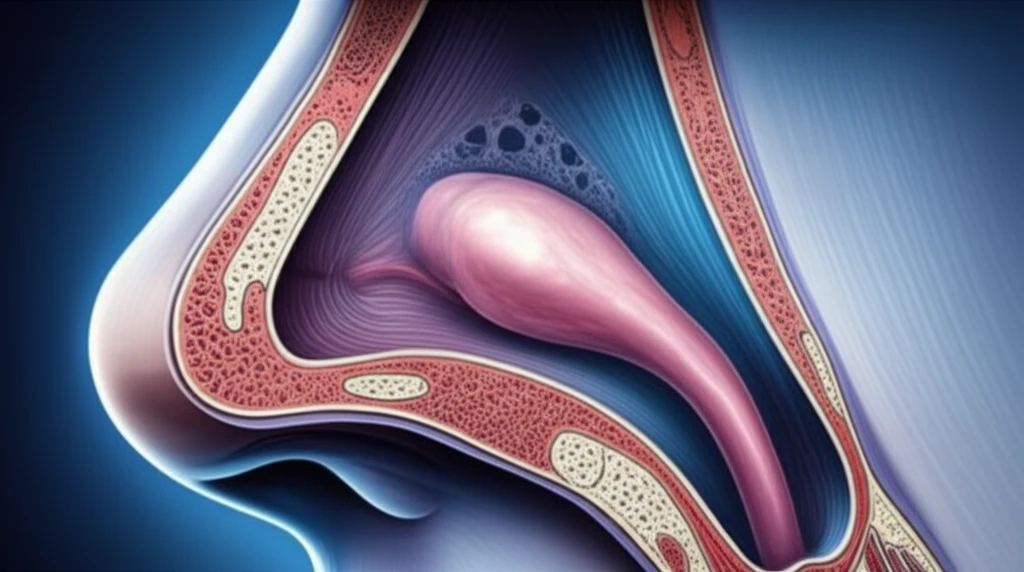
Illustration of a nasal passage with a sphenochoanal polyp.

Nasal Polyps and Nosebleeds: Understanding Sphenochoanal Polyps

"Uncommon Cause, Serious Symptoms"


Nosebleeds, or epistaxis, can be alarming. While many causes are benign, recurrent or severe nosebleeds, especially when paired with other symptoms like nasal obstruction, may point to a less common culprit: nasal polyps. Specifically, a sphenochoanal polyp, a growth originating from the sphenoid sinus, can present with these symptoms.

Sphenochoanal polyps are relatively rare compared to antrochoanal polyps, which arise from the maxillary sinus. These polyps extend from the sphenoid sinus through its opening (ostium), making their way into the nasal cavity and potentially the back of the throat (choana). Although less common, it’s crucial to recognize them because misdiagnosis can lead to inappropriate treatment and potential complications.

This article explores sphenochoanal polyps, focusing on their symptoms, diagnosis, treatment options, and the importance of early detection and proper management.

Symptoms of Sphenochoanal Polyps: What to Watch For?

Illustration of a nasal passage with a sphenochoanal polyp.

The symptoms of sphenochoanal polyps can vary, but some common indicators should prompt a visit to an otolaryngologist (ENT doctor). Recognizing these signs is the first step toward accurate diagnosis and treatment:

Here are some of the primary symptoms:

  • Recurrent Nosebleeds (Epistaxis): Frequent or heavy nosebleeds that don't have an obvious cause.
  • Nasal Obstruction: A persistent feeling of stuffiness or blockage in one or both nostrils. This may gradually worsen over time.
  • Nasal Discharge: Drainage from the nose, which may be clear, white, or yellowish.
  • Headache: Persistent headaches, potentially related to sinus pressure.
  • Choking Sensations: In some cases, a large polyp extending into the back of the throat can cause choking or difficulty swallowing.
  • Facial Pain or Pressure: Discomfort in the face, particularly around the sinuses.
It's important to note that these symptoms can also be associated with other conditions, such as allergies, sinus infections, or other types of nasal polyps. Therefore, a thorough evaluation by a medical professional is essential for accurate diagnosis.

The Importance of Early Detection and Intervention

Sphenochoanal polyps, while uncommon, can cause significant discomfort and potential complications if left untreated. Recognizing the symptoms, seeking prompt medical evaluation, and undergoing appropriate treatment are essential for managing this condition. Early intervention can prevent the polyp from growing larger, reducing the risk of nasal obstruction, sinus infections, and other related problems. By working closely with an ENT specialist, individuals with sphenochoanal polyps can achieve effective symptom relief and improve their quality of life.

About this Article -

This article was crafted using a human-AI hybrid and collaborative approach. AI assisted our team with initial drafting, research insights, identifying key questions, and image generation. Our human editors guided topic selection, defined the angle, structured the content, ensured factual accuracy and relevance, refined the tone, and conducted thorough editing to deliver helpful, high-quality information.See our About page for more information.

This article is based on research published under:

DOI-LINK: 10.4172/2165-7920.1000169, Alternate LINK

Title: Sphenochoanal Polyp In A Young Adult Female Presenting With Epistaxis

Subject: General Medicine

Journal: Journal of Clinical Case Reports

Publisher: OMICS Publishing Group

Authors: Arup Sen Gupta

Published: 2012-01-01

Everything You Need To Know

1

What are sphenochoanal polyps, and how do they differ from other types of nasal polyps?

Sphenochoanal polyps are a rare type of nasal growth that originates from the sphenoid sinus. Unlike antrochoanal polyps, which arise from the maxillary sinus, sphenochoanal polyps extend through the sphenoid sinus's opening into the nasal cavity and potentially the back of the throat (choana). This location and origin are crucial in differentiating them from other nasal polyp types, influencing both symptoms and treatment approaches. Their rarity makes accurate diagnosis especially important to avoid misdiagnosis and inappropriate treatment.

2

What are the most common symptoms of sphenochoanal polyps, and why is it important to recognize them?

The most common symptoms of sphenochoanal polyps include recurrent nosebleeds (epistaxis), nasal obstruction (stuffiness), nasal discharge, headaches, choking sensations, and facial pain or pressure. Recognizing these symptoms is crucial because they can also be associated with other conditions like allergies or sinus infections. Prompt identification of these symptoms and seeking medical evaluation are essential for an accurate diagnosis and effective management of the condition. Delaying diagnosis can lead to complications and a lower quality of life.

3

How do sphenochoanal polyps cause nosebleeds, and how serious can these nosebleeds be?

Sphenochoanal polyps can cause nosebleeds due to their location and growth within the nasal cavity. The polyps can irritate and damage the delicate blood vessels lining the nasal passages, leading to frequent or heavy nosebleeds (epistaxis). The seriousness varies, but recurrent or severe nosebleeds should prompt medical attention. These nosebleeds can be a significant indicator of the presence of sphenochoanal polyps and other underlying issues that require investigation to prevent complications.

4

What potential complications can arise if sphenochoanal polyps are left untreated?

If left untreated, sphenochoanal polyps can lead to significant discomfort and complications. The growth of the polyps can cause worsening nasal obstruction, making breathing difficult. This can increase the risk of sinus infections, which can lead to chronic sinusitis and other related problems. The location of the polyps near the sinuses and nasal passages can also cause pressure, facial pain, and headaches, impacting quality of life. Early intervention helps to prevent these complications and provides effective symptom relief.

5

What steps should I take if I suspect I have symptoms related to sphenochoanal polyps?

If you suspect you have symptoms related to sphenochoanal polyps, like recurrent nosebleeds, nasal obstruction, or other associated symptoms, you should promptly visit an otolaryngologist (ENT doctor). A thorough medical evaluation is crucial for an accurate diagnosis. This evaluation typically includes a physical examination and possibly imaging tests such as a CT scan or MRI. Early detection and proper management, in collaboration with an ENT specialist, are essential to relieve symptoms, prevent complications, and improve your quality of life.

Newsletter Subscribe

Subscribe to get the latest articles and insights directly in your inbox.