
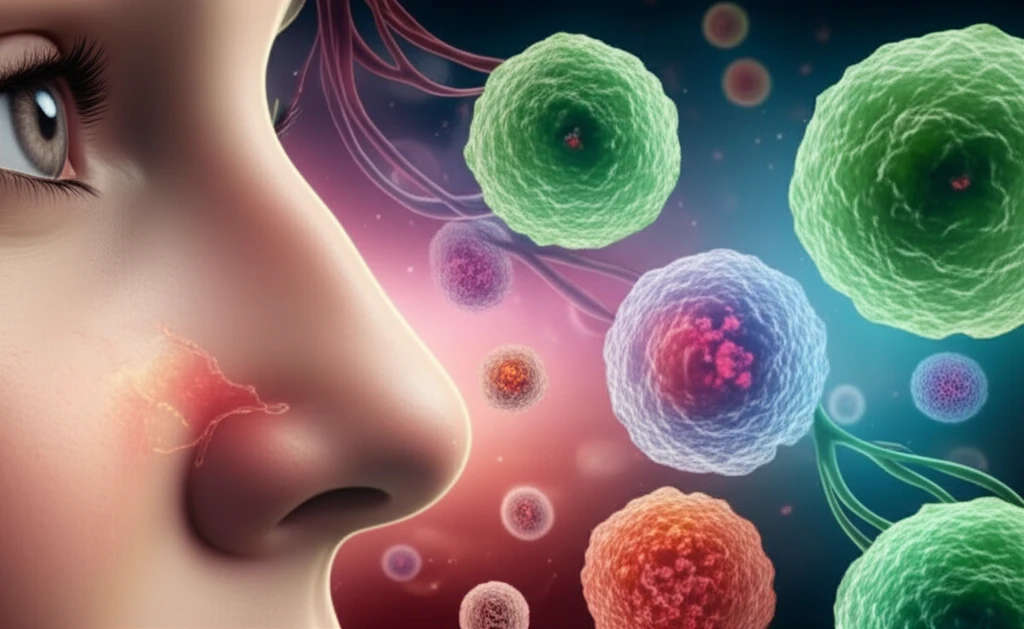
Stylized illustration of nasal NK/T-cell lymphoma with intertwined immune cells.

Nasal NK/T-Cell Lymphoma: Early Diagnosis is Key to Improved Outcomes

"Advanced nasal NK/T-cell lymphoma can be effectively managed with accurate diagnosis and prompt treatment. Learn about a real case and the importance of early detection."


Extranodal natural killer/T-cell lymphoma, nasal type (NKTL), is a rare and aggressive form of non-Hodgkin lymphoma that primarily affects the nasal cavity and upper respiratory tract. Because it mimics other common conditions, it presents diagnostic challenges. NKTL is more prevalent in Asia and Latin America. Quick diagnosis is vital to improve patient outcomes.

This cancer is characterized by the rapid growth of abnormal NK or T cells, leading to tissue destruction and various systemic symptoms. Early symptoms are often nonspecific, such as nasal obstruction, recurrent sinusitis, and rhinorrhea, delaying definitive diagnosis. As the disease progresses, it can lead to more severe complications, including nasal cavity collapse and oronasal fistulas.

This article discusses NKTL, highlighting a recent case report that demonstrates challenges and importance of early and accurate diagnosis. By understanding the complexities of NKTL and the critical role of timely intervention, medical professionals and the public can be better equipped to recognize and address this rare malignancy.

What are the Initial Signs and Symptoms of NKTL?

Stylized illustration of nasal NK/T-cell lymphoma with intertwined immune cells.

The early signs of extranodal natural killer/T-cell lymphoma, nasal type (NKTL), are often nonspecific and can mimic common upper respiratory conditions. This makes early diagnosis challenging. Recognizing these initial symptoms is crucial for prompt evaluation and treatment.

Common early symptoms may include:

  • Nasal Obstruction: Persistent blockage of one or both nasal passages.
  • Recurrent Sinusitis: Frequent sinus infections that do not respond well to standard treatments.
  • Rhinorrhea: Runny nose, often with clear or purulent discharge.
  • Epistaxis: Nosebleeds, which may be frequent or severe.
  • Facial Pain: Localized pain or pressure in the sinus or facial area.
As the disease progresses, more severe symptoms may develop, including palatal ulceration, necrotizing lesions, and facial swelling. These advanced symptoms indicate a more aggressive stage of the lymphoma and require immediate medical attention.

The Importance of Early Detection and Multidisciplinary Care

Early and accurate diagnosis of nasal NK/T-cell lymphoma is critical for improving patient outcomes. Given its rarity and nonspecific initial symptoms, maintaining a high index of suspicion and conducting thorough evaluations are essential. A multidisciplinary approach involving oncologists, otolaryngologists, and other specialists ensures comprehensive and coordinated care. Further research is needed to refine diagnostic and treatment strategies, ultimately enhancing the quality of life for individuals affected by this challenging malignancy.

About this Article -

This article was crafted using a human-AI hybrid and collaborative approach. AI assisted our team with initial drafting, research insights, identifying key questions, and image generation. Our human editors guided topic selection, defined the angle, structured the content, ensured factual accuracy and relevance, refined the tone, and conducted thorough editing to deliver helpful, high-quality information.See our About page for more information.

Everything You Need To Know

1

What exactly is nasal NK/T-cell lymphoma?

Extranodal natural killer/T-cell lymphoma, nasal type (NKTL) is a rare and aggressive form of non-Hodgkin lymphoma. It primarily affects the nasal cavity and upper respiratory tract. Because NKTL symptoms mimic those of more common conditions, this presents diagnostic challenges. It is characterized by the rapid growth of abnormal NK or T cells, leading to tissue destruction and various systemic symptoms.

2

What are the first symptoms someone might notice if they have nasal NK/T-cell lymphoma?

The early signs of extranodal natural killer/T-cell lymphoma, nasal type (NKTL) include nasal obstruction, which is the persistent blockage of one or both nasal passages. Patients may also experience recurrent sinusitis, frequent sinus infections that don’t respond well to standard treatments. Rhinorrhea, a runny nose, often with clear or purulent discharge, and epistaxis, or nosebleeds, which may be frequent or severe, are also common. Some patients may also experience facial pain, or localized pain or pressure in the sinus or facial area.

3

Why is it so important to catch nasal NK/T-cell lymphoma early?

Early and accurate diagnosis of extranodal natural killer/T-cell lymphoma, nasal type (NKTL) is critical because it significantly improves patient outcomes. Given the rarity of NKTL and the nonspecific initial symptoms, a high level of suspicion and thorough evaluations are essential. Early detection allows for prompt treatment, which can prevent the disease from progressing to more severe stages. This underscores the importance of recognizing the initial symptoms and seeking timely medical attention.

4

Why is a team of different doctors important in treating nasal NK/T-cell lymphoma?

A multidisciplinary approach is important in managing extranodal natural killer/T-cell lymphoma, nasal type (NKTL) because it ensures comprehensive and coordinated care. Such an approach typically involves oncologists, who specialize in cancer treatment; otolaryngologists, also known as ENT (ear, nose, and throat) doctors, who focus on the nasal cavity and upper respiratory tract; and other specialists as needed. This collaborative effort is essential for accurate diagnosis, tailored treatment planning, and effective management of the disease's complexities.

5

What happens if nasal NK/T-cell lymphoma isn't treated?

If extranodal natural killer/T-cell lymphoma, nasal type (NKTL) is left untreated, it can progress to more severe stages, leading to significant complications. These may include palatal ulceration, the development of ulcers in the palate; necrotizing lesions, which involve tissue death and damage; and facial swelling. In advanced stages, the disease can also cause nasal cavity collapse and oronasal fistulas, which are abnormal openings between the nasal cavity and the oral cavity. Prompt treatment is therefore essential to prevent these severe outcomes.

Newsletter Subscribe

Subscribe to get the latest articles and insights directly in your inbox.