
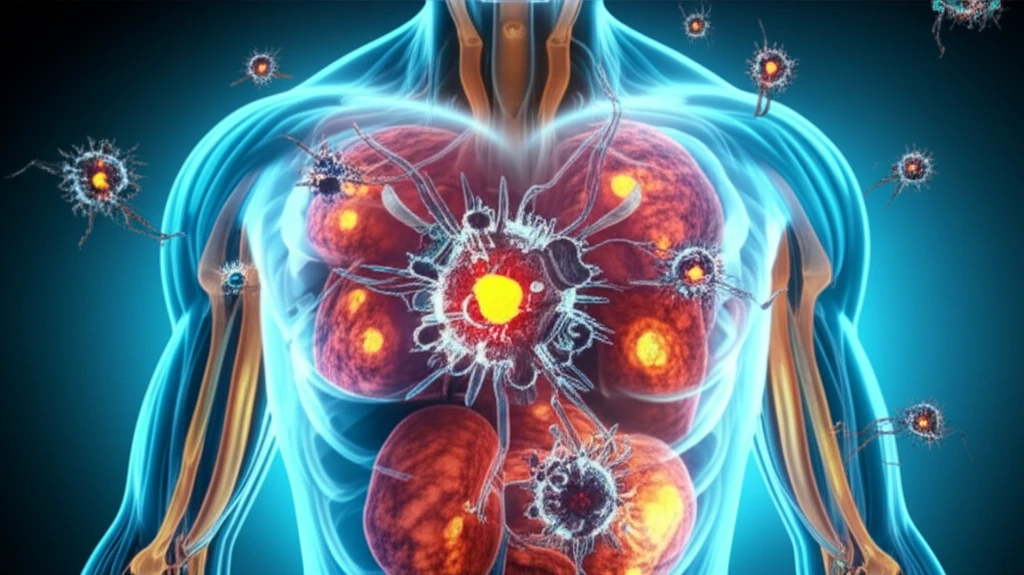
Nanoparticles targeting cancer cells

Nanoparticles: Tiny Tech, Big Cancer Breakthrough?

"Could targeted nanoparticles be the future of cancer treatment?"


Cancer treatment is a constantly evolving field, with researchers exploring new and innovative ways to target and destroy cancer cells while minimizing harm to healthy tissues. One promising area of research involves the use of nanoparticles – incredibly tiny particles – to deliver drugs and therapeutic agents directly to tumors.

Traditional cancer treatments like chemotherapy often affect the entire body, leading to a range of unpleasant side effects. The goal of nanoparticle-based therapies is to improve the precision of treatment, ensuring that the active drugs reach the cancer cells specifically, reducing damage to the rest of the body.

This article will explore how scientists are developing and testing biocompatible nanoparticles loaded with chemotherapy drugs and heat-generating agents. We'll delve into how these nanoparticles can be guided to tumors, activated to release their payload, and ultimately, improve the effectiveness of cancer treatment with fewer side effects.

CuS Nanoparticles: A Multi-Threat to Tumors

Nanoparticles targeting cancer cells

Researchers are particularly interested in copper sulfide (CuS) nanoparticles because of their unique properties. They are relatively inexpensive to produce, absorb light across a broad spectrum of the near-infrared (NIR) range, exhibit good biocompatibility, and efficiently convert NIR light into heat.

Here's how these CuS nanoparticles are being used in cancer treatment:

  • Photothermal Therapy (PTT): When exposed to NIR light, CuS nanoparticles heat up, effectively 'cooking' and destroying the cancer cells. This is a localized treatment, minimizing damage to surrounding healthy tissue.
  • Drug Delivery: The CuS nanoparticles can be coated with a mesoporous silica shell (SiO2), creating a space to load chemotherapy drugs like doxorubicin (DOX). This allows for the simultaneous delivery of both heat and chemotherapy directly to the tumor.
  • Synergistic Effect: The combination of PTT and chemotherapy has been shown to have a synergistic effect, meaning that the combined treatment is more effective than either treatment alone.
In laboratory studies and animal models, CuS nanoparticles loaded with DOX (CuS@MSN-DOX) have demonstrated promising results. Infrared thermal imaging has confirmed their ability to generate heat, and studies have shown that CuS@MSN-DOX can effectively kill cancer cells and reduce tumor growth. This suggests CuS nanoparticles are promising for combined cancer therapy.

The Future is Tiny: Nanoparticles in Cancer Care

The development of biocompatible nanoparticles like CuS@MSN-DOX represents a significant step forward in targeted cancer therapy. By combining photothermal therapy and chemotherapy into a single platform, researchers hope to improve treatment outcomes while reducing the debilitating side effects associated with traditional cancer treatments.

While still in the early stages of development, nanoparticle-based therapies hold immense promise for the future of cancer care. Further research and clinical trials are needed to fully evaluate their safety and effectiveness in humans, but the initial results are encouraging.

As nanotechnology continues to advance, we can expect to see even more sophisticated and targeted cancer therapies emerge, offering hope for more effective and less invasive treatments in the years to come.

About this Article -

This article was crafted using a human-AI hybrid and collaborative approach. AI assisted our team with initial drafting, research insights, identifying key questions, and image generation. Our human editors guided topic selection, defined the angle, structured the content, ensured factual accuracy and relevance, refined the tone, and conducted thorough editing to deliver helpful, high-quality information.See our About page for more information.

Everything You Need To Know

1

Why are nanoparticles being explored as a potential cancer treatment?

Nanoparticles are being explored because traditional cancer treatments, like chemotherapy, affect the entire body and cause unpleasant side effects. Nanoparticle-based therapies, specifically using biocompatible nanoparticles such as copper sulfide (CuS) nanoparticles, aim to improve treatment precision by delivering active drugs directly to cancer cells, reducing damage to the rest of the body. This targeted approach could minimize side effects and improve treatment effectiveness. The concept of drug encapsulation is missing, this helps deliver the drugs to the tumor sites more effectively.

2

What makes copper sulfide (CuS) nanoparticles particularly interesting for cancer treatment?

Copper sulfide (CuS) nanoparticles possess several properties that make them attractive for cancer treatment. They are relatively inexpensive to produce, absorb light across a broad spectrum of the near-infrared (NIR) range, exhibit good biocompatibility, and efficiently convert NIR light into heat. This allows them to be used in photothermal therapy (PTT) to 'cook' and destroy cancer cells when exposed to NIR light. Further enhancement can happen with coating the CuS nanoparticles with a mesoporous silica shell (SiO2) to deliver chemotherapy drugs like doxorubicin (DOX).

3

How does photothermal therapy (PTT) using copper sulfide (CuS) nanoparticles work to combat cancer?

Photothermal therapy (PTT) using copper sulfide (CuS) nanoparticles works by exposing the nanoparticles to near-infrared (NIR) light. CuS nanoparticles efficiently convert this light into heat, which then 'cooks' and destroys the cancer cells. This localized treatment minimizes damage to surrounding healthy tissue. The process leverages the unique light-absorbing properties of the CuS nanoparticles to selectively target and destroy cancer cells without affecting healthy tissues significantly. The process of heat generation and dissipation through the tumor is a complex topic that can further explain the therapy's mechanism.

4

What is the synergistic effect observed when combining photothermal therapy (PTT) and chemotherapy using nanoparticles?

The synergistic effect observed when combining photothermal therapy (PTT) and chemotherapy, specifically with agents like doxorubicin (DOX) delivered via a mesoporous silica shell (SiO2) on copper sulfide (CuS) nanoparticles (CuS@MSN-DOX), means that the combined treatment is more effective than either treatment alone. The heat from PTT can weaken cancer cells, making them more susceptible to the effects of chemotherapy drugs. This dual-attack strategy improves treatment outcomes by enhancing cancer cell destruction and reducing tumor growth more effectively than using either therapy in isolation. The specific mechanisms of how the heat interacts with cellular processes to enhance chemotherapy effectiveness can further illuminate the synergistic action.

5

What are the potential future implications of using biocompatible nanoparticles like CuS@MSN-DOX in cancer care?

The development of biocompatible nanoparticles like CuS@MSN-DOX represents a significant step toward more targeted cancer therapy. By combining photothermal therapy and chemotherapy into a single platform, researchers hope to improve treatment outcomes while reducing the debilitating side effects associated with traditional cancer treatments. This could lead to more effective and less toxic cancer therapies, improving the quality of life for patients undergoing treatment. The concept of personalized medicine and tailoring nanoparticle therapies to individual patients based on their specific cancer types and genetic profiles can open up a new avenue for cancer treatment.

Newsletter Subscribe

Subscribe to get the latest articles and insights directly in your inbox.