
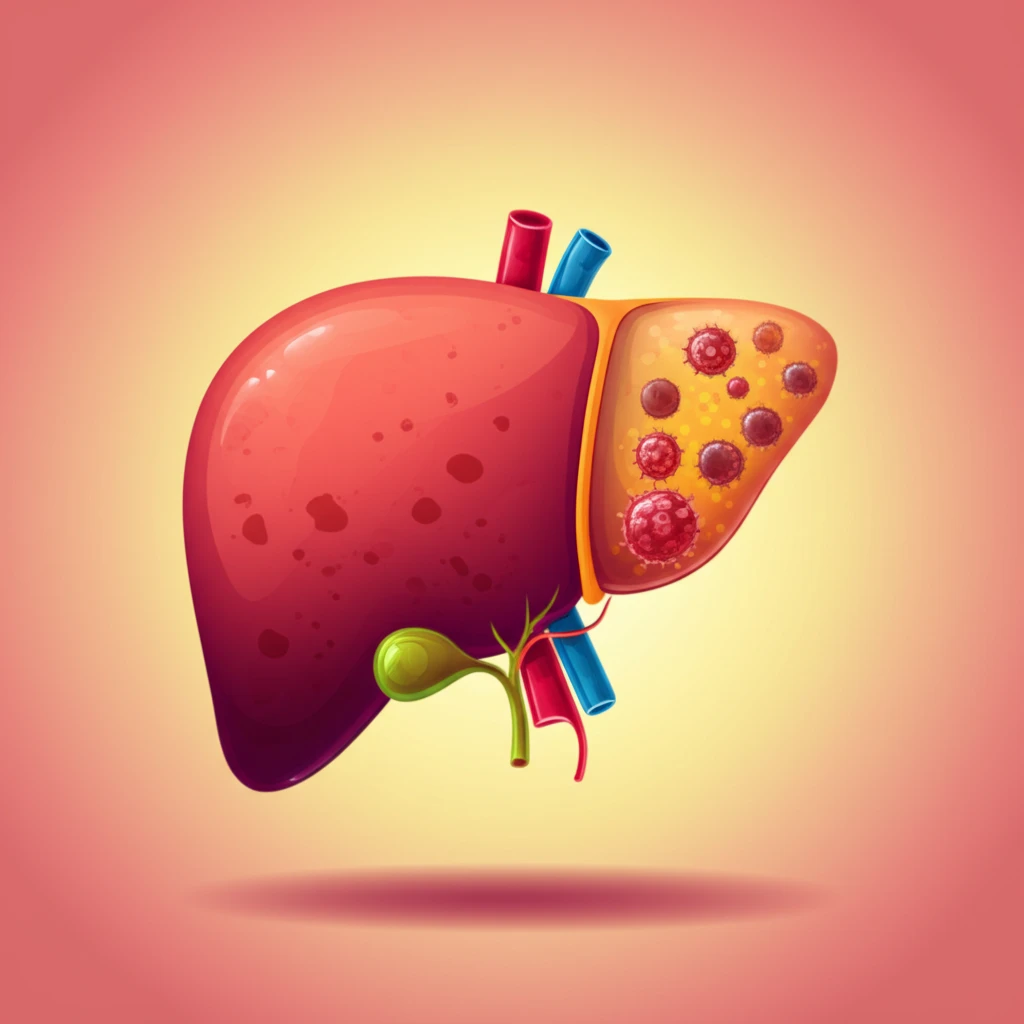
Digital illustration depicting the progression of NAFLD to liver cancer. The image shows a healthy liver transitioning to a diseased state, with fatty deposits and cancerous cells highlighted.

NAFLD and Liver Cancer: What You Need to Know About the Connection

"Unraveling the Links Between Nonalcoholic Fatty Liver Disease, Liver Cancer, and Your Health"


Nonalcoholic fatty liver disease (NAFLD) has quietly become a widespread health concern, affecting millions around the globe. Often asymptomatic in its early stages, NAFLD can progress to more severe conditions, including liver cancer. This article delves into the critical connection between NAFLD and liver cancer, offering insights into the risks, prevalence, and proactive steps you can take to safeguard your liver health.

The liver, a vital organ responsible for numerous bodily functions, is particularly vulnerable to the effects of NAFLD. As NAFLD becomes more prevalent, understanding its potential to develop into liver cancer is crucial. This article aims to shed light on this connection, providing you with the knowledge to make informed decisions about your health.

In this comprehensive guide, we will explore the latest research, risk factors, and preventive measures associated with NAFLD and liver cancer. By understanding these key aspects, you can take control of your health and reduce your risk. This information is designed to be accessible and empowering, ensuring you have the tools you need to protect your liver and overall well-being.

The Rise of NAFLD: A Silent Threat to Liver Health

Digital illustration depicting the progression of NAFLD to liver cancer. The image shows a healthy liver transitioning to a diseased state, with fatty deposits and cancerous cells highlighted.

NAFLD is characterized by an excessive accumulation of fat in the liver, unrelated to alcohol consumption. This condition is closely linked to metabolic syndrome, which includes risk factors such as obesity, type 2 diabetes, high cholesterol, and high blood pressure. The rising prevalence of these conditions has led to an increase in NAFLD cases worldwide. For many, NAFLD starts with simple steatosis (fatty liver), which may progress to nonalcoholic steatohepatitis (NASH), a more severe form characterized by inflammation and liver damage.

NASH can lead to fibrosis (scarring of the liver) and, eventually, cirrhosis (severe scarring and liver failure). It's this progression from steatosis to cirrhosis that significantly raises the risk of developing hepatocellular carcinoma (HCC), the most common type of liver cancer. The link between NAFLD, NASH, and HCC is a major concern, as it highlights the need for early detection and management of NAFLD.

  • Prevalence: NAFLD affects a significant portion of the global population, with rates varying by region and lifestyle.
  • Risk Factors: Key risk factors include obesity, type 2 diabetes, insulin resistance, high cholesterol, and high blood pressure.
  • Progression: NAFLD can progress through stages, from simple steatosis to NASH, fibrosis, cirrhosis, and eventually, liver cancer.
  • Impact: The progression of NAFLD increases the risk of developing hepatocellular carcinoma (HCC).
Early diagnosis and management of NAFLD are crucial. Lifestyle modifications such as diet, exercise, and weight management are essential in managing NAFLD and reducing the risk of its progression to more severe stages, including liver cancer. Medical interventions, such as medications, may be necessary for some individuals to manage related conditions and protect liver health.

Empowering Your Health: Taking Action Against NAFLD and Liver Cancer

Understanding the link between NAFLD and liver cancer empowers you to take proactive steps for your health. By recognizing the risk factors, seeking early diagnosis, and adopting a healthy lifestyle, you can significantly reduce your risk. Regular check-ups, a balanced diet, regular exercise, and weight management are key components of a liver-healthy lifestyle. Moreover, staying informed about the latest research and advancements in treatment can further enhance your ability to protect your liver and overall health. The journey to better liver health is a collaborative effort between you and your healthcare providers.

About this Article -

This article was crafted using a human-AI hybrid and collaborative approach. AI assisted our team with initial drafting, research insights, identifying key questions, and image generation. Our human editors guided topic selection, defined the angle, structured the content, ensured factual accuracy and relevance, refined the tone, and conducted thorough editing to deliver helpful, high-quality information.See our About page for more information.

This article is based on research published under:

DOI-LINK: 10.3748/wjg.v21.i3.913, Alternate LINK

Title: Association Of Nonalcoholic Fatty Liver Disease And Liver Cancer

Subject: Gastroenterology

Journal: World Journal of Gastroenterology

Publisher: Baishideng Publishing Group Inc.

Authors: Perla Oliveira Schulz, Fabio Gonçalves Ferreira, Maria De Fátima Araújo Nascimento, Andrea Vieira, Mauricio Alves Ribeiro, André Ibrahim David, Luiz Arnaldo Szutan

Published: 2015-01-01

Everything You Need To Know

1

What is nonalcoholic fatty liver disease (NAFLD), and why is it a health concern?

Nonalcoholic fatty liver disease (NAFLD) is a condition characterized by the excessive accumulation of fat in the liver, unrelated to alcohol consumption. It's a significant health concern because it is often asymptomatic in its early stages and can progress to more severe conditions, including nonalcoholic steatohepatitis (NASH), fibrosis, cirrhosis, and hepatocellular carcinoma (HCC), which is a common type of liver cancer. The link between NAFLD, NASH, and HCC highlights the need for early detection and management.

2

What are the primary risk factors associated with developing nonalcoholic fatty liver disease (NAFLD)?

The key risk factors for nonalcoholic fatty liver disease (NAFLD) are closely linked to metabolic syndrome. These include obesity, type 2 diabetes, insulin resistance, high cholesterol, and high blood pressure. The rising prevalence of these conditions contributes to the increasing number of NAFLD cases worldwide. Addressing these risk factors through lifestyle modifications and medical interventions is essential in managing NAFLD.

3

How does nonalcoholic fatty liver disease (NAFLD) potentially lead to liver cancer?

Nonalcoholic fatty liver disease (NAFLD) can progress through several stages, starting with simple steatosis (fatty liver), which can then advance to nonalcoholic steatohepatitis (NASH), characterized by inflammation and liver damage. NASH can further lead to fibrosis (scarring of the liver) and cirrhosis (severe scarring and liver failure). It's this progression from steatosis to cirrhosis that significantly increases the risk of developing hepatocellular carcinoma (HCC), the most common type of liver cancer. Therefore, managing NAFLD and preventing its progression are crucial for reducing the risk of liver cancer.

4

What proactive steps can individuals take to manage nonalcoholic fatty liver disease (NAFLD) and reduce the risk of liver cancer?

Individuals can take several proactive steps to manage nonalcoholic fatty liver disease (NAFLD) and reduce the risk of liver cancer. These include lifestyle modifications such as adopting a balanced diet, engaging in regular exercise, and managing weight. Regular check-ups with healthcare providers are also crucial for early diagnosis and monitoring. In some cases, medical interventions, such as medications to manage related conditions like diabetes and high cholesterol, may be necessary to protect liver health. Staying informed about the latest research and advancements in treatment is also beneficial.

5

What is the significance of understanding the connection between nonalcoholic fatty liver disease (NAFLD) and hepatocellular carcinoma (HCC)?

Understanding the connection between nonalcoholic fatty liver disease (NAFLD) and hepatocellular carcinoma (HCC) is significant because it empowers individuals to take proactive steps to protect their liver health. NAFLD often has no symptoms in its early stages, so awareness of its potential to progress to severe conditions like cirrhosis and HCC is crucial for early detection and management. By recognizing the risk factors associated with NAFLD, such as obesity and type 2 diabetes, individuals can adopt healthier lifestyles and seek medical advice to reduce their risk of developing liver cancer. Early diagnosis and management of NAFLD can significantly improve outcomes and reduce the likelihood of developing HCC.

Newsletter Subscribe

Subscribe to get the latest articles and insights directly in your inbox.