
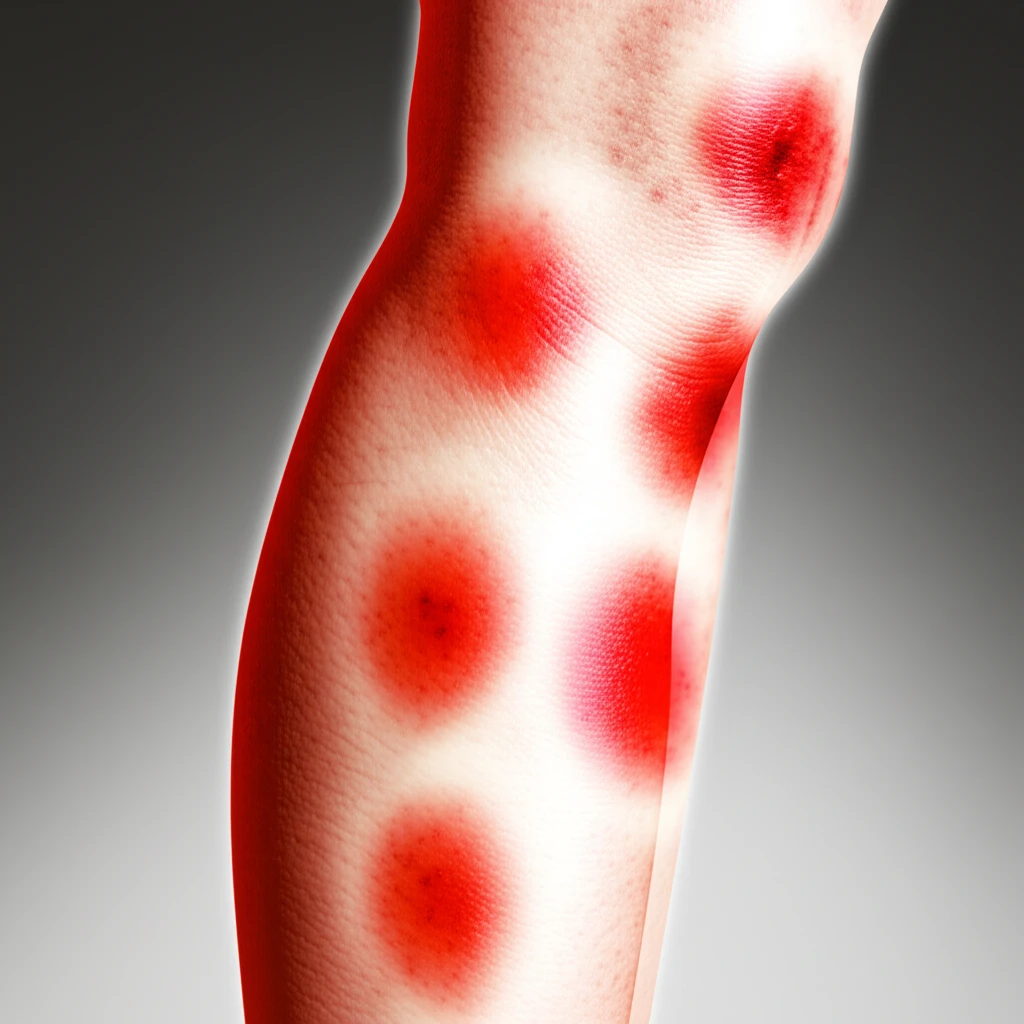
Illustration of multiple erythematous skin lesions exhibiting a pulsating effect on a human leg.

Mysterious 'Blinking' Skin: Unraveling a Rare Dermatological Puzzle

"Delving into Quincke's Sign and Insect Bite Reactions: A Medical Mystery Explained"


Have you ever heard of skin that seems to 'blink'? While it might sound like something out of science fiction, this is the reality for some individuals experiencing a rare dermatological condition known as Quincke's sign, often associated with a peculiar response to insect bites. This article will delve into the fascinating, yet perplexing, world of pulsating skin lesions, exploring the science behind this phenomenon and what it means for those affected.

Quincke's sign, typically observed in relation to cardiovascular issues, manifests as an alternating blanching and flushing of the skin, usually in the nail bed, synchronized with arterial pulsation. But what happens when this unusual sign appears in a different context? This article explores a unique case where multiple 'blinking' lesions arose from insect bites, presenting a medical puzzle that researchers are still working to fully understand.

Understanding this condition involves exploring the underlying causes and mechanisms at play. This article will explore the current medical understanding of 'blinking' lesions, providing insight into the diagnostic process, treatment options, and potential implications for individuals experiencing this rare condition.

Unmasking Quincke's Sign: What Are 'Blinking' Skin Lesions?

Illustration of multiple erythematous skin lesions exhibiting a pulsating effect on a human leg.

Quincke's sign is a clinical sign, usually connected to cardiovascular conditions like aortic regurgitation, and is characterized by rhythmic changes in skin color. The phenomenon presents as an alternating blanching and flushing of the skin, often observed in the nail bed, that pulses in time with the arterial pulse. However, in cases unrelated to cardiac issues, the appearance of 'blinking' lesions presents a unique medical challenge.

When these pulsating lesions occur due to insect bites, the situation becomes particularly intriguing. The exact mechanisms are still under investigation, but the current understanding suggests that the body's response to insect bites, including the release of certain chemicals, plays a crucial role. These chemicals might cause localized changes in blood vessels, which in turn could cause the 'blinking' effect.

  • Pulsating Erythema: The skin lesions, typically erythematous (red), exhibit a noticeable pulsation.
  • Alternating Blanching and Flushing: The lesions alternate between blanching (turning pale) and flushing (becoming red) in time with the pulse.
  • Insect Bite Association: The occurrence of these lesions is often linked to insect bites, suggesting an immunological response.
  • Localized Swelling: The affected areas may also show signs of swelling.
  • Pruritus: Itching is a common symptom experienced by individuals with these lesions.
The symptoms experienced can vary, but often include itching and discomfort. Diagnosis typically involves a physical examination, where a doctor observes the pulsating lesions and assesses the overall skin condition. Additionally, a medical history, including any recent insect bites, is crucial in pinpointing the cause. Further tests, like skin biopsies and blood tests, may be conducted to help rule out any underlying conditions or to support the diagnosis.

Looking Ahead: Research and Future Directions

The understanding of 'blinking' lesions and Quincke's sign in non-cardiovascular contexts is ongoing. Medical professionals and researchers continue to explore the underlying mechanisms, diagnostic methods, and effective treatment strategies. As research advances, the knowledge of this rare condition will continue to evolve, leading to improved diagnosis and management for individuals affected by 'blinking' skin. If you suspect you have this rare condition, seek medical help and consult a dermatologist for a diagnosis.

About this Article -

This article was crafted using a human-AI hybrid and collaborative approach. AI assisted our team with initial drafting, research insights, identifying key questions, and image generation. Our human editors guided topic selection, defined the angle, structured the content, ensured factual accuracy and relevance, refined the tone, and conducted thorough editing to deliver helpful, high-quality information.See our About page for more information.

Everything You Need To Know

1

What is Quincke's sign and how does it relate to 'blinking' skin lesions?

Quincke's sign is a clinical sign characterized by rhythmic blanching and flushing of the skin, typically observed in the nail bed, synchronized with the arterial pulse. While usually associated with cardiovascular conditions, 'blinking' skin lesions refer to instances where Quincke's sign appears in a different context, such as after insect bites. In these cases, the appearance of pulsating lesions presents a unique medical challenge separate from cardiac issues. The pulsations are due to changes in blood flow, resulting in the observed color variations.

2

What are the key symptoms associated with 'blinking' skin lesions linked to insect bites?

The symptoms of 'blinking' skin lesions related to insect bites include pulsating erythema (red lesions exhibiting pulsation), alternating blanching and flushing in time with the pulse, localized swelling around the affected area, and pruritus (itching). The appearance of these symptoms following insect bites is a key indicator that helps differentiate this specific manifestation of Quincke's sign from those related to cardiovascular problems. It's important to note the timing and context of these symptoms for accurate diagnosis.

3

What causes 'blinking' skin lesions to appear after insect bites, and why does the skin pulsate?

The exact mechanisms are still under investigation, but 'blinking' skin lesions appearing after insect bites are believed to be caused by the body's response to the insect bite. This response involves the release of chemicals that affect localized blood vessels. It is hypothesized that these chemicals cause localized changes in blood vessels, which in turn could cause the 'blinking' effect. This results in the characteristic alternating blanching and flushing of the skin in time with the pulse. The pulsation effect is likely due to vasodilation and vasoconstriction responding to each heartbeat.

4

How are 'blinking' skin lesions diagnosed, and what kind of tests might be involved?

Diagnosing 'blinking' skin lesions typically involves a physical examination, where a doctor observes the pulsating lesions and assesses the skin condition. A detailed medical history, including any recent insect bites, is crucial. Further tests, such as skin biopsies and blood tests, may be conducted to rule out other underlying conditions or to support the diagnosis. These tests help medical professionals determine if the lesions are indeed related to an insect bite response or if another condition is responsible for the observed symptoms.

5

What are the future directions in understanding and treating 'blinking' skin lesions associated with insect bites?

Research into 'blinking' skin lesions and Quincke's sign in non-cardiovascular contexts is ongoing. Future directions involve further exploration of the underlying mechanisms, refining diagnostic methods, and developing effective treatment strategies. Continued research aims to enhance the knowledge of this rare condition, leading to improved diagnosis and management for affected individuals. Further studies could focus on identifying the specific chemicals released in response to insect bites that trigger the vascular changes, as well as exploring targeted therapies to alleviate symptoms and address the root cause of the lesions.

Newsletter Subscribe

Subscribe to get the latest articles and insights directly in your inbox.