
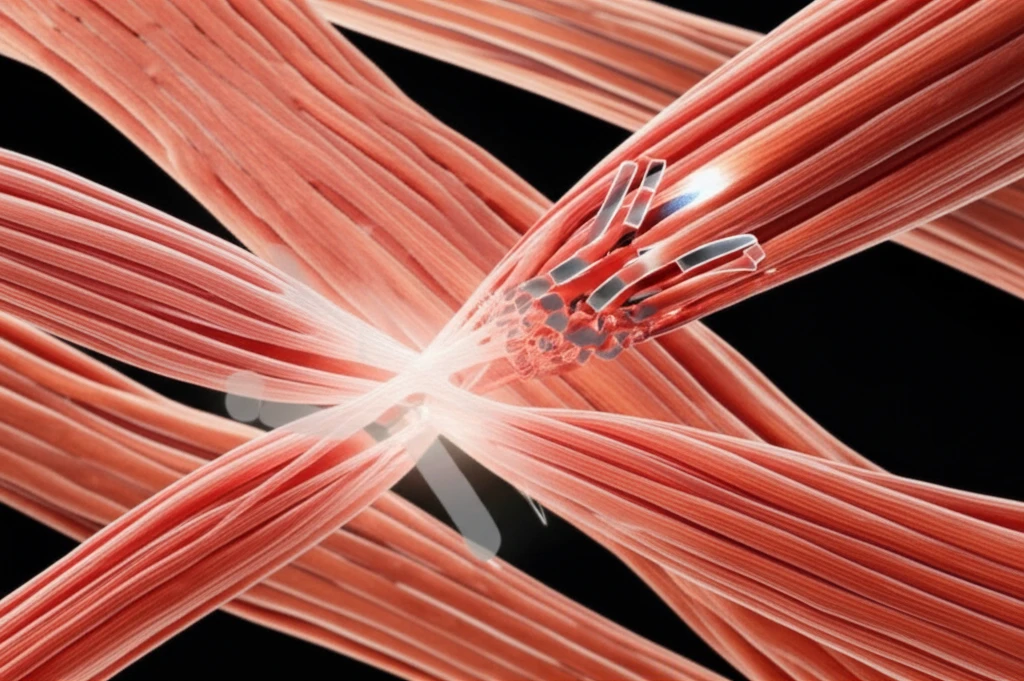
Chick embryo cells forming muscle fibers, disrupted by an antibody, symbolizing muscle dystrophy research.

Muscle Dystrophy Breakthrough: Chick Embryo Cells Offer New Hope for In Vitro Modeling

"Researchers are leveraging chick embryonic cells to create an accessible and cost-effective in vitro model for studying muscle dystrophy, potentially paving the way for novel pharmacological agents."


For decades, scientists have been meticulously studying the molecular mechanisms governing muscle development in vertebrates. Key players like Myoblast Determination Protein 1 (MYOD1), myogenin (MYOG), Myogenic Factor 5 (MYF5), and Myogenic Regulatory Factor 4 (MRF4) have been identified as critical myogenic regulatory factors since the late 1980s. These factors orchestrate muscle formation during embryonic development, as well as maintenance and regeneration processes post-embryonic development.

The vertebrate sarcolemma, which is the cell membrane of muscle fibers, contains a sophisticated assembly of glycoproteins. These include alpha and beta subtypes of dystroglycan, as well as alpha, beta, and gamma subtypes of sarcoglycan and dystrophin. When isolated, these components were found to be closely associated with the dystrophin protein, giving rise to the term 'dystrophin-glycoprotein complex.' Genetic defects in any of these proteins can lead to severe muscle developmental issues, with muscular dystrophy (MD) being a prime example.

Muscular dystrophy (MD) is a devastating disease characterized by progressive muscle weakness and atrophy. Among the various forms of MD, Duchenne muscular dystrophy (DMD) is the most prevalent. DMD arises from genetic mutations—such as deletions, insertions, point mutations, or duplications—affecting the dystrophin gene. Researchers are constantly seeking effective treatments, and novel models are needed to better understand the disease.

Why Chick Embryonic Cells?

Chick embryo cells forming muscle fibers, disrupted by an antibody, symbolizing muscle dystrophy research.

Chick embryonic cells offer a compelling alternative for in vitro MD studies, addressing many limitations associated with stem cells and induced myogenic cell lines. The conventional methods often grapple with ethical concerns, extended timelines for myogenic cell derivation, genetic modifications during cell induction, high costs, and limited cell yields. The myogenesis process in chicks closely mirrors that in humans, making them a relevant model. Significant early research on myogenesis in limbs and other organs was conducted using chick embryos. Their ease of manipulation, cost-effectiveness, and considerable genetic similarity to mammals make them an invaluable asset.

In a recent study, researchers isolated limb myoblasts from 11-day-old chick embryos and cultured them to create an in vitro model of muscle cell dystrophy. To mimic the effects of MD, the muscle cell cultures were treated with an anti-dystroglycan antibody (IIH6). This antibody targeted alpha-dystroglycan, disrupting the critical connection between cytoskeletal proteins and the extracellular matrix, a hallmark of MD.

  • Cell Isolation and Culture: Limb myoblasts from 11-day-old chick embryos were isolated and cultured.
  • MD Induction: The cultures were treated with IIH6 antibody to disrupt the connection between cytoskeletal proteins and the extracellular matrix.
  • Observation: Changes in morphometrics, contractibility, and mRNA expression were monitored.
The IIH6-treated muscle cells exhibited significant changes, including altered morphometry, reduced contractibility, and atrophy when compared to control cultures. Gene expression studies revealed an upregulation in TGF-β expression and a downregulation of muscle sculpture genes such as MYOD1, MYF5, LAMA2, and MYOG. These changes mirrored in vivo MD conditions, suggesting that chick embryonic cells provide a relevant and cost-effective model for studying MD.

The Future of MD Research

This innovative approach using chick embryonic cells provides a simple and cost-effective method to further understand the disease mechanism and conduct initial studies on the effects of novel pharmacological agents. By offering a readily accessible and ethically sound model, researchers can accelerate the development of effective treatments for muscular dystrophy, bringing new hope to those affected by this debilitating condition.

About this Article -

This article was crafted using a human-AI hybrid and collaborative approach. AI assisted our team with initial drafting, research insights, identifying key questions, and image generation. Our human editors guided topic selection, defined the angle, structured the content, ensured factual accuracy and relevance, refined the tone, and conducted thorough editing to deliver helpful, high-quality information.See our About page for more information.

Everything You Need To Know

1

What is the primary focus of the new research using chick embryonic cells?

The primary focus is on creating an in vitro model for studying muscular dystrophy (MD). This model utilizes chick embryonic cells to mimic the disease's effects, allowing researchers to better understand the disease mechanisms and test potential treatments in a cost-effective and accessible manner. It is particularly relevant for conditions like Duchenne muscular dystrophy (DMD).

2

Which specific cellular components are critical in the context of muscular dystrophy, and how are they affected?

The research highlights the importance of the dystrophin-glycoprotein complex, which includes proteins like alpha and beta-dystroglycan, alpha, beta, and gamma sarcoglycan, and dystrophin. Genetic defects in any of these proteins, often caused by mutations in the dystrophin gene, lead to MD. The study specifically targets alpha-dystroglycan using the IIH6 antibody to disrupt its connection to the extracellular matrix, mimicking the effects of MD in the in vitro model.

3

Why are chick embryonic cells considered a suitable model for studying muscular dystrophy?

Chick embryonic cells are ideal for several reasons. The process of myogenesis (muscle formation) in chicks closely resembles that in humans, making it a relevant model. They are easy to manipulate, cost-effective compared to other models, and offer a practical alternative addressing limitations associated with stem cells. The study mentions the benefits of using chick embryos, such as accessibility, ethical considerations and genetic similarities to mammals which offers invaluable asset for research.

4

How does the IIH6 antibody contribute to the in vitro model of muscular dystrophy using chick embryonic cells?

The IIH6 antibody targets alpha-dystroglycan, a key component of the dystrophin-glycoprotein complex. By binding to alpha-dystroglycan, the antibody disrupts the critical connection between the cytoskeletal proteins and the extracellular matrix. This disruption mimics the conditions found in MD, where these connections are compromised due to genetic defects. As a result, the treated cells show changes, including altered morphometry, reduced contractility, and atrophy, which resemble the characteristics of MD in vivo.

5

What are the implications of the observed changes in gene expression in the chick embryonic cell model?

The study observed changes in gene expression, including an upregulation in TGF-β expression and a downregulation of muscle sculpture genes such as MYOD1, MYF5, LAMA2, and MYOG. These changes are significant because they mirror the conditions observed in vivo MD. Specifically, the downregulation of MYOD1, MYF5, and MYOG, known as myogenic regulatory factors, suggests a disruption in muscle formation and maintenance, a key feature of MD. This indicates that the chick embryonic cell model accurately reflects the disease, making it valuable for studying MD mechanisms and testing pharmacological agents.

Newsletter Subscribe

Subscribe to get the latest articles and insights directly in your inbox.