
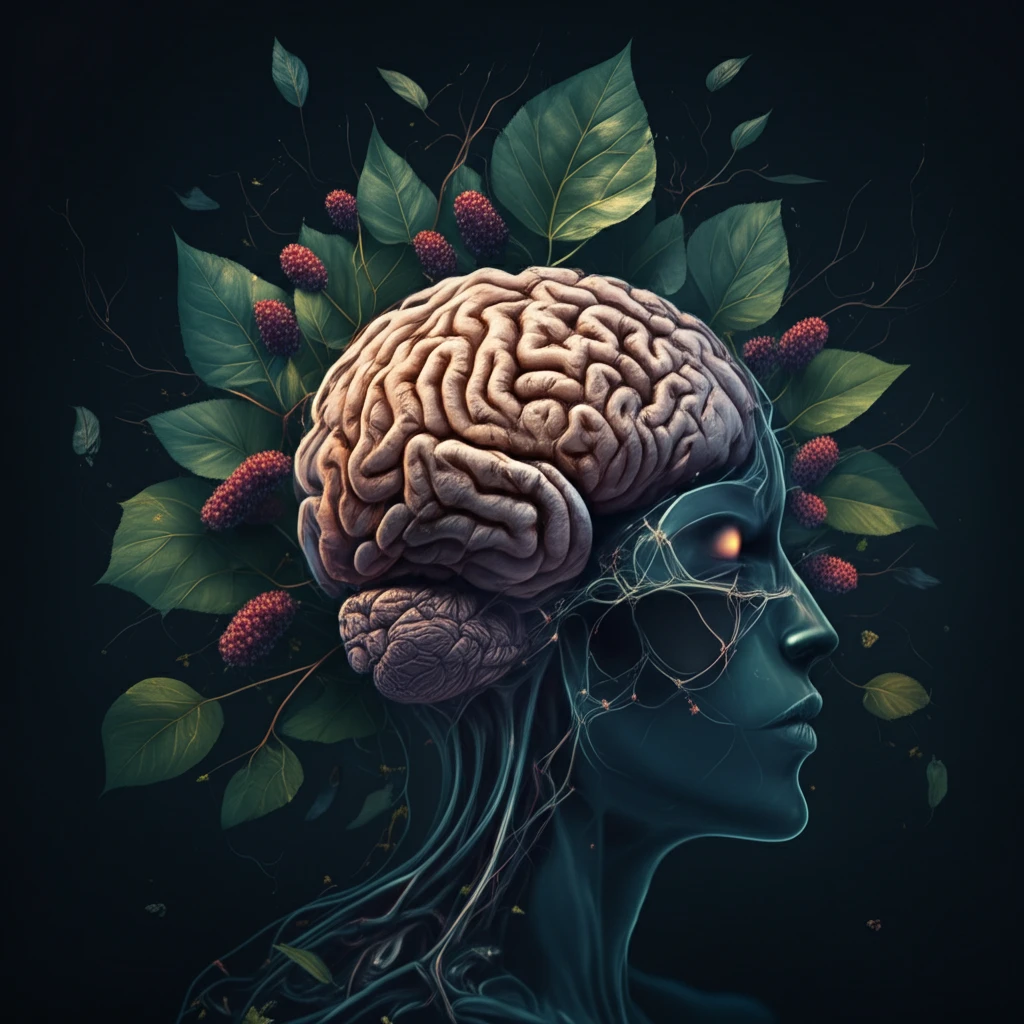
Brain surrounded by mulberry leaves and berries, symbolizing natural healing and brain protection.

Mulberry Magic: Can This Natural Remedy Ease Anxiety and Boost Your Brain?

"Uncover the surprising science behind Morus nigra (black mulberry) and its potential to combat depression and protect your brain, offering a natural alternative for mental well-being."


In a world increasingly seeking natural solutions for mental well-being, new research is shedding light on the potential benefits of an age-old plant: Morus nigra, or black mulberry. While known for its delicious fruit, scientists are now exploring the antidepressant-like and neuroprotective properties of its leaves and its major phenolic component, syringic acid.

Depression is a widespread and growing concern, affecting millions globally. While conventional treatments exist, the search for alternative and complementary therapies is ongoing. Studies suggest that oxidative stress and an imbalance of glutamate in the brain may contribute to depressive disorders. This has prompted researchers to investigate natural compounds that can address these underlying factors.

This article delves into the groundbreaking study that examines the potential of black mulberry extract and syringic acid to alleviate depressive symptoms and protect brain cells. We will explore the science behind these findings, offering a comprehensive look at how this natural remedy might revolutionize mental health care.

Black Mulberry: A Natural Antidepressant and Brain Booster?

Brain surrounded by mulberry leaves and berries, symbolizing natural healing and brain protection.

The study, published in Metabolic Brain Disease, investigated the antidepressant-like effects of Morus nigra aqueous extract (MN) and its major phenolic constituent, syringic acid (SA), in mice. The researchers also examined the involvement of antioxidant and neuroprotective activities.

Here's a breakdown of the key findings:

  • Antidepressant-Like Effects: Both acute and subchronic administration of MN or SA exerted antidepressant-like properties in behavioral tests in mice, such as the forced swimming test (FST) and tail suspension test (TST).
  • Syringic Acid's Role: The antidepressant-like effect of MN could be partly attributed to the influence of SA.
  • Nitro-Oxidative System Modulation: The observed effects involved modulation of the nitro-oxidative system in both the serum and brain of mice.
  • Neuroprotection: MN or SA was able to contain glutamate-induced cell death in hippocampal and cortical slices, indicating neuroprotection.
These results suggest that black mulberry extract and its major component, syringic acid, may offer a multi-faceted approach to combating depression by improving mood, protecting brain cells, and reducing nitro-oxidative stress.

The Future of Mulberry and Mental Health

The study opens exciting possibilities for the use of black mulberry and syringic acid as natural remedies for depression and brain health. Further research is needed to fully understand the mechanisms of action and to determine the efficacy and safety of these compounds in humans. However, these preliminary findings suggest that black mulberry may hold promise as a valuable tool in the fight against mental illness. As always, consult your healthcare provider before making any changes to your treatment plan.

About this Article -

This article was crafted using a human-AI hybrid and collaborative approach. AI assisted our team with initial drafting, research insights, identifying key questions, and image generation. Our human editors guided topic selection, defined the angle, structured the content, ensured factual accuracy and relevance, refined the tone, and conducted thorough editing to deliver helpful, high-quality information.See our About page for more information.

This article is based on research published under:

DOI-LINK: 10.1007/s11011-017-0089-y, Alternate LINK

Title: Morus Nigra And Its Major Phenolic, Syringic Acid, Have Antidepressant-Like And Neuroprotective Effects In Mice

Subject: Cellular and Molecular Neuroscience

Journal: Metabolic Brain Disease

Publisher: Springer Science and Business Media LLC

Authors: Ana Paula Dalmagro, Anderson Camargo, Ana Lúcia Bertarello Zeni

Published: 2017-08-18

Everything You Need To Know

1

What is Morus nigra, and what are its potential benefits?

Morus nigra, commonly known as black mulberry, is a plant whose leaves and fruit are being investigated for their potential health benefits. Research suggests that it may offer antidepressant-like and neuroprotective properties. The major phenolic component, syringic acid, found in Morus nigra, is also being studied for its role in these effects, potentially offering a natural approach to address mental well-being.

2

How does black mulberry extract, including syringic acid, exert antidepressant-like effects?

Studies have shown that Morus nigra aqueous extract (MN) and its major phenolic constituent, syringic acid (SA), have antidepressant-like properties. These effects were observed in behavioral tests like the forced swimming test (FST) and tail suspension test (TST) in mice. The antidepressant-like effect of MN is, in part, due to the influence of SA. Furthermore, the observed effects involve modulation of the nitro-oxidative system in both the serum and brain of mice.

3

What is the role of syringic acid in the context of black mulberry and mental health?

Syringic acid (SA), a major phenolic component of Morus nigra, plays a key role in the potential antidepressant-like and neuroprotective effects observed. Research indicates that SA contributes to the antidepressant-like effects of black mulberry extract. Additionally, SA has been found to contain glutamate-induced cell death, demonstrating its neuroprotective capabilities. This suggests that SA may be a key active compound, making black mulberry a promising natural remedy for mental well-being.

4

How does black mulberry offer neuroprotection, according to research?

The neuroprotective effects of Morus nigra are demonstrated by its ability to contain glutamate-induced cell death in hippocampal and cortical slices. The study indicates that both Morus nigra aqueous extract (MN) and syringic acid (SA) exhibit these protective properties. By protecting brain cells, black mulberry and its components like syringic acid, may help counteract some of the harmful effects associated with depression and promote overall brain health. This is a multi-faceted approach to combating depression by improving mood, protecting brain cells, and reducing nitro-oxidative stress.

5

What are the implications of this research for the future of mental health treatments?

The preliminary findings regarding Morus nigra and syringic acid open exciting possibilities for their use as natural remedies for depression and brain health. The study published in *Metabolic Brain Disease* suggests that these compounds may offer a multi-faceted approach to combating depression by improving mood, protecting brain cells, and reducing nitro-oxidative stress. Further research is needed to fully understand the mechanisms of action and to determine the efficacy and safety of these compounds in humans. However, these initial results suggest that black mulberry may hold promise as a valuable tool in the fight against mental illness, potentially revolutionizing mental health care by offering a natural alternative to existing treatments. It is important to consult with a healthcare provider before making any changes to a treatment plan.

Newsletter Subscribe

Subscribe to get the latest articles and insights directly in your inbox.