
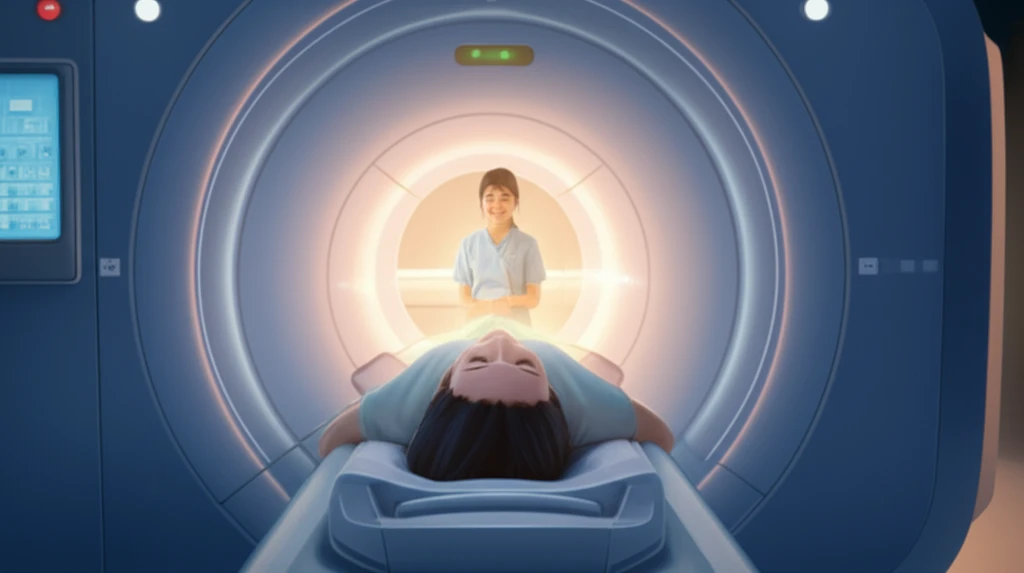
MRI Anxiety? How Radiology Nurses Can Transform Your Scan Experience

"Discover how specialized nursing interventions are improving patient comfort and image quality during abdominal 3-T MRI examinations."
Magnetic Resonance Imaging (MRI) has revolutionized medical diagnostics, providing detailed images of the body's internal structures without using radiation. This makes MRI a safer alternative to CT scans for many conditions. However, the process can be intimidating. The strong magnetic fields, enclosed spaces, and loud noises can trigger anxiety and claustrophobia, leading to patient discomfort and potentially compromised image quality.
That's where radiology nurses come in. These specialized nurses are trained to support patients throughout the MRI process, from pre-scan education to real-time coaching during the procedure. By employing specific techniques, they aim to reduce anxiety, improve cooperation, and ultimately enhance the diagnostic value of the MRI.
A recent study published in the Journal of School of Nursing USP investigated the impact of radiology nursing interventions on abdominal 3-T MRI examinations. The results highlight the significant benefits these nurses bring to the table, transforming the MRI experience for patients and improving outcomes for healthcare providers.
What Exactly Does a Radiology Nurse Do During an MRI?
The study, conducted at Shandong University in China, focused on patients undergoing abdominal 3-T MRI, a powerful type of MRI often used to diagnose complex abdominal conditions. Sixty patients were randomly divided into two groups: a control group receiving standard MRI preparation, and an intervention group receiving specialized nursing care.
- Detailed Pre-Scan Education: Nurses explained the MRI procedure, the sounds patients could expect, and the importance of remaining still. They also addressed safety concerns, clarifying contraindications and ensuring patients understood the need to remove all metallic objects.
- Anxiety Reduction Techniques: By providing clear explanations and a reassuring presence, nurses helped to alleviate patient anxiety and fear associated with the MRI environment.
- Respiration Training: Abdominal MRI requires patients to hold their breath for short periods to minimize movement artifacts. Nurses coached patients on proper breathing techniques to improve their ability to comply with these instructions.
- Continuous Monitoring and Support: During the scan, nurses closely monitored patients, offering encouragement and guidance to help them remain calm and cooperative.
- Post-Scan Debriefing: After the MRI, nurses addressed any remaining concerns and provided reassurance, ensuring patients felt supported throughout the entire process.
The Takeaway: A Calmer Patient, A Clearer Image
The study's findings send a clear message: radiology nursing interventions significantly improve the MRI experience. By addressing patient anxiety, providing clear instructions, and offering continuous support, these nurses play a vital role in ensuring high-quality diagnostic images and positive patient outcomes. So, if you're feeling anxious about an upcoming MRI, remember that radiology nurses are there to help you through it. Don't hesitate to ask questions, express your concerns, and partner with them to make your scan as smooth and successful as possible.