
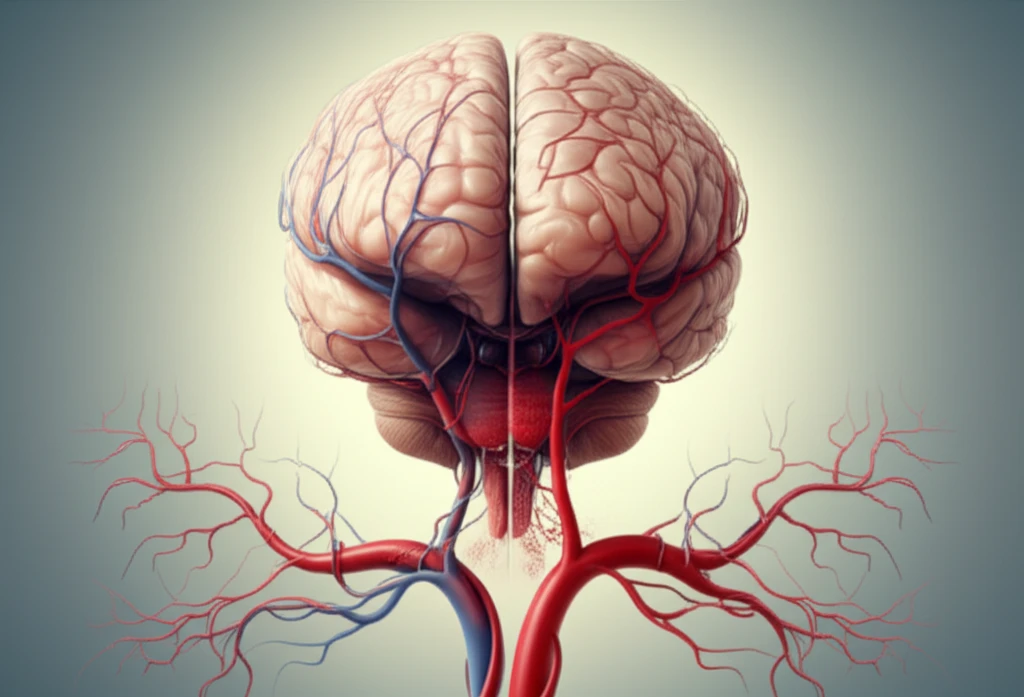
Moyamoya Disease and von Willebrand Disease: A Groundbreaking Surgical Approach

"Discover how surgeons successfully performed a revascularization operation on a patient with both Moyamoya and von Willebrand diseases, paving the way for safer treatments."
Moyamoya disease, characterized by progressive narrowing of the arteries at the base of the brain, often requires revascularization surgery to improve blood flow and prevent strokes. However, when this condition occurs alongside von Willebrand disease (vWD), a genetic bleeding disorder, the risk of hemorrhagic complications skyrockets, presenting a significant challenge for surgeons.
Von Willebrand disease (vWD) is a genetic condition that impairs blood clotting due to a deficiency or defect in the von Willebrand factor (vWF). While surgical interventions can be risky for vWD patients, managing vWF levels during the perioperative period has shown promise in mitigating bleeding risks.
Now, a team of surgeons has successfully navigated this complex scenario, performing a revascularization operation on a patient with both Moyamoya and vWD. This article delves into their groundbreaking approach, offering insights into how they managed the increased risk and achieved a positive outcome.
Overcoming the Odds: A Surgical Success Story
In a notable case, surgeons performed a left superficial temporal artery to middle cerebral artery (STA-MCA) bypass, combined with encephalo-myo-synangiosis (EMS), on a 35-year-old woman with both Moyamoya disease and type 1 vWD. The key to their success was meticulous management of the patient's vWF levels.
- Careful vWF Management: Maintaining adequate vWF levels is crucial in preventing hemorrhagic complications in vWD patients undergoing surgery.
- Desmopressin Alternative: The European Haemophilia Therapy Strategy Board suggests using a vWF/FVIII compound over desmopressin for patients with ischemic heart disease, stroke, or related conditions.
- Individualized Approach: Monitoring vWF and FVIII levels is essential to prevent both bleeding and thrombotic events.
Paving the Way for Safer Neurosurgery
This case marks a significant step forward in the treatment of Moyamoya disease in patients with concurrent vWD. By demonstrating the feasibility and success of carefully managed revascularization surgery, it offers hope for improved outcomes and reduced risks for this complex patient population.
The findings underscore the importance of a comprehensive perioperative strategy that includes close monitoring and replacement of vWF, tailored to the individual patient's needs and circumstances. This approach can minimize the risk of bleeding complications and enable successful surgical interventions.
While further research is needed to refine and optimize these strategies, this pioneering case provides a valuable framework for future neurosurgical interventions in patients with both Moyamoya and von Willebrand diseases, paving the way for safer and more effective treatments.