
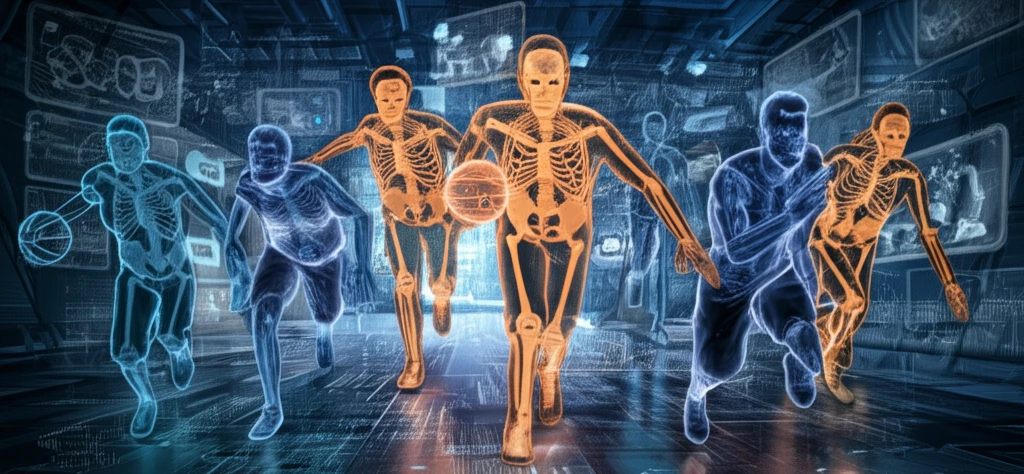
Markerless Motion Capture in Sports: Digital skeletons overlaid on athletes showcasing AI-powered movement analysis.

Move Like a Pro: How Markerless Motion Capture is Revolutionizing Sports Analysis

"Ditch the Suits, Keep the Moves: Discover how AI-powered motion capture brings cutting-edge performance analysis to athletes of all levels."


Motion capture technology has long been a staple in the gaming and film industries, bringing digital characters to life with realistic movements. However, the same technology is now making waves in a field with very real stakes: sports. Markerless motion capture, in particular, is emerging as a game-changer, offering athletes and coaches a powerful new way to analyze and improve performance.

Traditional motion capture relies on performers wearing special suits covered in markers. These markers are tracked by multiple cameras, creating a detailed record of movement. But this setup can be expensive, time-consuming, and restrictive, potentially affecting the athlete's natural movements. Markerless motion capture offers a streamlined alternative.

By using depth-sensing cameras and sophisticated algorithms, markerless systems can track an athlete's movements without any special equipment. This opens up a range of possibilities, from analyzing technique and identifying areas for improvement to preventing injuries and optimizing training programs. With the rise of affordable and accessible technology like the Microsoft Kinect and advancements in AI, markerless motion capture is poised to transform the world of sports.

Why Markerless Motion Capture is a Game Changer for Athletes

Markerless Motion Capture in Sports: Digital skeletons overlaid on athletes showcasing AI-powered movement analysis.

The core principle behind markerless motion capture in sports is simple: capture movement data without encumbering the athlete. Instead of suits and markers, these systems use cameras (often depth-sensing cameras like those found in the Microsoft Kinect) to record an athlete's movements in 3D. This data is then processed by sophisticated algorithms to create a digital skeleton, tracking joint angles, body position, and other key metrics.

This approach offers several advantages over traditional marker-based systems:

  • Unrestricted Movement: Athletes can move freely and naturally without the encumbrance of a motion capture suit.
  • Accessibility: Markerless systems are becoming increasingly affordable and accessible, making them available to a wider range of athletes and coaches.
  • Ease of Use: Setup and data collection are typically much simpler than with marker-based systems.
  • Real-time Feedback: Many systems provide real-time feedback, allowing athletes to adjust their movements on the spot.
These benefits translate into concrete improvements in training and performance. By analyzing motion data, coaches can identify subtle flaws in technique that are invisible to the naked eye. Athletes can then use this information to refine their movements, improve efficiency, and reduce the risk of injury.

The Future of Motion is Suit-Free

Markerless motion capture is more than just a technological novelty; it's a fundamental shift in how athletes and coaches approach training and performance analysis. By providing accurate, accessible, and unobtrusive data on human movement, this technology is empowering athletes to reach their full potential. As the technology continues to evolve and become more integrated into training regimens, we can expect to see even more impressive results on the field, court, and track.

About this Article -

This article was crafted using a human-AI hybrid and collaborative approach. AI assisted our team with initial drafting, research insights, identifying key questions, and image generation. Our human editors guided topic selection, defined the angle, structured the content, ensured factual accuracy and relevance, refined the tone, and conducted thorough editing to deliver helpful, high-quality information.See our About page for more information.

This article is based on research published under:

DOI-LINK: 10.5121/ijcga.2014.4103, Alternate LINK

Title: Animation Of 3D Human Model Using Markerless Motion Capture Applied To Sports

Subject: Automotive Engineering

Journal: International Journal of Computer Graphics & Animation

Publisher: Academy and Industry Research Collaboration Center (AIRCC)

Authors: Ashish Shingade, Archana Ghotkar

Published: 2014-01-31

Everything You Need To Know

1

What is markerless motion capture and how does it differ from traditional motion capture methods?

Markerless motion capture is a technology used to track movement without the need for special suits or markers attached to the athlete. Instead, it uses depth-sensing cameras, similar to those in a Microsoft Kinect, and sophisticated algorithms to record and analyze movements in 3D. Traditional motion capture relies on athletes wearing suits covered in markers, which are tracked by multiple cameras to create a detailed record of movement. Markerless systems offer a more streamlined, less restrictive alternative, allowing for more natural movement and easier data collection.

2

What are the key benefits of using markerless motion capture in sports training and analysis?

The key benefits of markerless motion capture include unrestricted movement, as athletes are not encumbered by suits or markers, and increased accessibility due to the lower cost and simpler setup compared to traditional systems. It also provides ease of use, with quicker data collection, and real-time feedback, enabling athletes to adjust their movements immediately. These advantages lead to improved technique, enhanced efficiency, and reduced risk of injury, helping athletes reach their full potential.

3

How does markerless motion capture technology contribute to injury prevention in sports?

Markerless motion capture aids in injury prevention by enabling coaches and trainers to identify subtle flaws in an athlete's technique that may not be visible to the naked eye. By analyzing motion data, they can pinpoint areas where an athlete is at risk of injury due to improper form or strain. This allows for targeted interventions to correct these issues, optimize movement patterns, and ultimately reduce the likelihood of injuries during training and competition. Additionally it allows for training programs to be optimized for improved biomechanics.

4

What impact do advancements in artificial intelligence (AI) have on the effectiveness of markerless motion capture systems?

Advancements in AI significantly enhance the effectiveness of markerless motion capture systems. AI algorithms are crucial for processing the data captured by depth-sensing cameras, creating digital skeletons, and tracking joint angles and body positions accurately. As AI technology improves, these algorithms become more sophisticated, enabling markerless systems to provide more detailed and precise analysis of an athlete's movements. This leads to more accurate feedback and better-informed training decisions, ultimately maximizing the benefits of markerless motion capture in sports performance.

5

Beyond elite athletes, how is the increasing accessibility of markerless motion capture impacting sports at all levels?

The increasing accessibility of markerless motion capture is democratizing sports analysis, making it available to a wider range of athletes and coaches beyond the elite level. With more affordable and user-friendly systems, such as those utilizing Microsoft Kinect, even amateur and youth sports programs can leverage motion capture technology to improve training and performance. This allows for earlier identification of technical flaws, personalized training plans, and a greater focus on injury prevention, benefiting athletes of all skill levels and promoting a more data-driven approach to sports development from the ground up. This accessibility allows more athletes to optimize their movements.

Newsletter Subscribe

Subscribe to get the latest articles and insights directly in your inbox.