
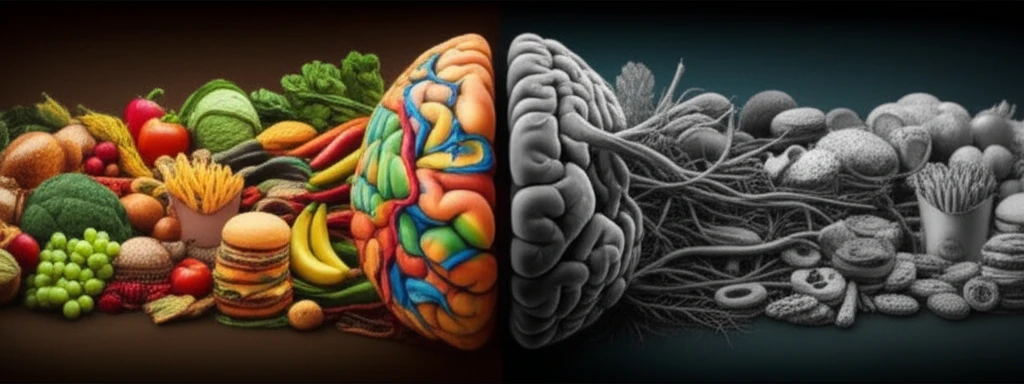
Surreal illustration of brain intertwined with healthy and unhealthy food, representing the impact of diet on mental health.

Mood Food: How Diet Inflammation Affects Your Mental Health

"New research reveals a link between pro-inflammatory diets and increased risk of depression and anxiety. Could what you eat be impacting your mental well-being?"


In today's fast-paced world, mental health is just as crucial as physical health. While many factors contribute to our emotional well-being, emerging research highlights a surprising connection: our diet. Specifically, the balance of inflammation in our bodies, influenced by what we eat, can significantly impact our mood and susceptibility to mental health disorders.

A recent study published in Clinical Nutrition investigated the relationship between the Dietary Inflammatory Index (DII) – a measure of how pro-inflammatory or anti-inflammatory a diet is – and the prevalence of psychological disorders like depression, anxiety, and psychological distress. The findings reveal a compelling link between a pro-inflammatory diet and a higher risk of these conditions.

This article dives into the key findings of this research, translating complex scientific terms into actionable insights you can use to understand how your dietary choices might be affecting your mental state and what you can do to foster a happier, healthier mind.

The Inflammation-Depression Connection: What the Study Revealed

Surreal illustration of brain intertwined with healthy and unhealthy food, representing the impact of diet on mental health.

The study, conducted on a large sample of Iranian adults, assessed dietary habits using a detailed questionnaire and measured psychological well-being using standard scales for anxiety, depression, and general psychological distress. The researchers then analyzed the data to see how DII scores correlated with mental health outcomes.

Here's what they found:

  • Higher DII Scores, Higher Risk: Participants with diets classified as more pro-inflammatory (higher DII scores) were significantly more likely to report symptoms of depression, anxiety, and psychological distress.
  • Quantifying the Risk: Individuals in the highest quintile of DII scores had approximately 70-85% greater odds of experiencing depression, anxiety or psychological distress compared to those in the lowest quintile, even after accounting for other factors like age, sex, and lifestyle.
  • Gender Differences: While the overall trend held true for both men and women, women showed a stronger association between pro-inflammatory diets and depression.
These findings align with a growing body of evidence suggesting that chronic low-grade inflammation in the body can disrupt brain function, neurotransmitter balance, and overall mental well-being. A pro-inflammatory diet, rich in processed foods, sugary drinks, and unhealthy fats, fuels this inflammation, potentially paving the way for mood disorders.

Taking Control of Your Diet, Taking Control of Your Mood

The research underscores the powerful link between diet and mental health. By reducing pro-inflammatory foods and incorporating anti-inflammatory choices, we can influence our mood and psychological state. Prioritizing a balanced diet can provide a stable foundation for mental well-being.

Here are some steps you can take right now:

Make small, sustainable changes to your diet, focusing on incorporating more whole foods and reducing processed foods. Observe how these changes impact your mood and energy levels. Mental well-being starts with you.

About this Article -

This article was crafted using a human-AI hybrid and collaborative approach. AI assisted our team with initial drafting, research insights, identifying key questions, and image generation. Our human editors guided topic selection, defined the angle, structured the content, ensured factual accuracy and relevance, refined the tone, and conducted thorough editing to deliver helpful, high-quality information.See our About page for more information.

This article is based on research published under:

DOI-LINK: 10.1016/j.clnu.2018.10.015, Alternate LINK

Title: Association Between Dietary Inflammatory Index And Psychological Profile In Adults

Subject: Critical Care and Intensive Care Medicine

Journal: Clinical Nutrition

Publisher: Elsevier BV

Authors: Asma Salari-Moghaddam, Ammar Hassanzadeh Keshteli, Hamid Afshar, Ahmad Esmaillzadeh, Peyman Adibi

Published: 2019-10-01

Everything You Need To Know

1

What is the Dietary Inflammatory Index (DII), and how does it relate to mental health?

The Dietary Inflammatory Index, or DII, is a tool used to measure how inflammatory or anti-inflammatory a person's diet is. A higher DII score indicates a more pro-inflammatory diet, which research suggests is linked to a higher risk of psychological disorders. This is determined by analyzing the consumption of various foods and their known inflammatory effects on the body.

2

How does a pro-inflammatory diet impact the risk of developing depression and anxiety, according to recent studies?

Research indicates that a pro-inflammatory diet, characterized by high DII scores, is associated with an increased risk of depression, anxiety, and general psychological distress. Specifically, individuals with diets in the highest quintile of DII scores showed a significantly higher likelihood (70-85%) of experiencing these mental health issues compared to those with the lowest DII scores. The study does not quantify how much improvement in mental health someone can experience from a specific DII reduction, but the trend indicates reducing DII scores will likely improve mental health outcomes.

3

Did the study reveal any gender-specific differences in the link between pro-inflammatory diets and mental health?

The study revealed that women exhibited a stronger association between pro-inflammatory diets and depression compared to men. While both genders were affected by high DII scores, the impact on women's mental health, specifically regarding depression, was more pronounced. The research doesn't explain why this gender difference exists, but hormonal and physiological differences could be contributing factors.

4

How does a pro-inflammatory diet lead to increased risks of depression and anxiety?

A pro-inflammatory diet can negatively impact mental health by promoting chronic low-grade inflammation in the body. This inflammation can disrupt brain function, neurotransmitter balance, and overall mental well-being, potentially leading to mood disorders. The study doesn't describe specific mechanisms of this process. However, conditions like increased oxidative stress and the passage of inflammatory molecules across the blood-brain barrier are likely to play a role.

5

What steps can I take to reduce inflammation through my diet and improve my mood?

To shift from a pro-inflammatory diet to an anti-inflammatory one, focus on reducing the consumption of processed foods, sugary drinks, and unhealthy fats, as these contribute to higher DII scores. Simultaneously, incorporate anti-inflammatory foods like fruits, vegetables, whole grains, and healthy fats (such as those found in fatty fish and olive oil). Adopting a balanced diet will influence the DII score and provide a stable foundation for mental well-being. While the research highlights dietary adjustments, it does not address other lifestyle changes that may lower inflammation, such as exercise and stress reduction techniques.

Newsletter Subscribe

Subscribe to get the latest articles and insights directly in your inbox.