
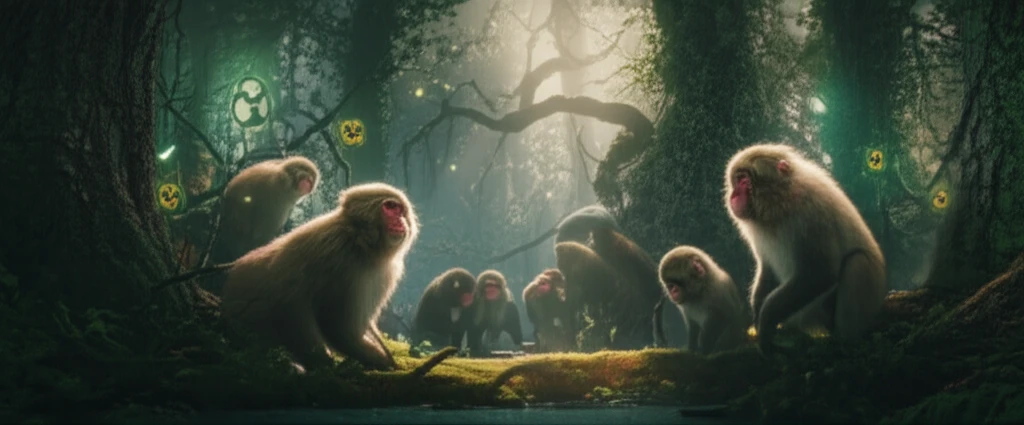
Japanese macaques in a serene forest setting, symbolizing conservation efforts amidst environmental challenges.

Monkey Business: Conservation Efforts and Ethical Challenges in Primate Research

"Exploring initiatives to protect Japanese macaques and address invasive species, while navigating ethical considerations in scientific research."


The world of primate conservation is fraught with complex challenges, ranging from habitat loss and invasive species to ethical considerations in scientific research. In Japan, dedicated researchers and conservationists are working tirelessly to protect native species like the Japanese macaque (Macaca fuscata), also known as the snow monkey, while grappling with the ecological impacts of introduced species.

This article delves into recent initiatives aimed at understanding and mitigating these challenges, drawing from reports by the Conservation and Welfare Committee of the Japan Primatological Society. We'll explore efforts to assess the impact of radiation on wild monkeys after the Fukushima disaster, examine strategies for managing invasive macaque populations, and consider the ethical dimensions of using primates in research.

Our journey will take us from the radiation-affected landscapes of Fukushima to the conflict zones between native and invasive macaque populations, and finally, into the laboratories where researchers are striving to balance scientific advancement with animal welfare. Join us as we uncover the latest developments in primate conservation and the ongoing debates that shape this critical field.

Addressing the Impact of the Great East Japan Earthquake

Japanese macaques in a serene forest setting, symbolizing conservation efforts amidst environmental challenges.

In the wake of the devastating Great East Japan Earthquake of 2011, concerns arose regarding the potential impact of radiation exposure on wildlife populations, particularly the native Japanese macaques. In response, the Japan Primatological Society (JPS) took a proactive stance, issuing a statement addressing the issue and advocating for further research.

Following a resolution passed at the 32nd Annual Meeting of the JPS in Fukushima in July 2017, the Conservation and Welfare Committee has been actively working to address the concerns raised about the effects of radiation on wild Japanese macaques. This resolution served as a call to action, urging researchers and policymakers to investigate the potential long-term consequences of radiation exposure on these animals and their habitat.

  • Collaborative Efforts: The committee is currently collaborating with relevant academic societies to formulate a formal request to government agencies.
  • Ongoing Discussions: The content of the request is still under discussion to ensure it accurately reflects the latest scientific understanding and the most pressing needs of macaque conservation.
The JPS's commitment to addressing the impact of the earthquake underscores the importance of scientific societies in advocating for wildlife conservation and promoting responsible environmental stewardship in the face of unforeseen challenges. By working with government agencies and other stakeholders, the JPS hopes to contribute to a comprehensive understanding of the long-term effects of the disaster on Japanese macaque populations.

The Future of Primate Conservation in Japan

As Japan continues to grapple with the challenges of invasive species, radiation exposure, and ethical research practices, the work of the Japan Primatological Society and its Conservation and Welfare Committee remains critical. By fostering collaboration, promoting responsible research, and advocating for sound conservation policies, the JPS is helping to ensure a future where both humans and primates can thrive in harmony.

About this Article -

This article was crafted using a human-AI hybrid and collaborative approach. AI assisted our team with initial drafting, research insights, identifying key questions, and image generation. Our human editors guided topic selection, defined the angle, structured the content, ensured factual accuracy and relevance, refined the tone, and conducted thorough editing to deliver helpful, high-quality information.See our About page for more information.

Everything You Need To Know

1

What specific actions has the Japan Primatological Society (JPS) taken in response to the Fukushima disaster's potential impact on Japanese macaques?

Following the Great East Japan Earthquake in 2011, the Japan Primatological Society (JPS) issued a statement addressing concerns about radiation exposure on Japanese macaques. The Conservation and Welfare Committee, formed after a resolution at the 32nd Annual Meeting in Fukushima, is actively working to investigate potential long-term consequences. This involves collaborative efforts with other academic societies to formulate a formal request to government agencies, with ongoing discussions to ensure the request accurately reflects the latest scientific understanding and the most pressing needs of macaque conservation.

2

How is the Japan Primatological Society (JPS) addressing the challenges of invasive species in the context of Japanese macaque conservation?

While the provided text focuses primarily on the impact of radiation and ethical considerations, it indirectly highlights the broader challenges of invasive species which is a central theme in primate conservation. The JPS, through its Conservation and Welfare Committee, fosters collaboration and promotes responsible research practices. This suggests the JPS likely supports efforts to manage invasive species, although specific strategies for invasive macaque populations are not detailed in the text. Addressing invasive species is a critical part of overall conservation efforts to ensure the well-being of the Japanese macaque.

3

What is the role of the Conservation and Welfare Committee of the Japan Primatological Society (JPS) in primate conservation efforts?

The Conservation and Welfare Committee of the Japan Primatological Society (JPS) plays a crucial role in primate conservation. Its work includes assessing the impact of events like the Fukushima disaster on Japanese macaques. The committee actively investigates the potential long-term effects of radiation exposure on Japanese macaques and their habitat. It also formulates requests to government agencies to address these concerns. The committee's efforts are vital for advocating for wildlife conservation, promoting responsible environmental stewardship, and ensuring a future where both humans and primates can thrive.

4

What are some of the ethical considerations involved in primate research, as addressed by the Japan Primatological Society (JPS)?

The provided text mentions ethical considerations as a broad challenge in primate research. While specific details about the ethical considerations addressed by the Japan Primatological Society (JPS) are not elaborated upon in the text, the text underscores the importance of balancing scientific advancement with animal welfare. This suggests that the JPS likely considers issues such as the ethical treatment of primates in research, the justification for using primates in experiments, and the minimization of any harm to the animals involved. Further research may involve examination of the specific guidelines and protocols that the JPS follows to ensure ethical practices in research involving Japanese macaques and other primates.

5

How does the Japan Primatological Society (JPS) contribute to the long-term well-being of Japanese macaques and their environment?

The Japan Primatological Society (JPS) significantly contributes to the long-term well-being of Japanese macaques and their environment by fostering collaboration, promoting responsible research practices, and advocating for sound conservation policies. Specifically, the JPS's Conservation and Welfare Committee actively investigates the potential impacts of radiation exposure on the Japanese macaques. The JPS also aims to promote a future where both humans and primates can live in harmony, and is working with government agencies and other stakeholders to ensure a comprehensive understanding of the long-term effects of the disaster on Japanese macaque populations, further solidifying their commitment to conservation efforts.

Newsletter Subscribe

Subscribe to get the latest articles and insights directly in your inbox.