
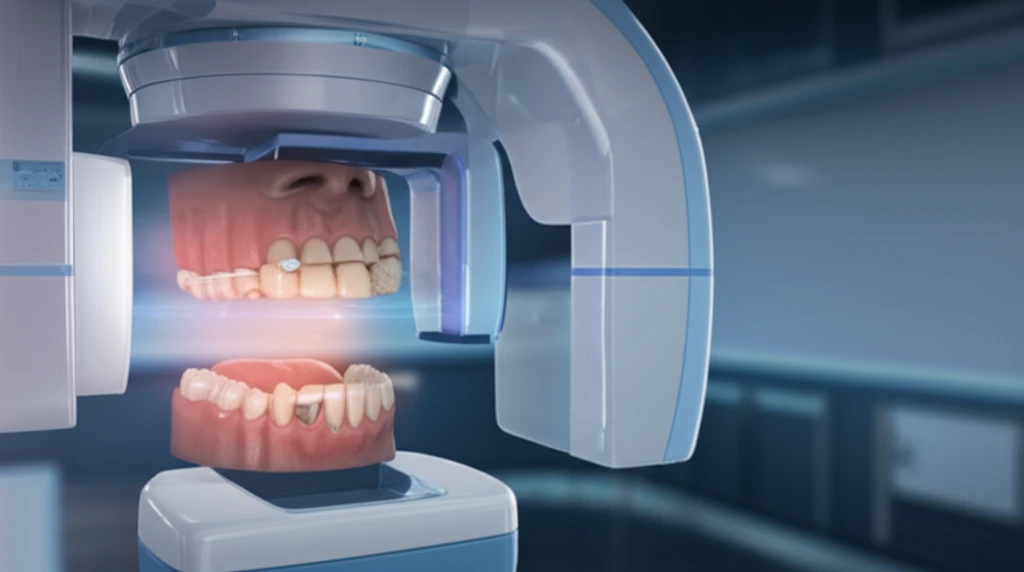
Mixed Dentition Analysis: Is Advanced Tomography Worth It?

"Cone-beam computed tomography (CBCT) offers new precision in assessing children's teeth, but how does it compare to traditional methods?"
For parents and orthodontists alike, ensuring proper dental development in children is a top priority. Malocclusions, or misalignments of teeth, often stem from imbalances between tooth size and the available space in the jaw. While some crowding is normal during the mixed dentition phase—when children have both baby and permanent teeth—it's crucial to monitor development to identify potential issues early.
Traditional methods for mixed dentition analysis, such as those developed by Moyers and Tanaka-Johnston, have long been used to estimate the size of unerupted permanent teeth. These methods rely on tables, formulas, and standard radiographs to predict tooth size and arch length. However, with advancements in technology, cone-beam computed tomography (CBCT) has emerged as a potential game-changer in orthodontic diagnostics.
This article will explore a study evaluating the effectiveness of CBCT in mixed dentition analysis, comparing its accuracy to traditional radiographic methods. By understanding the strengths and limitations of each approach, parents and professionals can make informed decisions about the best course of action for achieving optimal dental health for children.
CBCT vs. Traditional Radiography: What the Research Reveals
A research study published in the Dental Press Journal of Orthodontics sought to compare the accuracy of CBCT to traditional methods for mixed dentition analysis. The study aimed to determine if CBCT could offer a more precise assessment of intra-osseous (unerupted) tooth diameters compared to established techniques. Researchers evaluated measurements obtained from plaster cast models, traditional radiographs, and CBCT scans, using statistical analysis to compare the results.
- Moyers' Analysis: A method using tables to predict the size of unerupted canines and premolars based on the measurements of erupted lower incisors.
- Tanaka-Johnston Formula: A formula-based approach to estimating the size of unerupted teeth, also relying on the measurements of erupted lower incisors.
- 45-Degree Oblique Radiographs: A type of X-ray that provides a clearer, unilateral view of posterior teeth.
Making Informed Decisions: The Future of Mixed Dentition Analysis
CBCT offers several advantages, including the ability to observe and measure intra-osseous teeth individually without superimposition of anatomical structures. It also allows for viewing teeth from different perspectives, providing a comprehensive assessment of tooth development. However, the availability and cost of CBCT technology should be considered when making diagnostic decisions. Ultimately, a combination of clinical expertise, thorough evaluation, and appropriate imaging techniques will lead to the best possible outcomes for patients undergoing mixed dentition analysis. As technology advances, integrating CBCT where beneficial can help orthodontists provide more precise and individualized care.