
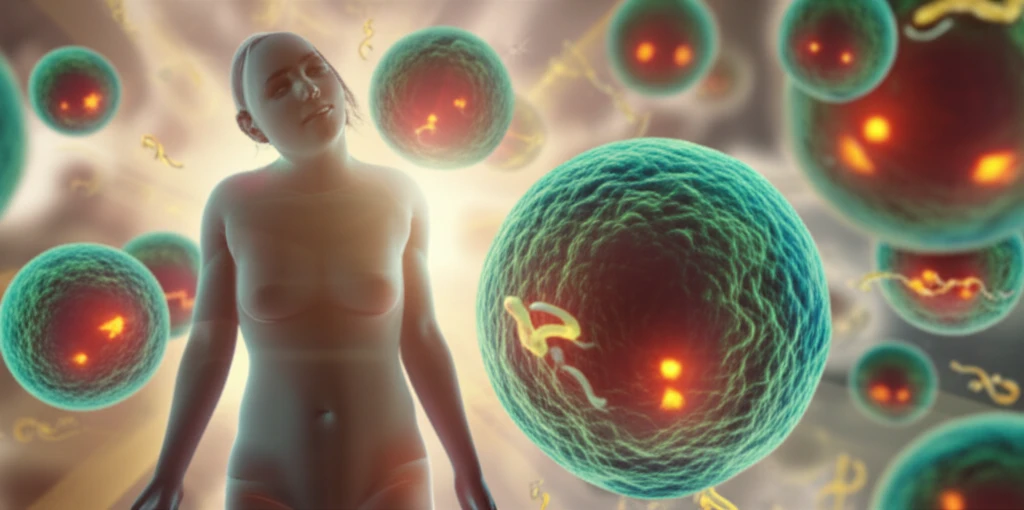
MitoQ10: A Promising Therapy for PCOS-Related Insulin Resistance?

"Discover how this targeted antioxidant could revolutionize PCOS treatment by addressing mitochondrial dysfunction and oxidative stress."
Polycystic ovary syndrome (PCOS) is a prevalent endocrine disorder affecting numerous women worldwide. Its complex etiology and often unsatisfactory clinical treatments make it a focal point for ongoing research. Given the ethical constraints of human studies, animal models that accurately replicate the key features of PCOS, particularly insulin resistance (IR), are invaluable for advancing our understanding and treatment of this syndrome.
Previous studies have indicated that mitochondrial dysfunction, stemming from mutations in mitochondrial DNA (mtDNA), plays a significant role in the development of PCOS with insulin resistance (PCOS-IR). Oxidative stress, an imbalance between the production of free radicals and the body's ability to neutralize them, further exacerbates the condition. This understanding has led to a hypothesis that limiting oxidative stress and mitigating mitochondrial damage could offer a promising therapeutic avenue for PCOS-IR.
In light of these insights, recent research has focused on the therapeutic potential of MitoQ10, a mitochondria-targeted antioxidant, in the context of PCOS-IR. The study delved into how MitoQ10 impacts ovarian morphology and various endocrine and reproductive parameters, providing crucial insights into its efficacy and mechanisms of action. This article explores these findings, shedding light on MitoQ10's role in potentially revolutionizing PCOS-IR treatment.
How MitoQ10 Targets Mitochondrial Dysfunction in PCOS-IR
The study's methodology involved creating a PCOS-IR model in rats by administering testosterone propionate and a high-fat diet, effectively mirroring the hormonal and metabolic imbalances observed in human PCOS. Thirty female Sprague-Dawley rats were divided into three groups: a control group, a PCOS-IR model group, and a MitoQ10 treatment group. The MitoQ10 group received the antioxidant in their drinking water following the establishment of the PCOS-IR model.
- Histopathology: Ovarian morphological changes were analyzed to observe the structural impacts of MitoQ10.
- ELISA Analysis: Endocrine and reproductive-related hormones were quantified using enzyme-linked immunosorbent assays (ELISA).
- Western Blot Analysis: Expression levels of key proteins involved in apoptosis (programmed cell death) were examined to understand MitoQ10’s impact on cellular survival pathways.
- Oxidative Stress Markers: Levels of malondialdehyde (MDA), total antioxidant capacity (T-AOC), superoxide dismutase (SOD), and glutathione (GSH) were measured to assess oxidative stress.
- Mitochondrial Function: Parameters such as ATP production, mitochondrial membrane potential (MMP), and reactive oxygen species (ROS) levels were evaluated.
The Promise of MitoQ10 for Future PCOS Therapies
The findings from this study suggest that MitoQ10 holds significant promise as a therapeutic agent for PCOS-IR. By targeting mitochondrial dysfunction and reducing oxidative stress, MitoQ10 can reverse insulin resistance and improve reproductive health in animal models. These results pave the way for future research and clinical trials to explore the potential of MitoQ10 in managing PCOS in humans, offering a new avenue for treatment and improved quality of life for affected women.