
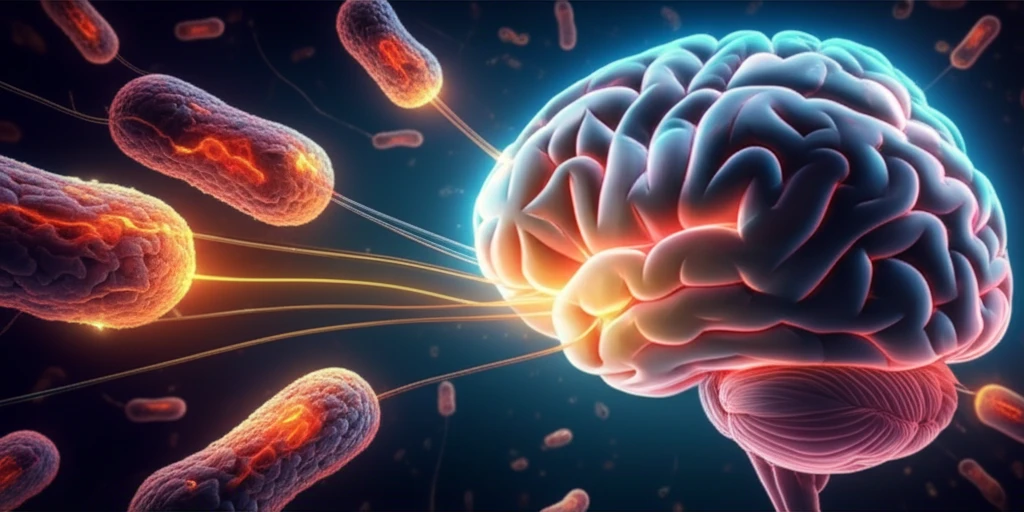
Mitochondria with glowing pathways leading to a brain

Mitochondria: The Unsung Heroes in the Fight Against Glioma

"Unlocking the Secrets of Cellular Powerhouses to Revolutionize Brain Cancer Treatment"


Cancer, a disease rooted in the accumulation of both nuclear and cytoplasmic abnormalities, thrives on exploiting these irregularities to express what's known as the 'tumourigenic phenotype.' Among the many forms of cancer, gliomas stand out as the most frequently diagnosed tumours of the central nervous system in adults. For years, scientists have been working to unravel the mysteries of cancer cell metabolism, particularly the role of mitochondria, integral to cellular function.

While the conventional knowledge emphasizes the importance of glycolysis (the breakdown of glucose) in cancer cells, recent research highlights the significance of mitochondria in the tumourigenic phenotype. Mitochondria, often hailed as the powerhouses of the cell, play a pivotal role in apoptosis, or programmed cell death. This process is crucial in preventing the uncontrolled growth of cells, and its disruption is a hallmark of cancer.

Now, researchers are exploring new approaches to treat gliomas and other cancers by focusing on mitochondria. By understanding how these organelles contribute to the tumourigenic phenotype and how their functions are altered in cancer cells, scientists hope to develop effective treatment regimens that target the unique vulnerabilities of cancer cells while sparing healthy tissues.

How Does Mitochondrial DNA Change in Gliomas?

Mitochondria with glowing pathways leading to a brain

Cancer’s development is intricately tied to DNA and cytoplasmic abnormalities that allow for the expression of aggressive traits, such as rapid proliferation and resistance to cell death. Gene amplification, where specific genes are copied excessively, is a well-known mechanism in cancer. Cytogenetic and molecular studies suggest that this phenomenon is an intermediate step in a cell's progression toward becoming fully neoplastic.

Specifically, scientists have observed significant alterations in mtDNA copy number in gliomas. Earlier investigations revealed that cancer cells frequently show an increased amount of mtDNA. What makes these findings particularly significant is that mtDNA amplification appears to be an early event in the development of cancer, contrasting with nuclear DNA amplification, which is generally considered an intermediate step.

  • Amplification: Gliomas exhibit an early amplification of mtDNA, suggesting it is a crucial event in tumour development.
  • Deletions: Certain electron transport chain components have been reported to be deleted in gliomas.
  • Mutations: Variations in the polycytosine tract of mtDNA have been observed, with tumor-associated changes occurring via similar mechanisms as inherited polymorphisms.
These discoveries highlight the complex interplay between nuclear and mitochondrial DNA in cancer and offer opportunities for targeted therapeutic interventions. By unraveling the mechanisms driving mtDNA alterations, researchers hope to develop strategies to selectively disrupt cancer cell metabolism and halt tumour progression.

Targeting Mitochondria: A Promising Therapeutic Approach

Given the critical role mitochondria play in cancer, scientists are exploring ways to target these organelles with novel therapies. Previous research indicates that disrupting mitochondrial function can selectively kill cancer cells while sparing healthy cells. Researchers are developing innovative treatments that target mitochondrial vulnerabilities, potentially revolutionizing cancer therapy. By selectively targeting mitochondria, these therapies aim to disrupt cancer cell metabolism, induce apoptosis, and ultimately improve patient outcomes.

About this Article -

This article was crafted using a human-AI hybrid and collaborative approach. AI assisted our team with initial drafting, research insights, identifying key questions, and image generation. Our human editors guided topic selection, defined the angle, structured the content, ensured factual accuracy and relevance, refined the tone, and conducted thorough editing to deliver helpful, high-quality information.See our About page for more information.

This article is based on research published under:

DOI-LINK: 10.3892/ijmm.2010.579, Alternate LINK

Title: The Importance Of Mitochondria In The Tumourigenic Phenotype: Gliomas As The Paradigm (Review)

Subject: Genetics

Journal: International Journal of Molecular Medicine

Publisher: Spandidos Publications

Authors: Liang

Published: 2011-02-01

Everything You Need To Know

1

What are mitochondria, and why are they important in the context of gliomas?

Mitochondria are crucial components within cells, often referred to as the 'powerhouses.' They are vital for cellular function, particularly in processes like apoptosis, or programmed cell death. In the context of gliomas, understanding the role of mitochondria is essential because their dysfunction is closely linked to the development and progression of these brain tumors. Their contribution to the 'tumourigenic phenotype' underscores their importance as potential therapeutic targets.

2

What is the significance of studying the role of mitochondria in gliomas?

Gliomas, which are the most common brain tumors in adults, are characterized by their ability to exploit cellular irregularities. The 'tumourigenic phenotype' is a set of traits that allows cancer cells to grow uncontrollably. Scientists are focusing on mitochondria to understand how they contribute to this phenotype. Alterations in mitochondrial function, like disruption of apoptosis, are hallmarks of cancer and offer potential targets for treatment.

3

How does mitochondrial DNA change in gliomas?

Mitochondrial DNA (mtDNA) changes in gliomas involve several key alterations. Amplification, or an increase in mtDNA copy number, is an early event. There are also deletions of certain components and mutations in mtDNA. These changes are significant because they offer insights into the mechanisms driving tumor development. They also open avenues for targeted therapies that can disrupt cancer cell metabolism.

4

Why is targeting mitochondria a promising therapeutic approach for gliomas?

Targeting mitochondria offers a promising therapeutic approach. Research indicates that disrupting mitochondrial function can selectively kill cancer cells while sparing healthy cells. Scientists are developing new treatments aimed at the vulnerabilities of mitochondria. These therapies aim to disrupt the 'tumourigenic phenotype', induce apoptosis, and improve patient outcomes by selectively attacking cancer cells.

5

What is the role of apoptosis, and why is it relevant in the context of mitochondrial function and cancer treatment?

Apoptosis, or programmed cell death, is a critical function of mitochondria. When cells are damaged or become abnormal, mitochondria initiate apoptosis to eliminate them, preventing uncontrolled cell growth. In cancer, this process is often disrupted, allowing cancer cells to proliferate unchecked. Therefore, therapies that can restore or induce apoptosis by targeting mitochondria are potentially effective in treating gliomas.

Newsletter Subscribe

Subscribe to get the latest articles and insights directly in your inbox.