
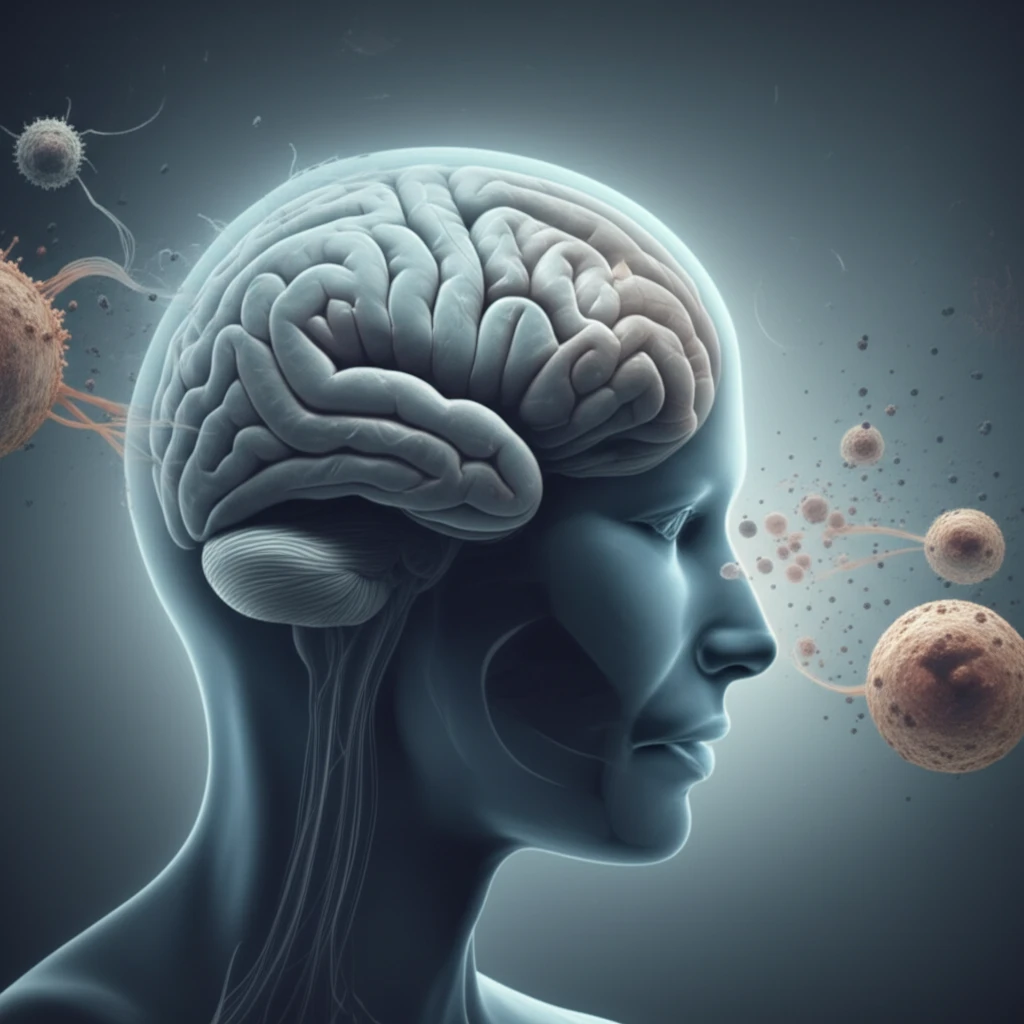
A surreal illustration showing the connection between mental health and prostate cancer, representing the study's findings on depression and cancer progression.

Mind-Body Connection: Can Depression Fuel Prostate Cancer?

"New research unveils how psychological stress triggers biological pathways that may accelerate prostate cancer growth and explores novel strategies for intervention."


Prostate cancer is a leading health concern for men worldwide. While genetics and lifestyle factors have long been recognized as key players, emerging research is shedding light on the unexpected influence of psychological well-being. Studies suggest a significant correlation between mental health and prostate cancer progression, urging both patients and healthcare providers to consider the mind-body connection in comprehensive cancer care.

Depression, a prevalent mental health disorder, can trigger a cascade of physiological changes within the body. Chronic stress and emotional distress have been shown to impact the immune system, hormonal balance, and even cellular growth. Understanding how these depression-related changes interact with cancer development is crucial for devising more effective treatment strategies.

Recent studies have revealed a specific pathway by which depression may fuel prostate cancer growth. This involves the increased secretion of neuropeptide Y, a molecule released under stress, which promotes the recruitment of myeloid cells, a type of immune cell, to the tumor site. These findings open new avenues for therapeutic intervention, targeting both the mental and physical aspects of the disease.

How Does Depression Promote Prostate Cancer?

A surreal illustration showing the connection between mental health and prostate cancer, representing the study's findings on depression and cancer progression.

A new study published in "Clinical Cancer Research" has uncovered a concerning link between depression and prostate cancer. Researchers found that psychological stress can stimulate the secretion of neuropeptide Y (NPY), a signaling molecule that appears to promote cancer growth. This process involves a complex interplay between the nervous system, immune cells, and tumor cells.

The research team's experiments with mouse models revealed that stressed mice exhibited increased levels of NPY, which in turn recruited myeloid-derived suppressor cells (MDSCs) to the prostate tumor microenvironment. These MDSCs, instead of fighting the cancer, suppress the immune system's ability to attack the tumor, creating a favorable environment for cancer cells to thrive.

Here’s a breakdown of the key steps in this process:
  • Stress and NPY: Psychological stress triggers the release of norepinephrine (NE), a neurotransmitter, which then stimulates prostate cancer cells to secrete NPY.
  • Myeloid Cell Recruitment: NPY acts as a signal, attracting MDSCs to the tumor site.
  • Immune Suppression: Once at the tumor, MDSCs suppress the activity of T cells, crucial immune cells that would normally target and destroy cancer cells.
  • Cancer Growth: With the immune system suppressed, prostate cancer cells proliferate more readily, leading to accelerated tumor growth.
Further analyses of human prostate cancer samples revealed a similar pattern. Patients with higher scores for psychological depression also had increased levels of NPY and MDSCs in their tumors, suggesting that the findings in mice are relevant to human disease.

What Can You Do?

While the link between depression and prostate cancer may seem daunting, it also opens doors to new treatment strategies. The study suggests that targeting NPY signaling or blocking the recruitment of MDSCs could potentially slow down cancer progression in depressed patients. Additionally, managing mental health through therapy, medication, and lifestyle changes may offer a holistic approach to cancer care.

About this Article -

This article was crafted using a human-AI hybrid and collaborative approach. AI assisted our team with initial drafting, research insights, identifying key questions, and image generation. Our human editors guided topic selection, defined the angle, structured the content, ensured factual accuracy and relevance, refined the tone, and conducted thorough editing to deliver helpful, high-quality information.See our About page for more information.

Everything You Need To Know

1

How does feeling depressed affect prostate cancer?

Psychological depression can influence prostate cancer progression through a specific biological pathway. Stress triggers the release of norepinephrine, which stimulates prostate cancer cells to secrete neuropeptide Y (NPY). NPY then recruits myeloid-derived suppressor cells (MDSCs) to the tumor site. These MDSCs suppress the activity of T cells, which are crucial immune cells that normally target and destroy cancer cells. This immune suppression creates a favorable environment for prostate cancer cells to proliferate, leading to accelerated tumor growth.

2

What is Neuropeptide Y (NPY), and why is it important in prostate cancer?

Neuropeptide Y (NPY) is a signaling molecule released under stress. In the context of prostate cancer, NPY plays a significant role by attracting myeloid-derived suppressor cells (MDSCs) to the tumor site. This recruitment suppresses the immune system's ability to attack the tumor, promoting cancer growth. High levels of NPY in human prostate cancer samples correlate with increased psychological depression scores, suggesting its importance in the connection between mental health and cancer progression.

3

What are Myeloid-Derived Suppressor Cells (MDSCs), and how do they relate to prostate cancer?

Myeloid-derived suppressor cells (MDSCs) are a type of immune cell. Instead of fighting the cancer, they suppress the activity of T cells. T cells are crucial immune cells that would normally target and destroy cancer cells. By suppressing T cell activity, MDSCs create a favorable environment for cancer cells to thrive, leading to accelerated tumor growth. This process highlights the complex interplay between the nervous system, immune cells, and tumor cells in the progression of prostate cancer.

4

Based on these findings, what actions can someone take to address the link between depression and prostate cancer?

To potentially slow down cancer progression, it is suggested that targeting neuropeptide Y (NPY) signaling or blocking the recruitment of myeloid-derived suppressor cells (MDSCs) could be effective. Simultaneously, managing mental health through therapy, medication, and lifestyle changes may offer a holistic approach to cancer care. These strategies address both the mental and physical aspects of the disease, aiming to disrupt the pathway by which depression fuels prostate cancer growth.

5

Does this research mean that depression is the only thing that causes prostate cancer to get worse?

The research indicates a link between mental health and prostate cancer, but genetics and lifestyle factors still play key roles. While the study focuses on the impact of psychological stress and depression on cancer progression, it doesn't negate the significance of genetic predispositions, diet, exercise, and other lifestyle choices in the development and management of prostate cancer. Addressing both mental and physical well-being is essential for comprehensive cancer care.

Newsletter Subscribe

Subscribe to get the latest articles and insights directly in your inbox.