
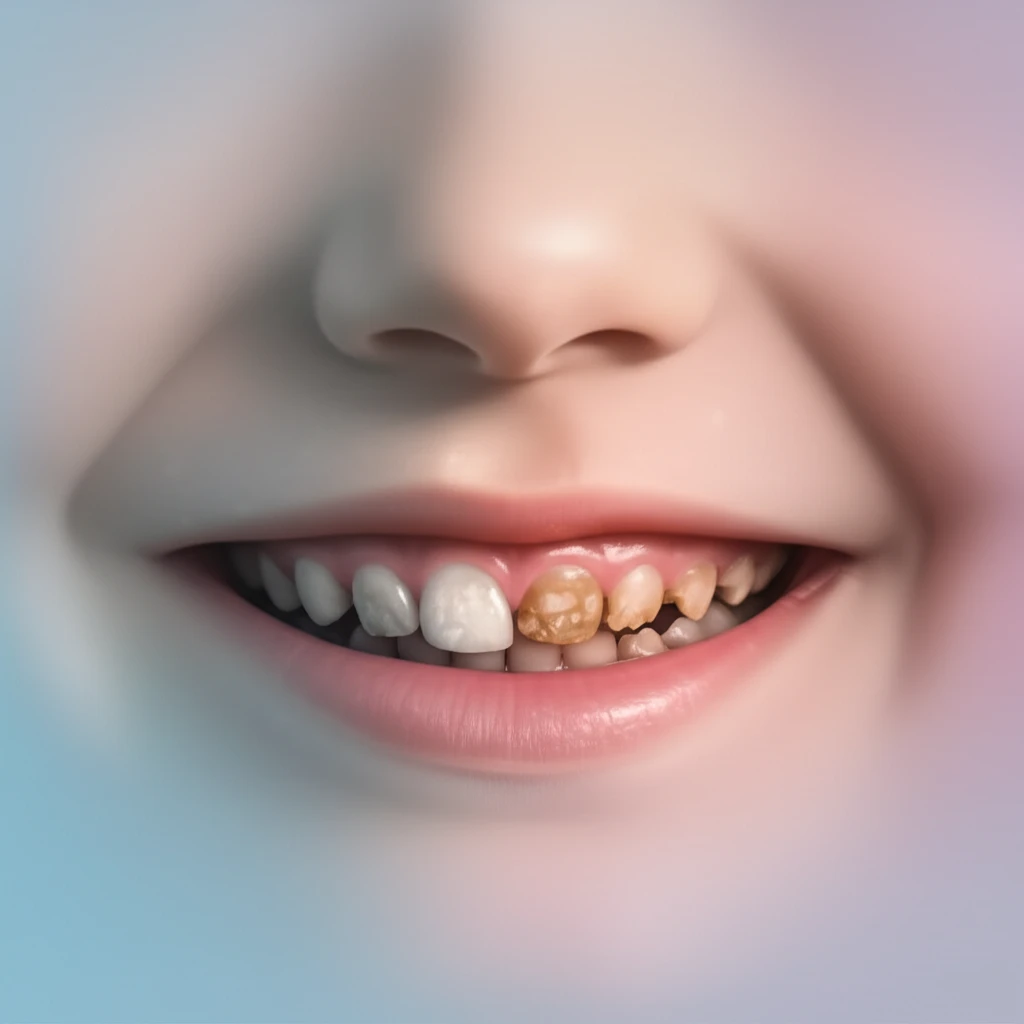
Illustration of healthy teeth transforming into MIH-affected teeth.

MIH in Children: What Every Parent Should Know About Molar Incisor Hypomineralization

"Learn how MIH affects children's teeth, its causes, and what you can do to protect your child's smile."


Imagine your child's permanent teeth erupting, only to find they're not as strong as they should be. This is the reality for many children affected by Molar Incisor Hypomineralization (MIH), a condition where the enamel of the molars and incisors doesn't develop properly. MIH can lead to sensitive teeth, increased risk of cavities, and a lot of anxiety for both children and parents.

MIH is more common than you might think, with studies showing it affects a significant percentage of children worldwide. A study conducted in Kavre, Nepal, revealed that 13.7% of school children showed signs of MIH. But what exactly is MIH, and why is it happening?

This article will explore the ins and outs of MIH, offering clear, actionable advice for parents. We'll cover how to spot the signs, understand the potential causes, and, most importantly, what steps you can take to ensure your child's dental health isn't compromised.

What Exactly is Molar Incisor Hypomineralization (MIH)?

Illustration of healthy teeth transforming into MIH-affected teeth.

Molar Incisor Hypomineralization (MIH) is a developmental dental defect where one or more of the first permanent molars (the big teeth at the back) and often the incisors (the front teeth) are affected by enamel that hasn't formed correctly. This enamel is weaker and more porous than healthy enamel.

The compromised enamel in MIH-affected teeth can manifest in various ways:

  • Demarcated Opacities: These appear as white, creamy, yellow, or brown spots on the teeth.
  • Post-Eruptive Breakdown (PEB): The weakened enamel is prone to chipping and breaking down after the tooth erupts.
  • Hypersensitivity: Affected teeth can be extremely sensitive to temperature changes and brushing.
Unlike cavities caused by poor oral hygiene, MIH is a developmental issue that occurs during tooth formation. This means the problem arises before the tooth even appears in the mouth. If left unaddressed, MIH can lead to significant dental problems and impact a child's quality of life.

Taking Control of Your Child's Dental Health

Molar Incisor Hypomineralization can be a challenging condition, but with early detection and appropriate management, children can maintain healthy and functional teeth. Stay informed, proactive, and work closely with your dentist to ensure the best possible outcome for your child's smile.

About this Article -

This article was crafted using a human-AI hybrid and collaborative approach. AI assisted our team with initial drafting, research insights, identifying key questions, and image generation. Our human editors guided topic selection, defined the angle, structured the content, ensured factual accuracy and relevance, refined the tone, and conducted thorough editing to deliver helpful, high-quality information.See our About page for more information.

This article is based on research published under:

DOI-LINK: 10.3126/kumj.v12i1.13631, Alternate LINK

Title: Prevalence Of Molar Incisor Hypomineralisation Among School Children In Kavre

Subject: General Medicine

Journal: Kathmandu University Medical Journal

Publisher: Nepal Journals Online (JOL)

Authors: R Shrestha, S Upadhaya, M Bajracharya

Published: 2015-10-12

Everything You Need To Know

1

What exactly is Molar Incisor Hypomineralization (MIH) in children?

Molar Incisor Hypomineralization (MIH) is a developmental defect affecting children's teeth, specifically the first permanent molars and incisors. In MIH, the enamel doesn't form correctly, leading to weaker and more porous teeth. This compromised enamel can cause demarcated opacities (white, creamy, yellow, or brown spots), post-eruptive breakdown (chipping), and hypersensitivity. Unlike cavities from poor hygiene, MIH occurs during tooth formation.

2

How can I tell if my child has Molar Incisor Hypomineralization (MIH)? What are the specific signs to look for?

Signs of Molar Incisor Hypomineralization (MIH) include demarcated opacities, which are discolored spots (white, creamy, yellow, or brown) on the molars and incisors. Also, watch for post-eruptive breakdown (PEB), where the enamel chips or breaks down soon after the teeth erupt. Hypersensitivity to temperature changes or during brushing can also indicate MIH. Regular dental check-ups are crucial for early detection.

3

What are the potential long-term consequences if Molar Incisor Hypomineralization (MIH) is left untreated?

If Molar Incisor Hypomineralization (MIH) isn't addressed, it can lead to significant dental problems, affecting a child's quality of life. The weakened enamel is prone to cavities, and the teeth may become increasingly sensitive, making eating and oral hygiene painful. Severe cases may require extensive and costly dental treatments, such as fillings, crowns, or even extractions. Early intervention and management are vital to prevent these long-term complications.

4

Is Molar Incisor Hypomineralization (MIH) a rare condition, or is it relatively common among children?

Molar Incisor Hypomineralization (MIH) is more common than many parents realize. Studies have shown that it affects a noteworthy percentage of children worldwide. For example, a study in Kavre, Nepal, indicated that 13.7% of school children exhibited signs of MIH. While the exact prevalence varies, MIH is a significant dental concern that warrants awareness and proactive management.

5

Can anything be done to prevent Molar Incisor Hypomineralization (MIH) from developing in my child's teeth? What proactive steps can I take?

While the exact causes of Molar Incisor Hypomineralization (MIH) are still being researched, there are proactive steps parents can take. Focus on maintaining good overall health during pregnancy and early childhood, as tooth development begins in utero and continues after birth. Ensure your child receives adequate nutrition, and minimize exposure to illnesses and certain medications during critical tooth formation periods. Regular dental check-ups from the time the first tooth erupts are also essential for early detection and preventive care.

Newsletter Subscribe

Subscribe to get the latest articles and insights directly in your inbox.