
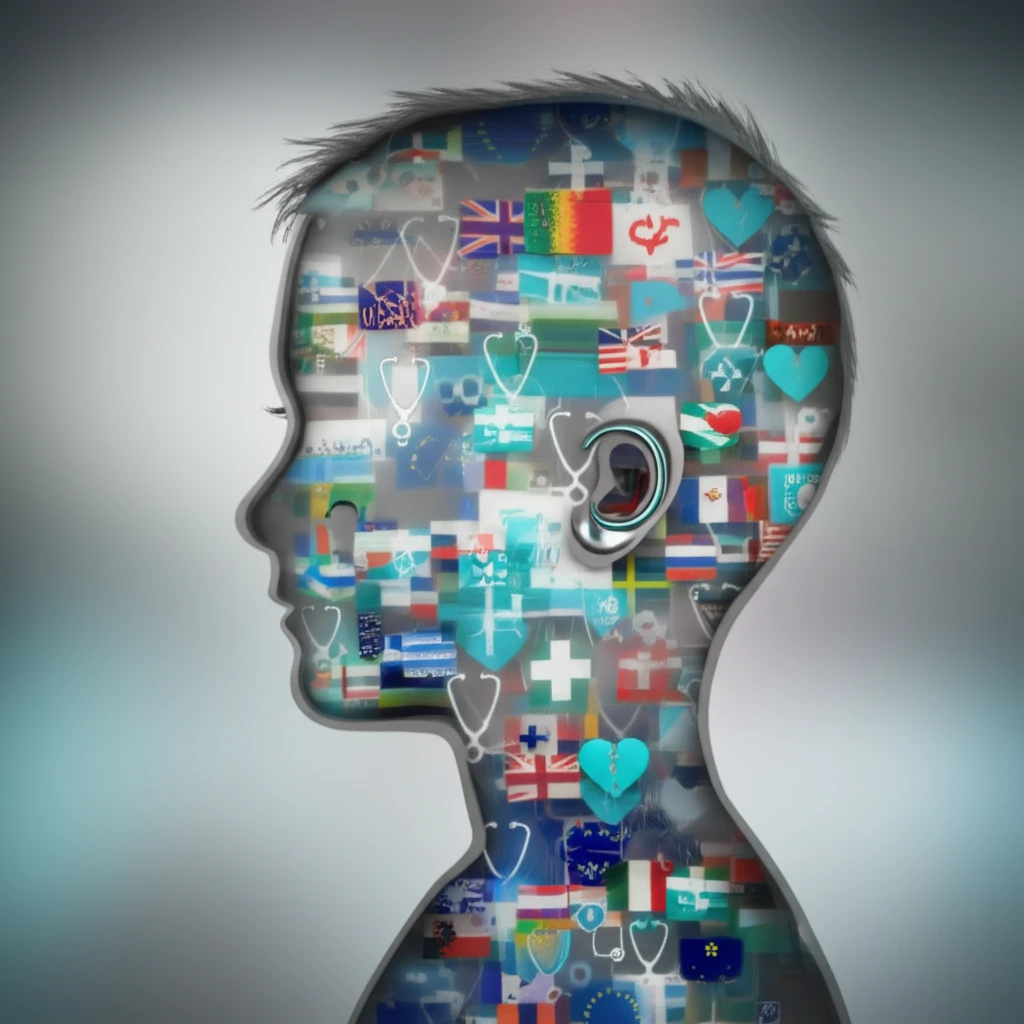
Child's silhouette filled with interconnected medical symbols and European flags

Migrant Children's Healthcare: Are European Systems Failing?

"A look at the challenges migrating children face in accessing healthcare within Europe, and what can be done to bridge the gap."


Across Europe, healthcare systems face increasing pressure to provide care for a growing population of migrating children. These children, often fleeing conflict, poverty, or persecution, arrive with unique health needs and vulnerabilities. However, inconsistent policies and systemic barriers across EU member states hinder their access to essential medical services.

Médecins du Monde (MdM), an international organization providing medical care to vulnerable populations, has been tracking the healthcare access challenges faced by migrants in Europe since 2006. Their research reveals significant disparities between national laws and practices, leaving many children without the care they need. This article dives into MdM's findings, exposing the gaps in European healthcare systems and advocating for equitable solutions.

We'll explore the legal frameworks designed to protect children's health, the realities on the ground as reflected in recent data, and the specific barriers that migrating children encounter when trying to access healthcare. By understanding these challenges, we can advocate for policies and practices that ensure all children in Europe, regardless of their migration status, receive the medical care they deserve.

Legal Rights vs. Real-World Access: Why Are Migrant Children Falling Through the Cracks?

Child's silhouette filled with interconnected medical symbols and European flags

International and European legal frameworks clearly state that children have a right to healthcare, regardless of their migration status. The UN Convention on the Rights of the Child, for example, explicitly states that children should enjoy the highest attainable standard of health. Similarly, the European Union Agency for Fundamental Rights (FRA) asserts that every child within an EU member state is entitled to the same healthcare services as native populations, including vaccinations.

Despite these legal protections, the reality for many migrating children is far different. A study by MdM across 13 European countries revealed that only a minority of EU states grant migrant children the same healthcare access as national children. Many countries treat children the same as adults, who face significant difficulties accessing care due to administrative hurdles or lack of insurance.

  • Varying National Laws: Access to healthcare for undocumented children varies widely across Europe, with some countries offering free access, others providing limited access, and some denying access altogether.
  • Age Assessment Issues: Unreliable age assessment methods can lead to children being wrongly classified as adults, denying them the specific protections and healthcare services they are entitled to.
  • Exclusionary Practices: Some European countries, following the European directive 2004/38/EC, limit the right to stay for people without sufficient financial resources and health coverage, disproportionately impacting migrant communities like the Roma.
These legal and practical barriers have significant consequences for the health and well-being of migrating children. Limited access to vaccinations, for instance, contributes to higher rates of preventable diseases like measles. Furthermore, the stress of navigating complex healthcare systems, coupled with unstable living conditions, can negatively impact their mental and physical health.

Bridging the Gap: A Call to Action for Equitable Healthcare

The research paints a concerning picture of the challenges migrating children face in accessing healthcare across Europe. While legal frameworks exist to protect their rights, the reality on the ground reveals significant disparities and systemic barriers. These barriers not only compromise the health and well-being of these vulnerable children but also undermine the principles of equity and universality that underpin European healthcare systems.

To address this issue, MdM calls on all European states to prioritize the health of migrating children by offering universal public health systems built on solidarity, equality, and equity. This includes ensuring access to vaccinations, prenatal care, and pediatric services, regardless of migration status. Furthermore, states must address the administrative and financial barriers that prevent people from accessing care and protect migrant children from exploitation and violence.

By translating declarations into action, Europe can uphold its commitment to protecting the rights of all children and ensure that every child, regardless of their background, has the opportunity to thrive.

About this Article -

This article was crafted using a human-AI hybrid and collaborative approach. AI assisted our team with initial drafting, research insights, identifying key questions, and image generation. Our human editors guided topic selection, defined the angle, structured the content, ensured factual accuracy and relevance, refined the tone, and conducted thorough editing to deliver helpful, high-quality information.See our About page for more information.

Everything You Need To Know

1

What role does Médecins du Monde (MdM) play in understanding the challenges faced by migrating children in accessing healthcare?

Médecins du Monde (MdM) has been tracking healthcare access challenges for migrants in Europe since 2006, revealing significant disparities between national laws and practices. Their findings highlight how inconsistent policies across EU member states hinder migrating children's access to essential medical services, emphasizing the need for equitable solutions.

2

What legal protections are in place to ensure migrating children have access to healthcare in Europe?

According to legal frameworks such as the UN Convention on the Rights of the Child, children, including migrating children, are entitled to healthcare regardless of their migration status. The European Union Agency for Fundamental Rights (FRA) also asserts that every child within an EU member state is entitled to the same healthcare services as native populations, including vaccinations. However, the implementation varies greatly across Europe.

3

What are some of the key barriers that migrating children face when trying to access healthcare?

Migrating children encounter several specific barriers. These include varying national laws that dictate access to healthcare, with some countries offering free access, others limited access, and some denying access altogether. Unreliable age assessment methods can lead to children being wrongly classified as adults, denying them the protections and healthcare services they are entitled to. Furthermore, exclusionary practices, such as those following European directive 2004/38/EC, can limit the right to stay for people without sufficient financial resources and health coverage, impacting migrant communities.

4

What are the consequences of these barriers for migrating children?

These barriers have significant consequences. Limited access to vaccinations contributes to higher rates of preventable diseases like measles. Additionally, the stress of navigating complex healthcare systems, coupled with unstable living conditions, can negatively impact their mental and physical health. The inconsistencies in access undermine the principles of equity and universality that underpin European healthcare systems.

5

What actions are needed to improve healthcare access for migrating children across Europe?

The article calls for equitable healthcare solutions for migrating children. This involves addressing the disparities between legal frameworks and real-world access. Understanding the challenges faced by these children, such as inconsistent national laws, unreliable age assessments, and exclusionary practices, is crucial for advocating for policies and practices that ensure all children in Europe receive the medical care they deserve. Addressing these issues will help uphold the principles of equity and universality in European healthcare.

Newsletter Subscribe

Subscribe to get the latest articles and insights directly in your inbox.