
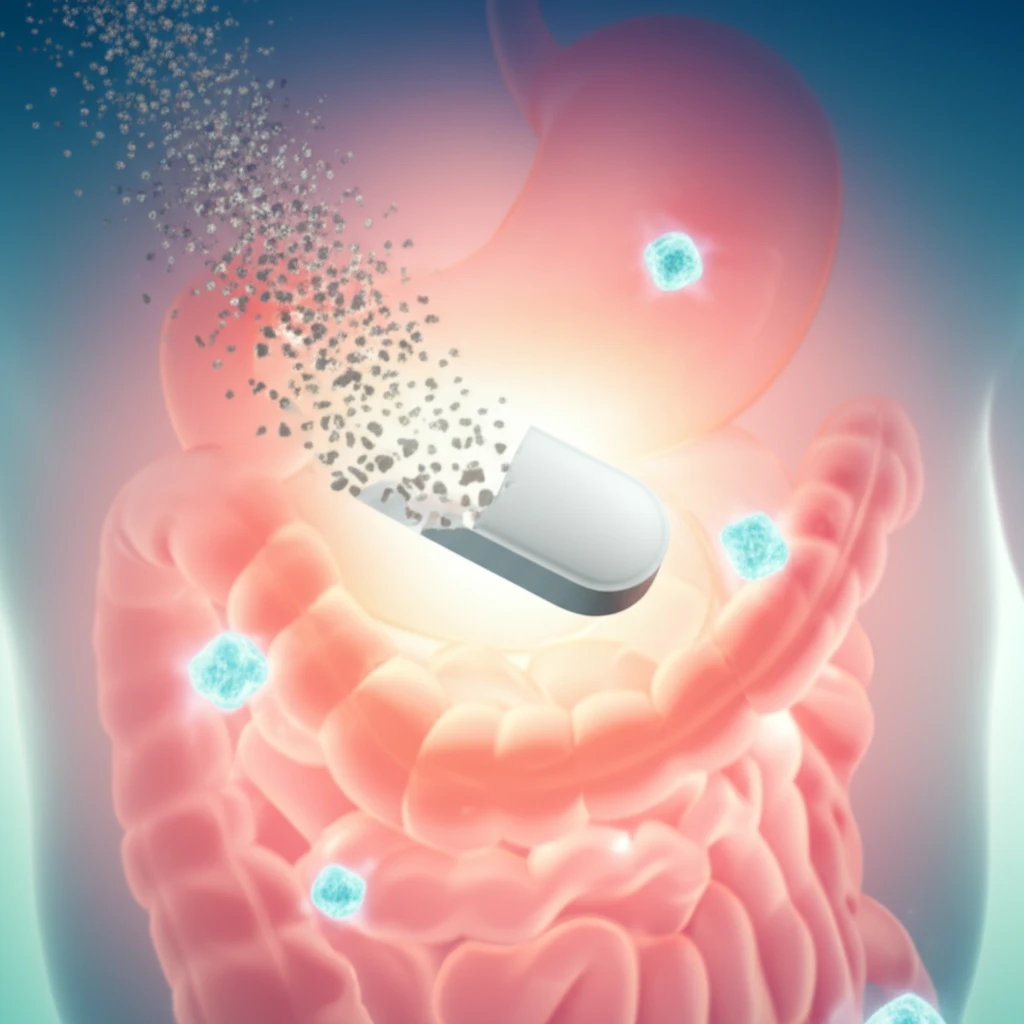
Metformin and Gut Health: A visual representation of metformin's interaction with the digestive system to lower blood sugar.

Metformin's Gut Connection: How It Really Lowers Blood Sugar

"Unlocking the mystery: New research reveals that metformin's glucose-lowering power isn't just about the liver—it's about the gut!"


For years, metformin has been a go-to medication for managing type 2 diabetes. It's prescribed worldwide to help control blood sugar levels, but the exact way it works has remained somewhat of a mystery. While it was initially believed that metformin primarily acted on the liver to reduce glucose production, recent studies suggest that the gastrointestinal tract plays a much more significant role than previously thought.

A new study published in the journal Diabetes, Obesity and Metabolism, sheds light on this gut connection, comparing how metformin works when administered in different parts of the small intestine. This research could change how we approach diabetes treatment, potentially leading to more effective and targeted therapies.

This article breaks down the key findings of the study, explaining how metformin interacts with the gut to lower blood sugar, stimulate beneficial hormones, and even affect the rate at which your stomach empties.

The Gut's Role in Metformin's Action: What Does the Science Say?

Metformin and Gut Health: A visual representation of metformin's interaction with the digestive system to lower blood sugar.

The study, conducted by researchers at the University of Adelaide, Australia, involved 10 participants with diet-controlled type 2 diabetes. The participants were given metformin through a tube inserted into either the upper (proximal) or lower (distal) part of their small intestine. Researchers then measured their blood sugar levels, as well as levels of gut hormones like glucagon-like peptide-1 (GLP-1), insulin, and glucagon. Gastric emptying, or the rate at which food leaves the stomach, was also assessed.

The results revealed that metformin, whether administered in the upper or lower small intestine, significantly lowered blood sugar levels and increased GLP-1 production. GLP-1 is a crucial hormone that stimulates insulin release, suppresses glucagon secretion, and slows gastric emptying—all of which contribute to lower blood sugar levels. Interestingly, the study found that where metformin was given in the small intestine didn’t affect how well it lowered blood sugar.

Key findings from the study:
  • Both proximal (upper) and distal (lower) administration of metformin reduced plasma glucose comparably.
  • Metformin, in both locations, augmented GLP-1 responses to oral glucose.
  • Gastric emptying was slower after proximal metformin compared to the control group.
  • There was a trend toward slower gastric emptying after distal metformin, though not statistically significant.
These findings suggest that metformin's glucose-lowering effects are closely linked to its interaction with the gut, regardless of the specific location in the small intestine. The stimulation of GLP-1 and the slowing of gastric emptying appear to be key mechanisms by which metformin helps manage blood sugar.

What This Means for You: Practical Takeaways

While this study provides valuable insights into how metformin works, it's essential to remember that it's just one piece of the puzzle. Managing type 2 diabetes involves a combination of medication, diet, exercise, and regular monitoring. Talk to your doctor about the best approach for you, and don't make any changes to your medication without their guidance. Understanding how metformin interacts with your gut can empower you to make informed decisions about your health and work with your healthcare team to achieve optimal blood sugar control.

About this Article -

This article was crafted using a human-AI hybrid and collaborative approach. AI assisted our team with initial drafting, research insights, identifying key questions, and image generation. Our human editors guided topic selection, defined the angle, structured the content, ensured factual accuracy and relevance, refined the tone, and conducted thorough editing to deliver helpful, high-quality information.See our About page for more information.

This article is based on research published under:

DOI-LINK: 10.1111/dom.13567, Alternate LINK

Title: Comparative Effects Of Proximal And Distal Small Intestinal Administration Of Metformin On Plasma Glucose And Glucagon-Like Peptide-1, And Gastric Emptying After Oral Glucose, In Type 2 Diabetes

Subject: Endocrinology

Journal: Diabetes, Obesity and Metabolism

Publisher: Wiley

Authors: Malcolm J. Borg, Michelle Bound, Jacqueline Grivell, Zilin Sun, Karen L. Jones, Michael Horowitz, Christopher K. Rayner, Tongzhi Wu

Published: 2018-11-21

Everything You Need To Know

1

What is metformin and how does it work to lower blood sugar?

Metformin is a widely used medication for type 2 diabetes. It primarily lowers blood sugar levels. Recent research indicates that metformin's mechanism of action extends beyond the liver and involves the gastrointestinal tract. This is a significant shift in understanding, suggesting that the gut plays a crucial role in how the drug works. Understanding this role may lead to new targeted treatments of diabetes.

2

How does metformin affect GLP-1, and why is this important?

The study showed that metformin increases the production of glucagon-like peptide-1 (GLP-1). GLP-1 is a key hormone that stimulates insulin release, reduces glucagon secretion, and slows down how quickly food leaves the stomach (gastric emptying). These actions collectively help to lower blood sugar levels. The fact that metformin affects GLP-1 has significant implications for blood sugar management, as it influences multiple pathways involved in glucose regulation.

3

What is gastric emptying, and how does metformin influence it?

Gastric emptying refers to the rate at which food empties from the stomach into the small intestine. The study found that metformin slows gastric emptying, which contributes to lower blood sugar levels. When gastric emptying is slower, glucose from food is absorbed more gradually, preventing sharp spikes in blood sugar. Delayed gastric emptying is an important effect of metformin as it helps to stabalize post-meal blood sugar levels.

4

In the study, where in the small intestine was metformin administered, and what were the results?

The study involved administering metformin in both the upper (proximal) and lower (distal) parts of the small intestine. The results showed that metformin was effective in lowering blood sugar levels and increasing GLP-1 production regardless of where it was administered in the small intestine. This finding is important because it suggests that metformin's effects are not dependent on a specific location within the small intestine but rather on its overall interaction with the gut environment.

5

What key measurements were taken in the study to understand how metformin works?

The researchers measured blood sugar levels, levels of gut hormones such as glucagon-like peptide-1 (GLP-1), insulin, and glucagon. They also assessed gastric emptying rates. These measurements were crucial for understanding how metformin affects glucose metabolism and gut hormone secretion. By monitoring these parameters, researchers were able to identify the key mechanisms through which metformin exerts its glucose-lowering effects.

Newsletter Subscribe

Subscribe to get the latest articles and insights directly in your inbox.