
Mercury Rising: Can Electrokinetic Remediation Clean Up Contaminated Soil?

"Explore how innovative electrokinetic and bioremediation techniques are revolutionizing the fight against mercury pollution in soil, offering hope for a cleaner environment."
Landfills, while necessary for waste disposal, pose significant environmental risks. These sites often harbor harmful bacteria and heavy metals, which can leach into the surrounding soil and water, creating a toxic environment. Among these contaminants, mercury stands out due to its severe health and ecological impacts. Traditional methods of soil remediation can be costly and disruptive, prompting researchers to explore innovative solutions.
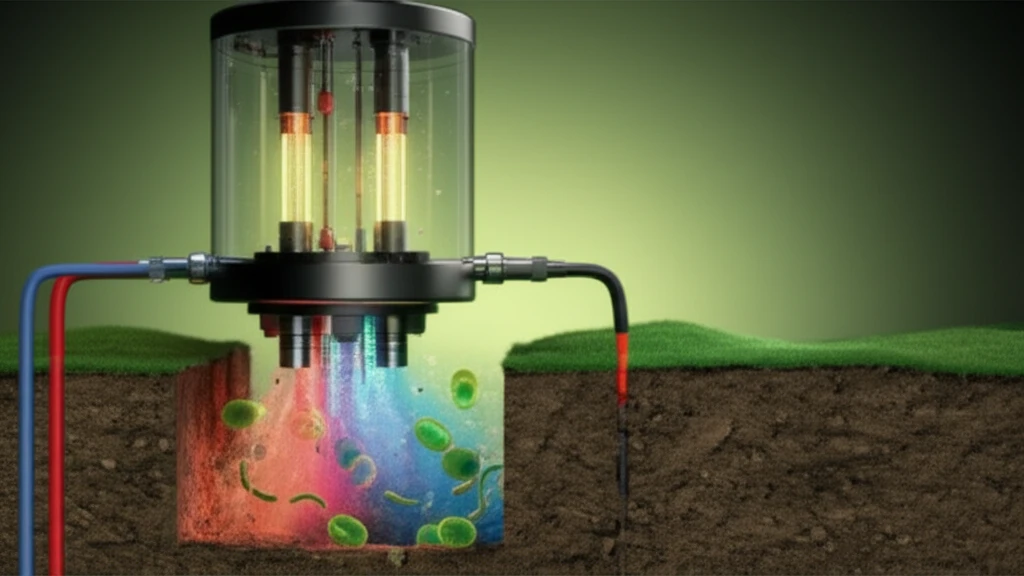
Electrokinetic-Bioremediation (EK-Bio) emerges as a promising technique in this context. By combining electrokinetics, which uses an electric field to mobilize contaminants, with bioremediation, which employs microorganisms to degrade pollutants, EK-Bio offers a potentially more efficient and environmentally friendly approach. This method enhances microbiological activities in the soil, speeding up the degradation of contaminants and reducing the overall content of heavy metals.
A recent study investigated the effectiveness of EK-Bio using a specific type of bacteria, Lysinibacillus fusiformis, to remove mercury from landfill soil. The study aimed to determine whether this isolated bacteria could significantly reduce mercury levels, offering a viable solution for mercury-contaminated sites. This research could pave the way for broader applications of EK-Bio in environmental cleanup efforts.
How Does Electrokinetic-Bioremediation Work?
The electrokinetic-bioremediation technique involves several key steps. First, landfill soil is mixed with deionized water to create a slurry. This slurry is then placed in an electrokinetic cell, where an electric field is applied. An anode (positive electrode) and a cathode (negative electrode) are positioned within the cell, with the slurry located in the middle. Lysinibacillus fusiformis bacteria are introduced at the anode reservoir, while distilled water is placed at the cathode reservoir.
- Electromigration: The electric field helps transport mercury ions.
- Bioremediation: Lysinibacillus fusiformis degrades and removes mercury.
- Synergistic Effect: The combination enhances overall removal.
The Future of Soil Remediation
The study's findings suggest that electrokinetic bioremediation, particularly with the use of Lysinibacillus fusiformis, holds significant potential for mercury removal from contaminated soil. The combination of electromigration and bioremediation offers a synergistic approach that can effectively reduce mercury concentrations in a relatively short period. This technique represents a promising step toward developing sustainable and green technologies for environmental remediation.