
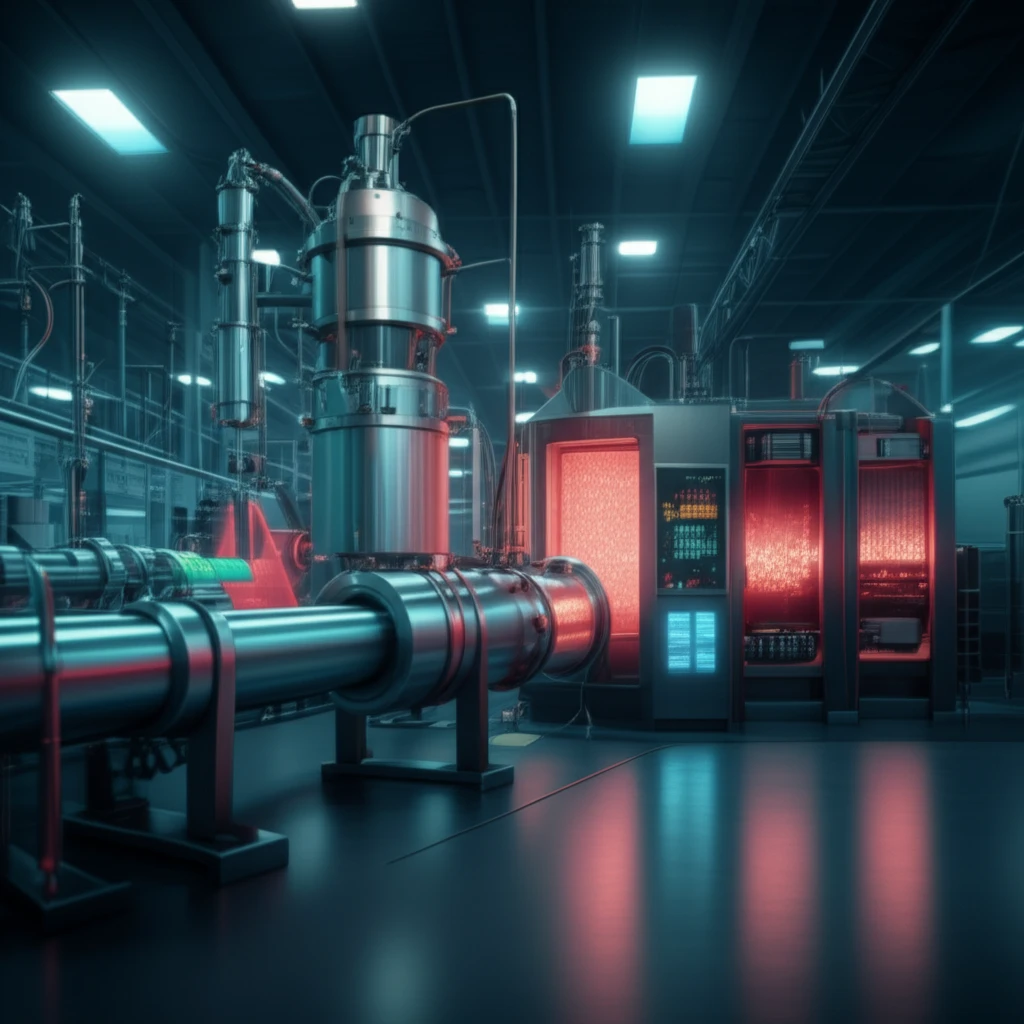
Pharmaceutical manufacturing process with hot melt extrusion and near-infrared spectroscopy monitoring

Melt Your Troubles Away: How Hot Melt Extrusion is Revolutionizing Pharmaceuticals

"Discover how near-infrared spectroscopy is transforming pharmaceutical manufacturing through real-time monitoring and quality control of hot melt extrusion."


The pharmaceutical industry is constantly evolving, with new drug discovery methods leading to a surge of potential medications. However, a significant challenge arises: many of these new chemical entities (NCEs) struggle with poor solubility. This can hinder their bioavailability, making it difficult for the body to absorb and utilize them effectively. Overcoming these solubility issues is crucial for ensuring that new drugs can be successfully formulated and delivered to patients.

One promising solution is hot melt extrusion (HME), a technique that combines drugs with thermoplastic polymers at elevated temperatures, typically between 50-180°C. This process allows for the creation of solid solutions, where the drug is molecularly dispersed within the polymer matrix. The extruder can be configured with different temperature zones and sections, allowing for precise control over melting, mixing, and the sequential addition of ingredients. Vacuum venting can also be incorporated to remove any unwanted gases.

The use of HME is rapidly increasing in the pharmaceutical industry due to its numerous advantages. It enables the formulation of products with enhanced solubility and bioavailability, which can reduce dosing intervals and improve patient compliance. HME also allows for taste masking of active pharmaceutical ingredients (APIs), making medications more palatable. Furthermore, as a continuous process, HME offers excellent reproducibility, minimizing batch-to-batch variability and reducing manufacturing costs through streamlined operations and smaller material volumes. Perhaps most importantly, HME is amenable to in-line monitoring, allowing for real-time quality control.

Why Near-Infrared Spectroscopy is the Perfect Partner for HME

Pharmaceutical manufacturing process with hot melt extrusion and near-infrared spectroscopy monitoring

Near-infrared (NIR) spectroscopy has long been recognized for its ability to analyze active ingredients in pharmaceutical formulations. However, with the rise of process analytical technology (PAT) and quality by design (QbD) principles, NIR is now being increasingly used for on-line and in-line monitoring of pharmaceutical processes. NIR spectroscopy offers several key advantages, including its non-destructive nature, excellent signal-to-noise ratios, and the ability to use fiber optics for remote sampling.

These characteristics make NIR spectroscopy an ideal choice for monitoring the output of hot melt extruders. By integrating NIR spectroscopy into the HME process, manufacturers can gain real-time insights into the composition and uniformity of the extrudate, allowing for immediate adjustments to maintain product quality. This ensures that the final product meets the required specifications for drug content, dissolution rate, and other critical parameters.

  • Improved Solubility and Bioavailability: HME enhances drug solubility, reducing dosing intervals.
  • Taste Masking: HME can mask the taste of APIs, making drugs more palatable.
  • Continuous Process: HME is reproducible, reducing batch variability and costs.
  • Stable Solid Solutions: HME creates solutions with improved temperature and mechanical stability.
  • In-Line Monitoring: HME is suitable for real-time monitoring with NIR spectroscopy.
A study was conducted using a Thermo Scientific™ PRISM Pharmalab 16 HME twin-screw extruder to investigate the influence of screw speed and throughput rate on the blend uniformity of an extrudate. The equipment was designed for easy dismantling and cleaning, ensuring thorough removal of any residual materials. NIR spectra were collected using a Thermo Scientific™ Antaris™ FT-NIR instrument equipped with an extruder probe, specifically designed for reflectance measurements of the extrudate at temperatures up to 300°C.

The Future of Pharmaceutical Manufacturing is Here

The integration of NIR spectroscopy with hot melt extrusion offers a powerful approach to real-time monitoring and control of pharmaceutical manufacturing processes. By understanding the relationships between formulation characteristics and extruder mechanisms, manufacturers can optimize process conditions, minimize variability, and ensure consistent product quality. This not only improves the efficiency and cost-effectiveness of manufacturing but also enhances the safety and efficacy of pharmaceutical products for patients.

About this Article -

This article was crafted using a human-AI hybrid and collaborative approach. AI assisted our team with initial drafting, research insights, identifying key questions, and image generation. Our human editors guided topic selection, defined the angle, structured the content, ensured factual accuracy and relevance, refined the tone, and conducted thorough editing to deliver helpful, high-quality information.See our About page for more information.

Everything You Need To Know

1

What is hot melt extrusion and why is it used in pharmaceutical manufacturing?

Hot melt extrusion, or HME, is a process used in pharmaceutical manufacturing to address the challenge of poorly soluble drugs. It involves combining drugs with thermoplastic polymers at elevated temperatures, typically between 50-180°C, to create solid solutions. This allows the drug to be molecularly dispersed within the polymer matrix, enhancing its solubility and bioavailability. The setup allows for precise control over melting, mixing, and ingredient addition, and can even remove unwanted gases. While the text highlights the integration of near-infrared spectroscopy for quality control, other analytical techniques like Raman spectroscopy or X-ray diffraction can also be used to characterize the extrudate.

2

What is near-infrared spectroscopy, and why is it a good fit for monitoring hot melt extrusion?

Near-infrared spectroscopy, also known as NIR spectroscopy, is significant because it provides a non-destructive method for real-time monitoring and quality control during hot melt extrusion. It allows manufacturers to gain insights into the composition and uniformity of the extrudate. This is important because immediate adjustments can be made to maintain product quality, ensuring that the final product meets the required specifications for drug content and dissolution rate. Other spectroscopic techniques could be used such as UV Vis.

3

How does hot melt extrusion improve drug solubility, and why is that important?

Hot melt extrusion improves drug solubility and bioavailability, which is crucial for ensuring that new drugs can be effectively absorbed and utilized by the body. Poor solubility can hinder a drug's bioavailability, making it difficult for the body to absorb it effectively. By enhancing these properties, HME can reduce dosing intervals, improve patient compliance, and make medications more palatable through taste masking of active pharmaceutical ingredients. This has implications for drug development and patient outcomes.

4

What are the main advantages of combining near-infrared spectroscopy with hot melt extrusion?

The key benefits of integrating near-infrared spectroscopy with hot melt extrusion include improved solubility and bioavailability of drugs, taste masking of active pharmaceutical ingredients, enhanced reproducibility due to its continuous nature, and the creation of stable solid solutions. Most importantly, in-line monitoring allows for real-time quality control, minimizing batch-to-batch variability and reducing manufacturing costs. This integration enables manufacturers to optimize process conditions and ensure consistent product quality.

5

Can you describe the specific equipment used in the study mentioned, and what was investigated?

The Thermo Scientific™ PRISM Pharmalab 16 HME twin-screw extruder and the Thermo Scientific™ Antaris™ FT-NIR instrument were used to investigate how screw speed and throughput rate affected the uniformity of the blend. This equipment was specifically designed for easy cleaning and dismantling to ensure thorough removal of residual materials. The NIR spectra was collected using a special probe designed for reflectance measurements of the extrudate at high temperatures. This setup allowed for a detailed understanding of the relationships between process parameters and product quality.

Newsletter Subscribe

Subscribe to get the latest articles and insights directly in your inbox.