
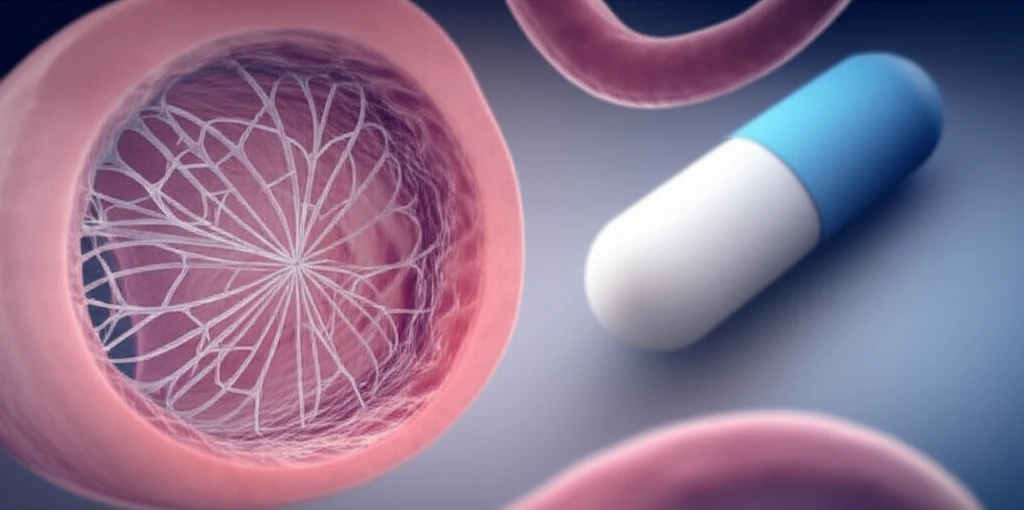
Illustration of intestinal stenosis linked to meloxicam use.

Meloxicam and Your Gut: What You Need to Know About NSAID-Induced Intestinal Issues

"A deep dive into the risks of GI bleeding and stenosis linked to meloxicam, empowering you to make informed decisions about your health and pain management."


Nonsteroidal anti-inflammatory drugs (NSAIDs) are a common class of medications used to manage pain and inflammation. Among these, meloxicam, a COX-2 selective NSAID, is frequently prescribed for conditions like arthritis and chronic back pain. While generally considered safer for the stomach than traditional NSAIDs, recent reports suggest that meloxicam is not without its risks.

A case report published in Reactions detailed a concerning instance of a 72-year-old man who developed severe gastrointestinal (GI) issues after prolonged use of meloxicam. This case highlights the potential for meloxicam to cause serious complications, including GI bleeding and multiple stenoses (narrowing) in the small intestine.

This article aims to break down the details of this case report, explain the potential risks associated with meloxicam, and provide you with information on how to protect your gut health while managing pain. We will explore the underlying mechanisms, symptoms to watch out for, and alternative strategies for pain relief.

Understanding the Case: Meloxicam's Impact on the Small Intestine

Illustration of intestinal stenosis linked to meloxicam use.

The 72-year-old patient in the case report had been taking 300 mg of oral meloxicam daily for two years to manage chronic back pain. He began experiencing abdominal fullness, unexplained gastrointestinal bleeding, and recurrent small intestinal ileus (blockage). These symptoms prompted hospitalization and further investigation.

Doctors used double-balloon endoscopy (DBE), a specialized procedure that allows visualization of the small intestine, to examine the patient's GI tract. The DBE revealed several concerning findings:

  • Pinhole membranous stenoses: Multiple tiny, web-like constrictions in the mid-jejunum (a section of the small intestine).
  • Ulcer scars: Evidence of previous damage and inflammation in the small intestine.
  • Microscopic changes: Tissue samples showed abnormalities, including reduction of the cervical region in the epithelium, sub-epithelial fibrosis, collagen hyperplasia, and changes in pericryptal cells to myofibroblasts. Apoptotic bodies (cells undergoing programmed death) were also observed.
The patient underwent further DBE, during which a bladder cancer was incidentally discovered. An enteroscopy balloon dilation was performed to address the stenoses in the small intestine. While some stenoses were successfully opened, the histopathological findings confirmed scar formation, mucosal erosion, and slight fibrosis in the submucosal layer. Based on these findings, the patient was diagnosed with multiple membranous stenoses in the small intestine due to meloxicam therapy.

Protecting Your Gut: Alternative Strategies and Precautions

The case report serves as a reminder of the potential risks associated with even COX-2 selective NSAIDs like meloxicam. While these medications can be effective for pain management, it's crucial to be aware of the potential side effects and take proactive steps to protect your gut health. If you are taking meloxicam or another NSAID, talk to your doctor about strategies to minimize your risk of GI complications. This may include exploring alternative pain management options, using the lowest effective dose of NSAIDs, and considering concomitant use of gastroprotective medications.

About this Article -

This article was crafted using a human-AI hybrid and collaborative approach. AI assisted our team with initial drafting, research insights, identifying key questions, and image generation. Our human editors guided topic selection, defined the angle, structured the content, ensured factual accuracy and relevance, refined the tone, and conducted thorough editing to deliver helpful, high-quality information.See our About page for more information.

Everything You Need To Know

1

What is meloxicam, and why is it relevant to intestinal health?

Meloxicam is a nonsteroidal anti-inflammatory drug (NSAID) often prescribed for conditions like arthritis and chronic back pain. It is a COX-2 selective NSAID, which means it's designed to target specific enzymes involved in inflammation, potentially reducing the risk of stomach upset compared to traditional NSAIDs. However, despite being considered safer for the stomach, meloxicam still carries risks related to intestinal health.

2

What are GI bleeding and multiple stenoses, and how do they relate to meloxicam?

Gastrointestinal (GI) bleeding is a serious condition that can occur with meloxicam use. It involves bleeding in the digestive tract, which can manifest as blood in the stool, black tarry stools, or vomiting blood. Multiple stenoses refer to the narrowing of the small intestine, which can cause abdominal pain, bloating, and even intestinal blockage. These complications stem from meloxicam's potential to damage the lining of the digestive tract, leading to ulcers, inflammation, and scar formation, ultimately causing bleeding and narrowing.

3

What were the key symptoms and findings in the case report involving meloxicam?

In the case report mentioned, the patient experienced several key symptoms. These include abdominal fullness, unexplained gastrointestinal bleeding, and recurrent small intestinal ileus (blockage). Further investigation using double-balloon endoscopy (DBE) revealed pinhole membranous stenoses, ulcer scars, and microscopic tissue changes in the small intestine. It's essential to be aware of these symptoms and promptly report them to your doctor if you are taking meloxicam or any other NSAID.

4

What was the dosage and duration of meloxicam use in the case report, and what was the outcome?

The 72-year-old patient in the case study was taking 300 mg of oral meloxicam daily for two years to manage chronic back pain. This long-term use of meloxicam led to the development of severe gastrointestinal issues, including multiple stenoses in the small intestine. The case underscores that prolonged use of meloxicam, even at seemingly moderate doses, can significantly increase the risk of serious intestinal complications.

5

What steps can someone taking meloxicam take to protect their gut health?

If you're taking meloxicam, it's important to discuss strategies to minimize the risk of GI complications with your doctor. This might include exploring alternative pain management options, using the lowest effective dose of meloxicam, and considering the use of gastroprotective medications. Regular monitoring and open communication with your healthcare provider are crucial for managing pain effectively while protecting your gut health. Always inform your doctor about any symptoms of GI distress.

Newsletter Subscribe

Subscribe to get the latest articles and insights directly in your inbox.