
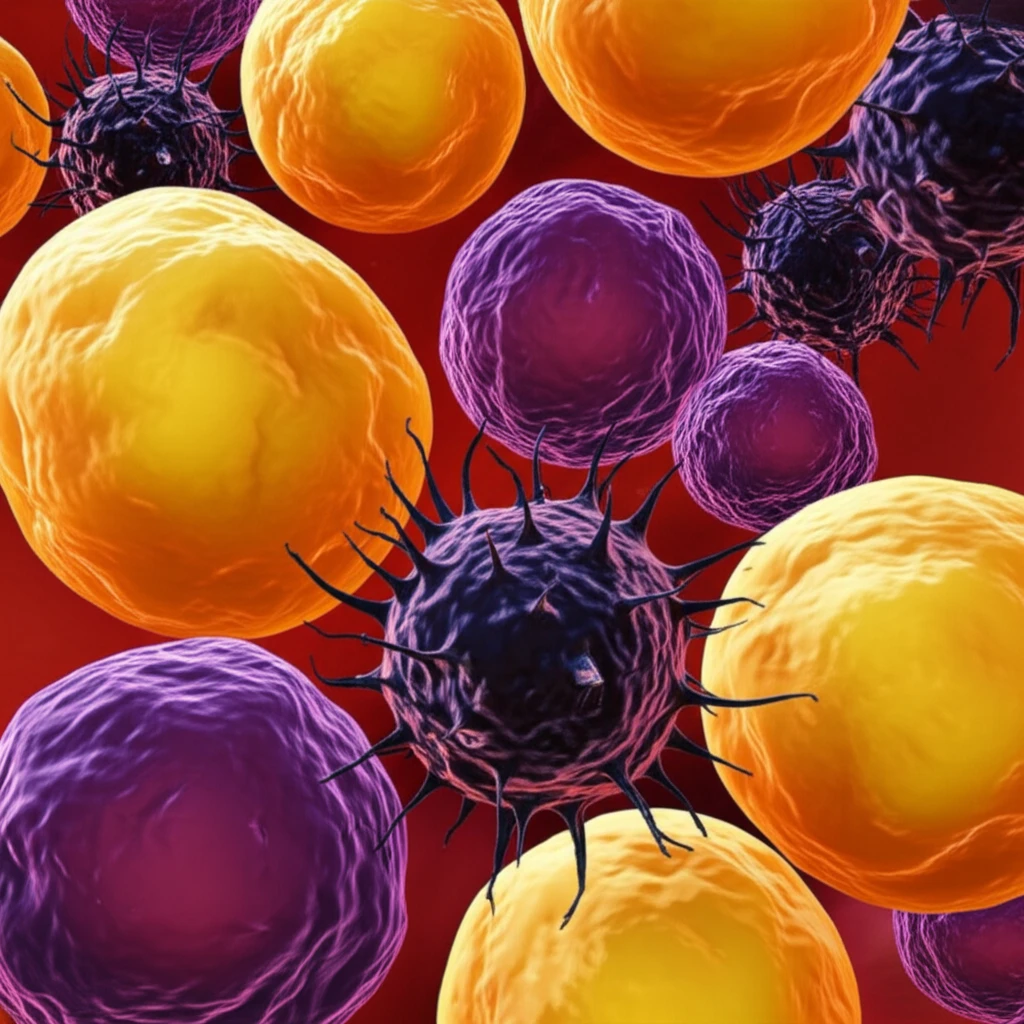
Illustration of bone marrow adipocytes and cancer cells interaction

Melanoma's Hidden Helpers: How Cancer Cells Team Up with Fat to Invade Bone

"Unraveling the Complex Dance Between Cancer, Fat Cells, and Bone Metastasis"


Cancer is a formidable adversary, and its ability to spread, or metastasize, to distant sites like the bones is one of its most terrifying capabilities. Bone metastasis, where cancer cells take root and thrive in the bone marrow, is a common complication in advanced cancers such as melanoma. But what if the very environment within the bone, the bone marrow itself, is complicit in this process? Recent research is uncovering a fascinating and complex interplay between cancer cells and the bone marrow's resident fat cells, known as adipocytes.

These adipocytes, long considered mere storage units for energy, are proving to be active participants in the tumor's journey. They don't just passively observe; they actively support the cancer cells, providing a nurturing environment that fuels their growth and spread. This article will delve into the latest findings, exploring how melanoma cells interact with bone marrow adipocytes and how this interaction contributes to the formation of bone metastasis. The goal is to understand the mechanisms at play, potentially leading to new therapeutic strategies.

This article is not overly technical; it aims to translate complicated scientific research into an understandable format. The information is structured for general consumption and to educate the public on an intricate issue. This is relevant to the target audience, as the complexities of cancer are always of general interest.

The Bone Marrow: A Battleground for Cancer

Illustration of bone marrow adipocytes and cancer cells interaction

The bone marrow is a dynamic microenvironment, teeming with various cell types, including hematopoietic stem cells, immune cells, and, importantly for our discussion, adipocytes. These fat cells are not just about storing energy; they also play a crucial role in regulating the bone marrow's cellular landscape. In the context of cancer, this landscape becomes a battleground where the tumor cells and the bone marrow cells, including adipocytes, engage in a complex and often duplicitous dialogue.

Melanoma cells, known for their aggressive nature, have evolved clever strategies to exploit this environment. They release factors that can influence the behavior of the surrounding cells, including the adipocytes. The research, as highlighted in the original article, demonstrates that melanoma cells can prompt bone marrow adipocytes to alter their behavior, essentially making them more supportive of the cancer's growth and spread. This change is pivotal in the development of bone metastasis.

  • Adipocytes as Support System: Adipocytes provide energy and growth factors that fuel the proliferation of cancer cells.
  • Altered Cellular Behavior: Melanoma cells can change the function of adipocytes, making them more likely to promote tumor growth.
  • Microenvironment Manipulation: Cancer cells can manipulate the bone marrow's microenvironment to favor their survival and spread.
The core of this study is the 2D coculture system. This method of study has been used to examine the effects of the tumor cells on bone marrow adipocytes. This is done by culturing bone marrow stromal cells and melanoma cells together. This is effective in observing the interaction between the two. The results show that the bone marrow adipocytes support the cancer cells’ growth and spread. The reverse is also true: The cancer cells alter the fat cells’ behavior, making them more supportive of the cancer's progress.

Future Directions: Targeting the Adipocyte-Cancer Dialogue

The research sheds light on the intricate relationship between melanoma cells and bone marrow adipocytes, opening avenues for targeted therapies. By understanding the mechanisms underlying this interaction, scientists may be able to develop strategies that disrupt the cancer cells' ability to manipulate their environment, potentially halting or slowing the progression of bone metastasis. This research is an important step forward in the fight against cancer, promising a deeper understanding and new ways to combat this devastating disease.

About this Article -

This article was crafted using a human-AI hybrid and collaborative approach. AI assisted our team with initial drafting, research insights, identifying key questions, and image generation. Our human editors guided topic selection, defined the angle, structured the content, ensured factual accuracy and relevance, refined the tone, and conducted thorough editing to deliver helpful, high-quality information.See our About page for more information.

Everything You Need To Know

1

How do melanoma cells spread to the bone and what role do fat cells play in this process?

Melanoma cells spread to the bone through a process called bone metastasis, where they establish and grow in the bone marrow. Bone marrow adipocytes, which are fat cells within the bone marrow, actively support melanoma cells by providing energy and growth factors. Melanoma cells can manipulate bone marrow adipocytes to create a nurturing environment that fuels tumor growth and spread.

2

What is the role of bone marrow adipocytes in the context of melanoma bone metastasis?

Bone marrow adipocytes, typically known for energy storage, play a significant role in melanoma bone metastasis. They actively support cancer cells by providing energy and growth factors, fueling their proliferation. Melanoma cells can alter the function of bone marrow adipocytes, making them more likely to promote tumor growth and spread. This manipulation of the bone marrow's microenvironment by melanoma cells favors their survival and progression.

3

How do melanoma cells manipulate the bone marrow environment to promote their growth and spread?

Melanoma cells manipulate the bone marrow environment by releasing factors that influence the behavior of surrounding cells, including bone marrow adipocytes. These factors prompt bone marrow adipocytes to alter their behavior, making them more supportive of the cancer's growth and spread. This manipulation creates a microenvironment that favors the survival and proliferation of melanoma cells, ultimately contributing to bone metastasis.

4

What does the 2D coculture system reveal about the interaction between melanoma cells and bone marrow adipocytes?

The 2D coculture system is a method used to study the direct interaction between melanoma cells and bone marrow adipocytes. This system involves culturing both cell types together to observe their effects on each other. Studies using this method have revealed that bone marrow adipocytes support the growth and spread of melanoma cells, while melanoma cells alter the behavior of bone marrow adipocytes, making them more supportive of the cancer's progress. This system allows researchers to observe the reciprocal influence between these cell types.

5

How might understanding the interaction between melanoma cells and bone marrow adipocytes lead to new cancer therapies?

Understanding the intricate relationship between melanoma cells and bone marrow adipocytes opens avenues for targeted therapies aimed at disrupting the cancer cells' ability to manipulate their environment. By identifying the specific mechanisms underlying this interaction, scientists may be able to develop strategies that interfere with the communication between melanoma cells and bone marrow adipocytes. Such therapies could potentially halt or slow the progression of bone metastasis by preventing melanoma cells from exploiting bone marrow adipocytes for their survival and growth.

Newsletter Subscribe

Subscribe to get the latest articles and insights directly in your inbox.