
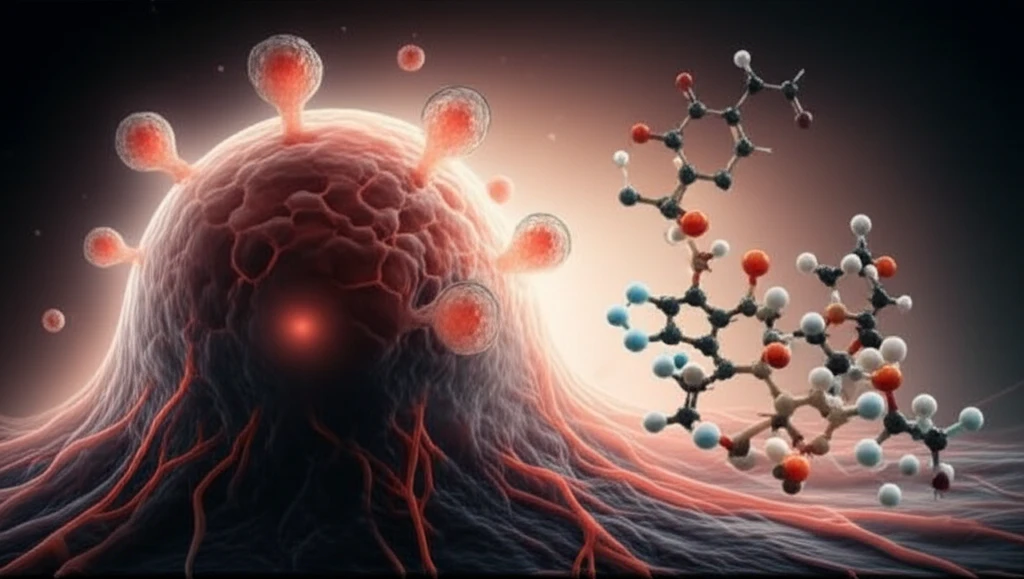
Melanoma cell influenced by microRNAs, representing drug resistance.

Melanoma Breakthrough: Can MicroRNAs Outsmart Drug Resistance?

"New research highlights the crucial role of microRNAs in melanoma's resistance to BRAF inhibitors, offering potential new targets for treatment and improved patient outcomes."


Melanoma, the deadliest form of skin cancer, has seen significant advancements in treatment thanks to the discovery of the BRAF V600E mutation. Drugs like vemurafenib and dabrafenib, known as BRAF inhibitors (BRAFi), specifically target this mutation, offering substantial benefits to patients. However, the emergence of drug resistance remains a major hurdle in long-term treatment success.

While many resistance mechanisms involve the reactivation of the MAPK pathway, a significant portion of melanomas develop resistance through other means, not accounted for by genetic alterations alone. This complexity underscores the need to explore other factors contributing to drug resistance.

MicroRNAs (miRNAs), small non-coding RNA molecules, are known to play a crucial role in cancer progression. Recent studies have focused on how miRNAs might contribute to melanoma's resistance to BRAF inhibitors. By understanding the specific miRNAs involved, researchers aim to identify new therapeutic targets to overcome drug resistance and improve patient outcomes.

How MicroRNAs Influence Drug Resistance in Melanoma

Melanoma cell influenced by microRNAs, representing drug resistance.

To investigate the role of miRNAs, researchers conducted a study comparing melanoma cells resistant to vemurafenib (A375-VR) with their drug-sensitive counterparts. Using small RNA sequencing, they identified several miRNAs that were differentially expressed between the two cell types. Key miRNAs of interest included miR-140-3p, which was downregulated, and miR-204-5p and miR-211-5p, which were upregulated in drug-resistant cells.

Further experiments revealed that changes in the expression of these miRNAs occurred rapidly upon exposure to vemurafenib and were sustained over time. These changes were also observed with other MAPK inhibitors, such as trametinib (MEK inhibitor) and SCH772984 (ERK inhibitor), suggesting a direct link between MAPK pathway inhibition and miRNA expression. The clinical relevance of these findings was further supported by similar observations in another BRAF V600E melanoma cell line (SK-Mel 28) and in cells treated with a combination of vemurafenib and trametinib.

  • miR-204-5p and miR-211-5p: Upregulated in vemurafenib-resistant cells.
  • miR-140-3p: Downregulated in vemurafenib-resistant cells.
  • STAT3 Transcription Factor: Plays a role in the increased expression of miR-204-5p and miR-211-5p.
  • PAX6 and MITF: While their expression levels were enhanced by vemurafenib, they did not significantly contribute to the increased expression of the mentioned miRNAs.
Importantly, silencing or overexpressing miR-204-5p and miR-211-5p demonstrated their crucial role in the early development of resistance to vemurafenib in melanoma cells. In vivo experiments using mice confirmed that increased expression of these miRNAs was linked to enhanced melanoma resistance to vemurafenib. Overexpression of miR-204 and miR-211 resulted in sustained stimulation of the Ras-MAPK pathway even after vemurafenib exposure. This suggests that these miRNAs contribute to maintaining pErk1/2 levels, facilitating the initial steps of resistance and paving the way for additional resistance mechanisms to develop.

The Future of Melanoma Treatment: Targeting MicroRNAs

These findings add to a growing body of evidence highlighting the importance of miRNAs in melanoma resistance. Other studies have identified different miRNAs, such as miR-514a and miR-579-3p, that also play a role in resistance to BRAF inhibitors, underscoring the complexity of this phenomenon.

The emerging picture suggests that miRNAs could be potential therapeutic targets for overcoming drug resistance in melanoma. By developing strategies to modulate the expression or activity of specific miRNAs, researchers hope to enhance the effectiveness of BRAF inhibitors and improve patient outcomes.

Further research is needed to fully elucidate the intricate network of miRNAs involved in melanoma resistance and to develop effective miRNA-targeted therapies. Understanding how these tiny molecules influence drug sensitivity could revolutionize melanoma treatment and provide new hope for patients facing this challenging disease.

About this Article -

This article was crafted using a human-AI hybrid and collaborative approach. AI assisted our team with initial drafting, research insights, identifying key questions, and image generation. Our human editors guided topic selection, defined the angle, structured the content, ensured factual accuracy and relevance, refined the tone, and conducted thorough editing to deliver helpful, high-quality information.See our About page for more information.

This article is based on research published under:

DOI-LINK: 10.18632/oncotarget.26244, Alternate LINK

Title: New Insights In Melanoma Resistance To Braf Inhibitors: A Role For Micrornas

Subject: Oncology

Journal: Oncotarget

Publisher: Impact Journals, LLC

Authors: Marta Díaz-Martínez, Lucía Benito-Jardón, Joaquin Teixidó

Published: 2018-10-23

Everything You Need To Know

1

What are microRNAs, and why are they important in melanoma treatment?

MicroRNAs (miRNAs) are small, non-coding RNA molecules that regulate gene expression. In the context provided, they are significant because they have been found to play a crucial role in melanoma's resistance to BRAF inhibitors. Understanding how specific miRNAs contribute to drug resistance is crucial for developing new therapeutic strategies. Implications include identifying new targets for treatment, improving treatment effectiveness, and ultimately enhancing patient outcomes by overcoming drug resistance.

2

What role do BRAF inhibitors play in treating melanoma, and what is the main challenge associated with their use?

BRAF inhibitors (BRAFi) like vemurafenib and dabrafenib specifically target the BRAF V600E mutation found in melanoma. While these drugs initially offer benefits to patients, the development of drug resistance poses a major challenge. This resistance often involves mechanisms beyond the reactivation of the MAPK pathway, underscoring the need for alternative therapeutic strategies. The significance lies in the initial effectiveness in treating the deadliest form of skin cancer.

3

Which microRNAs were found to be involved in resistance to vemurafenib, and how were they affected?

In vemurafenib-resistant melanoma cells, miR-204-5p and miR-211-5p were upregulated, while miR-140-3p was downregulated. These changes in microRNA expression were observed rapidly upon exposure to vemurafenib and were sustained over time. The implications are that these miRNAs directly link MAPK pathway inhibition and miRNA expression, and can potentially result in early development of resistance to vemurafenib in melanoma cells. The silencing or overexpressing these miRNAs demonstrated the crucial role in the early development of resistance.

4

How do certain microRNAs impact the Ras-MAPK pathway in the context of vemurafenib resistance?

The Ras-MAPK pathway is stimulated by the overexpression of miR-204 and miR-211, even after vemurafenib exposure. The significance is that these miRNAs contribute to maintaining pErk1/2 levels. This stimulation of the Ras-MAPK pathway facilitates the initial steps of resistance, allowing additional resistance mechanisms to develop. This pathway is integral to melanoma cell growth, proliferation, and survival.

5

What is the potential future of melanoma treatment based on these findings?

The findings described suggest that targeting microRNAs (miRNAs) could offer new avenues for treating melanoma. Researchers aim to identify specific miRNAs that drive drug resistance and develop therapies to counteract their effects. This approach has the potential to improve treatment effectiveness by overcoming drug resistance, which in turn enhances patient outcomes. Other studies have identified different miRNAs, such as miR-514a and miR-579-3p, that also play a role in resistance to BRAF inhibitors, underscoring the complexity of this phenomenon.

Newsletter Subscribe

Subscribe to get the latest articles and insights directly in your inbox.