
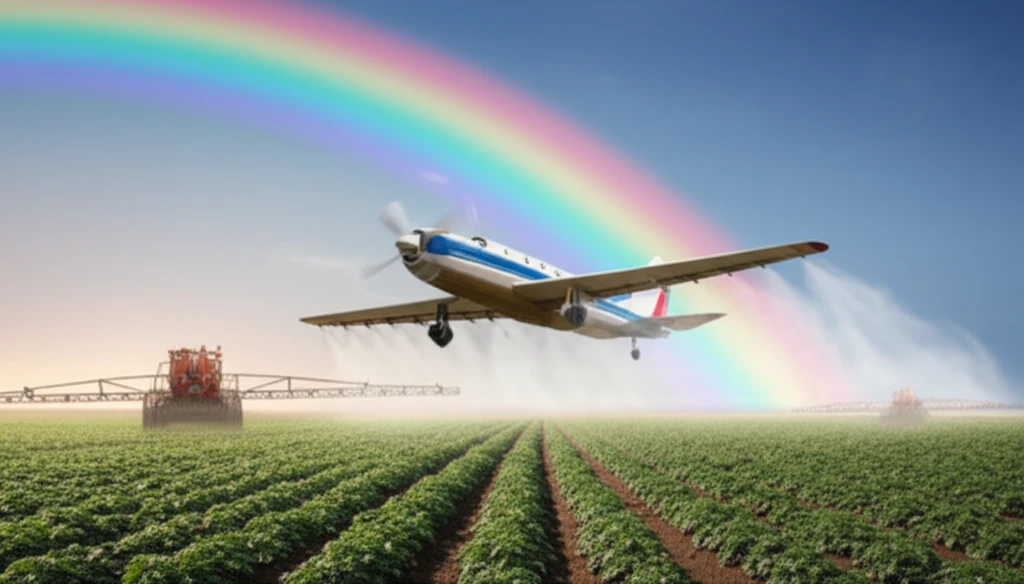
Potato field being sprayed by aerial and ground equipment under a rainbow.

Maximize Your Potato Harvest: A Guide to Aerial and Ground Spraying Techniques

"Unlock the secrets to effective pesticide application in potato farming. Discover how aerial and ground spraying methods, combined with the right adjuvants, can optimize crop protection and boost your yields."


Potato farming demands meticulous attention to pest and disease control. Effective management not only safeguards yields but also minimizes environmental impact. Selecting the right spraying methods and understanding how they affect pesticide deposition is crucial for success. This article explores the nuances of aerial and ground spraying techniques in potato crops, providing insights into optimizing spray deposition, reducing waste, and enhancing overall crop protection.

Traditional approaches often involve high spray volumes, but modern research is paving the way for more efficient practices. By examining how different application methods and spray compositions influence pesticide coverage, we can refine our strategies for better results. This guide highlights key findings on droplet size, spray deposition patterns, and the role of adjuvants in maximizing the efficacy of each application.

Whether you're a seasoned potato farmer or new to the field, mastering these techniques will empower you to make informed decisions that protect your crops and promote sustainable farming practices. Let's delve into the details of aerial and ground spraying to help you achieve a bountiful and healthy potato harvest.

Aerial vs. Ground Spraying: Choosing the Best Method for Your Potato Crop

Potato field being sprayed by aerial and ground equipment under a rainbow.

Deciding between aerial and ground spraying depends on various factors, including field size, terrain, and available resources. Each method has distinct advantages and challenges that can significantly impact the outcome of your pest control efforts.

Aerial spraying offers rapid coverage, making it ideal for large fields or areas with difficult terrain. However, it requires careful attention to weather conditions to minimize drift and ensure accurate deposition. Ground spraying, on the other hand, provides more precise application but can be slower and more labor-intensive.

  • Aerial Spraying: Suitable for large areas, quick application, higher operational capacity, but susceptible to drift.
  • Ground Spraying: Precise application, less drift, better for uneven terrain, but slower and may cause soil compaction.
Understanding the strengths and weaknesses of each method will enable you to select the most appropriate technique for your specific needs. Consider the following when making your decision: the size and layout of your fields, the type of pests or diseases you're targeting, and the environmental conditions in your area. Tailoring your approach to these factors will help optimize your spray deposition and maximize the effectiveness of your crop protection efforts.

Optimize Your Spraying Strategy

Mastering the art of aerial and ground spraying is essential for maximizing your potato harvest. By understanding the nuances of each method and carefully selecting the right adjuvants, you can improve spray deposition, reduce waste, and protect your crops from pests and diseases. Keep experimenting with different techniques and formulations to find the perfect balance for your unique growing environment. With a commitment to continuous improvement, you can achieve consistent and bountiful harvests season after season.

About this Article -

This article was crafted using a human-AI hybrid and collaborative approach. AI assisted our team with initial drafting, research insights, identifying key questions, and image generation. Our human editors guided topic selection, defined the angle, structured the content, ensured factual accuracy and relevance, refined the tone, and conducted thorough editing to deliver helpful, high-quality information.See our About page for more information.

Everything You Need To Know

1

What is aerial spraying and why is it used in potato farming?

Aerial spraying involves using aircraft to apply pesticides. It's significant because it allows for rapid coverage of large potato fields and is particularly useful in areas with difficult terrain. The implications include higher operational capacity but also a greater susceptibility to drift, which can affect the accuracy of pesticide deposition and potentially impact surrounding environments. Careful attention to weather conditions is crucial when using aerial spraying to minimize these risks.

2

What is ground spraying and what are its advantages in potato crops?

Ground spraying uses equipment on the ground to apply pesticides. This method is important because it offers more precise application and reduces the risk of drift compared to aerial spraying. However, it can be slower and more labor-intensive, and may cause soil compaction. It is best suited for uneven terrain and smaller fields where precision is key to effective pest control.

3

What does spray deposition mean and why is it important for effective pest control in potato farming?

Spray deposition refers to the amount of pesticide that effectively lands on the potato plants. It is important because it directly impacts the efficacy of pest control efforts. Optimizing spray deposition involves selecting the right spraying method (aerial or ground), droplet size, and adjuvants to ensure maximum coverage and minimal waste. Ineffective spray deposition can lead to inadequate pest control, increased pesticide usage, and potential environmental harm.

4

What are adjuvants and why are they important when spraying potatoes?

Adjuvants are substances added to pesticide mixtures to enhance their performance. They are significant because they can improve spray deposition, reduce drift, and increase the effectiveness of the pesticide. Different adjuvants have different functions, such as improving droplet spread or increasing rainfastness. Selecting the right adjuvant is crucial for maximizing the benefits of both aerial and ground spraying techniques. Without the proper adjuvant, the effectiveness of a pesticide application can be significantly reduced, leading to increased costs and potential crop damage. The text implies further research should continue into spray compositions.

5

How do I decide whether to use aerial or ground spraying for my potato crop?

Choosing between aerial and ground spraying depends on factors like field size, terrain, and available resources. Aerial spraying is suitable for large fields and difficult terrain, offering rapid coverage but requiring careful attention to weather conditions to minimize drift. Ground spraying provides more precise application and is better for uneven terrain, but it's slower and may cause soil compaction. The best method depends on your specific needs and environmental conditions. A decision needs to factor in the pest or disease targeting, and the layout of the fields.

Newsletter Subscribe

Subscribe to get the latest articles and insights directly in your inbox.