
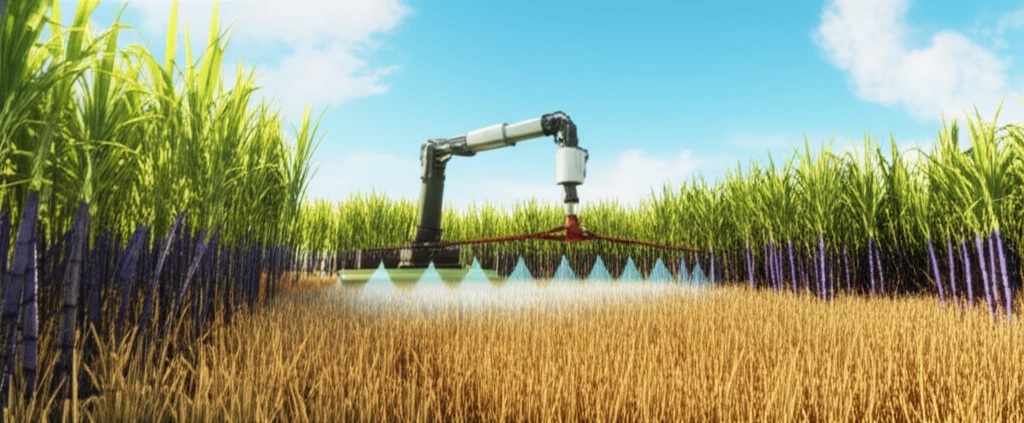
Maximize Herbicide Efficiency: Nozzle Tech for Sugarcane Straw

"Unlock the secret to effective weed control in sugarcane fields by optimizing herbicide application techniques in heavy straw conditions."
The shift towards harvesting sugarcane without burning has led to a significant increase in crop residue, or straw, left on the soil surface. While this mulch layer offers environmental benefits, it also presents challenges for weed management. The straw acts as a physical barrier, hindering herbicide contact with the soil and potentially reducing its effectiveness.
Achieving optimal herbicide deposition through sugarcane straw is crucial for effective weed control and minimizing herbicide usage. Selecting the right spray nozzle can make a significant difference in herbicide penetration and coverage.
This article explores research on how different spray nozzle types impact herbicide deposition through varying amounts of sugarcane straw. We'll break down the findings to help you choose the best nozzle for your specific field conditions, maximizing herbicide efficiency and improving weed control.
Why Nozzle Choice Matters: Herbicide Delivery Through Sugarcane Straw
Research conducted at the Universidade Estadual de Maringá investigated the effectiveness of various spray nozzles in delivering herbicides through different quantities of sugarcane straw. The study evaluated eight nozzle types across seven straw densities, measuring the amount of spray solution that reached the soil surface.
- Anti-Drift Fan Nozzles (AD 110 02): These nozzles, designed to reduce drift, also demonstrated excellent herbicide delivery through the straw.
- Air Induction Cone Nozzles (CV-IA 02): These nozzles create air-filled droplets, which proved effective in penetrating the straw layer and depositing herbicide on the soil.
Optimize Your Spray Strategy: Key Takeaways for Effective Weed Control
Selecting the right spray nozzle is critical for effective weed control in sugarcane fields with heavy straw cover. Anti-drift fan nozzles (AD 110 02) and air induction cone nozzles (CV-IA 02) have shown promise in delivering herbicides through the straw layer.
Consider the amount of straw in your fields when choosing a nozzle. As straw density increases, nozzle selection becomes even more important for ensuring adequate herbicide deposition. Monitor herbicide efficacy and adjust your spray strategy as needed to optimize weed control.
While managing sugarcane straw presents challenges, optimizing herbicide application techniques can help you overcome these hurdles and achieve effective weed control while maintaining the benefits of crop residue management.