
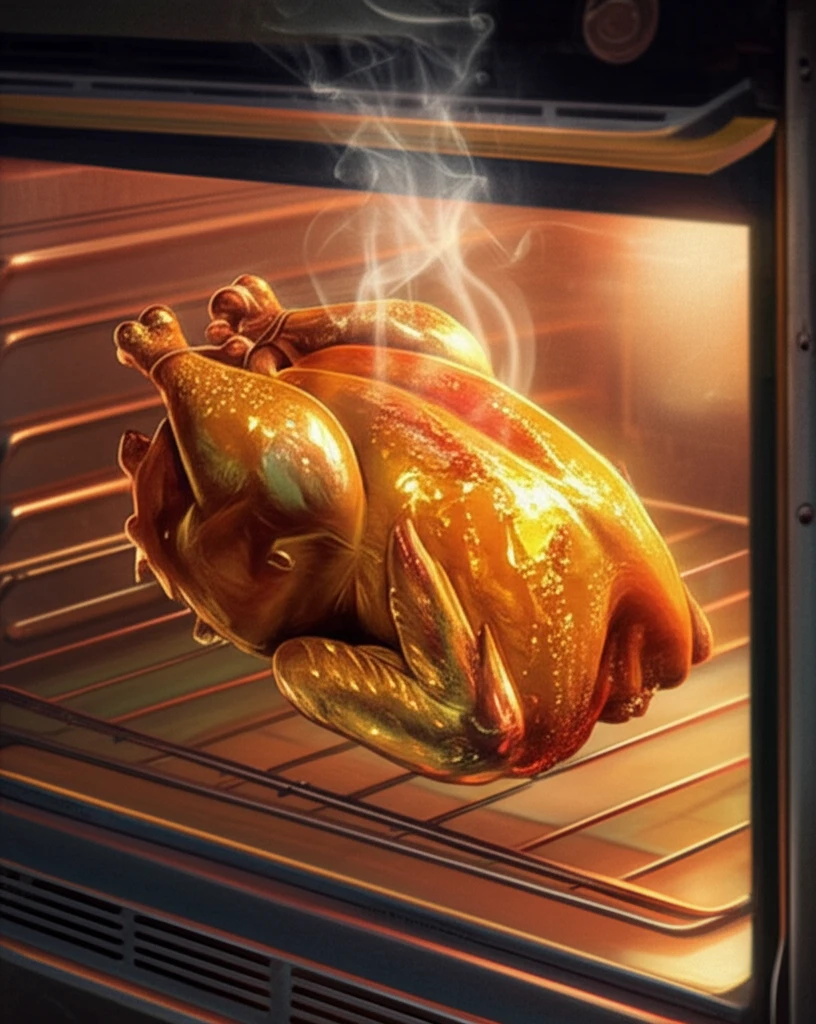
Surreal image of bread transforming into chicken, representing baking and roasting.

Mastering the Art of Baking and Roasting: Techniques, Science, and Culinary Secrets

"Unlock the secrets to perfect baking and roasting with our comprehensive guide, exploring everything from the science of heat transfer to essential preservation techniques."


Baking and roasting, ancient techniques integral to global cuisine, involve using heated air to transform the eating quality of foods. While these terms are often used interchangeably, they apply to different food categories: baking for flour-based goods and fruits, and roasting for meats, cocoa, coffee beans, nuts, and vegetables. This article will use 'baking' to encompass both processes, highlighting how it preserves food and enhances flavor.

The shelf life of baked products hinges on several key factors: moisture content, acidity (ranging from pH 4.2 to 7.0 depending on the product), the use of chemical preservatives, and the application of heat to eliminate microorganisms and enzymes. Effective packaging, such as modified atmosphere packaging, and proper storage temperatures (chilled or frozen) also play crucial roles. These elements collectively ensure the quality and longevity of baked goods.

This comprehensive guide covers baking with convective or conductive heat transfer from hot air, delving into the theories and practical applications essential for both novice and experienced bakers. We'll also touch on microwave and radio-frequency heating, and infrared toasting, offering a complete overview of modern baking techniques.

The Science Behind Baking: Heat Transfer and Moisture Control

Surreal image of bread transforming into chicken, representing baking and roasting.

As with dehydration, baking involves simultaneous heat transfer into food and moisture removal through evaporation. The primary difference lies in the heated air temperature, which, in baking, ranges from 110°C to 300°C, much higher than in typical dehydration. Unlike dehydration, which aims to remove as much water as possible, baking seeks to retain some moisture to enhance the sensory qualities of the final product. Think of the difference between a cracker and a cake.

In baking, heat serves multiple purposes: destroying microorganisms, evaporating water, forming a desirable crust, and superheating water vapor. In a hot-air oven, heat is supplied through a combination of infrared radiation, convection from circulating hot air, and conduction. Each method plays a critical role in how the food cooks and how its texture and flavor develop.

The factors that influence heat transfer in baking include:
  • Temperature Difference: The contrast between the heat source and the food influences the speed of heat absorption.
  • Air Velocity: The speed of air moving in the oven impacts moisture removal and heat distribution.
  • Food Characteristics: The size and type of food determine how uniformly it cooks.
A boundary film of air resists heat transfer into the food and moisture movement from the food. The air's velocity and the food's surface determine the boundary layer's thickness. High-velocity fans in ovens reduce this layer, enhancing heat and mass transfer. Impingement ovens virtually eliminate these boundary films, optimizing the baking environment for uniform and rapid cooking.

Elevate Your Baking and Roasting Game

Whether you're a home baker or a culinary professional, understanding the science and techniques behind baking and roasting is essential. By mastering heat transfer, moisture control, and preservation methods, you can consistently create delicious, safe, and high-quality baked goods. Embrace these principles, experiment with new approaches, and transform your cooking!

About this Article -

This article was crafted using a human-AI hybrid and collaborative approach. AI assisted our team with initial drafting, research insights, identifying key questions, and image generation. Our human editors guided topic selection, defined the angle, structured the content, ensured factual accuracy and relevance, refined the tone, and conducted thorough editing to deliver helpful, high-quality information.See our About page for more information.

This article is based on research published under:

DOI-LINK: 10.1016/b978-0-08-100522-4.00016-x, Alternate LINK

Title: Baking And Roasting

Journal: Food Processing Technology

Publisher: Elsevier

Authors: P.J. Fellows

Published: 2017-01-01

Everything You Need To Know

1

What distinguishes baking from roasting in culinary terms, and what's the underlying purpose of both?

Baking and roasting both use heated air to cook foods, but 'baking' generally refers to flour-based items and fruits, while 'roasting' is applied to meats, cocoa, coffee beans, nuts, and vegetables. The key is the application of dry heat in a controlled environment to enhance flavor and, importantly, preserve food.

2

What are the primary determinants of how long baked goods remain fresh and safe to eat?

Several factors affect the shelf life of baked products, including moisture content, acidity levels (pH ranging from 4.2 to 7.0 depending on the product), the use of chemical preservatives, and effective heat treatment to eliminate microorganisms and enzymes. Proper packaging, such as modified atmosphere packaging, and correct storage temperatures (chilled or frozen) are also crucial.

3

How does heat circulate within an oven to bake food, and what factors impact how efficiently this heat transfers?

In baking, heat transfer occurs through infrared radiation, convection from circulating hot air, and conduction. Each method plays a critical role. The temperature difference between the heat source and the food, the velocity of the air, and the characteristics of the food itself all influence how effectively heat is transferred.

4

Why are high-velocity fans used in ovens, and how do they improve the baking process?

The purpose of high-velocity fans in ovens is to reduce the boundary film of air that resists heat transfer into the food and moisture movement from it. By minimizing this boundary layer, high-velocity fans enhance both heat and mass transfer, leading to more uniform and rapid cooking. Impingement ovens are designed to virtually eliminate these boundary films, optimizing the baking environment.

5

How does baking differ from dehydration, considering both involve heat and moisture?

While both dehydration and baking involve heat transfer and moisture removal, the crucial difference lies in the temperature and the objective. Baking uses much higher temperatures (110°C to 300°C) than dehydration. Unlike dehydration, which aims to remove as much water as possible, baking seeks to retain a certain amount of moisture to achieve the desired sensory qualities, distinguishing a cracker from a cake, for example.

Newsletter Subscribe

Subscribe to get the latest articles and insights directly in your inbox.