
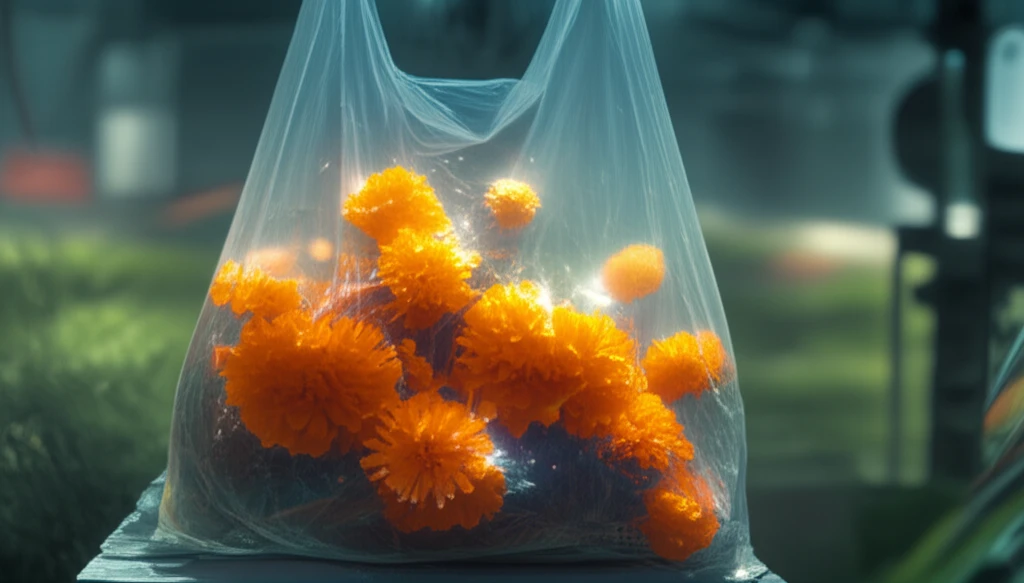
Marigold Magic: How Smart Packaging Keeps Flowers Fresh and Boosts Lutein

"Unlock the secrets to extending the shelf life of marigolds and maximizing their health benefits with the right packaging. Discover how a simple LDPE bag can make all the difference!"
Marigolds aren't just beautiful; they're also packed with health benefits, thanks to a powerful antioxidant called lutein. India is a major producer of marigolds, but these delicate flowers have a short shelf life, leading to significant losses and limiting export potential. Finding ways to keep them fresh longer is a big deal for both the economy and our health.
While there are traditional methods for preserving marigolds, like air drying or using preservatives, these can degrade lutein or introduce unwanted chemicals. That's where innovative packaging comes in. Recent research explores how different packaging materials can extend the shelf life of cut flowers, keeping them vibrant and nutrient-rich.
This article dives into a study that tested various packaging configurations to find the best way to preserve marigold flowers. The goal? To keep them fresh for longer, maintain their lutein content, and unlock their full potential as both an ornamental delight and a source of valuable nutrients. Prepare to discover the surprising power of a simple LDPE bag!
Packaging Shapes Shelf Life
Research on marigold flowers found that wrapping material and storage conditions affected weight loss, total water absorbed, maximum flower diameter, and vase life in both cultivars. A separate evaluation under ambient conditions reported a shelf life of 1 day in summer and 4 days in the rainy season. Researchers at Dr Y.S. Parmar University of Horticulture and Forestry studied polyethylene, cellophane, and newspaper as packaging materials during 2016-2017.
Conventional Protection
Conventional post-harvest handling generally relies on suitable wrapping, storage conditions, and careful management of water loss. These methods can help preserve appearance and freshness, but their performance may vary with temperature, humidity, packaging material, and handling conditions. Because marigold flowers are perishable, standard approaches should be treated as practical preservation measures rather than universally reliable solutions.
From Wrapping to Controlled Storage
The development of marigold post-harvest practice has progressed from basic wrapping toward deliberate comparisons of packaging materials and storage environments. Earlier work established that packaging and storage conditions influence flower quality and longevity. This foundation supports current efforts to combine material selection with better temperature and moisture control.
The Packaging Solution: LDPE to the Rescue
Researchers designed ten different packaging configurations using materials like low-density polyethylene (LDPE), polyethylene terephthalate (PET), glassine paper, and cellophane. They packed fresh marigold flowers in these materials and stored them in a controlled environment, monitoring their sensory attributes (appearance, color, texture, fungal growth) and chemical properties (moisture, oxidation, lutein content). A control group of unpackaged flowers was also observed.
- Preserved Lutein: Flowers in LDPE bags showed significantly higher lutein production, enhancing their nutritional value.
- Maintained Moisture: LDPE helped prevent moisture loss, keeping the petals from drying out and shrinking.
- Reduced Oxidation: The packaging limited the production of harmful peroxide radicals, slowing down the aging process.
- Boosted Antioxidant Activity: LDPE-packaged flowers retained higher levels of beneficial antioxidants.
Shrink Wrap and Carotenoid Preservation
A 2024 study of Cryovac-based shrink-wrap packaging reported that combining shrink wrap with low-temperature storage significantly extended marigold storability, preserved color, minimized shrivelling, and limited physiological weight loss to below 10.0%. Research conducted at the ICAR-Indian Agricultural Research Institute, New Delhi, during 2021 and 2022 evaluated packaging materials to improve flower shelf life. In marigold var. Pusa Basanti Gainda, the reported results included maximum shelf life, high carotenoid content, minimum ion leakage, and reduced physiological loss in weight and enzyme activity.
Limits of Packaging Alone
Packaging does not eliminate the underlying perishability of marigold flowers. Its effectiveness may depend on storage temperature, ambient conditions, material choice, and storage duration. Results from one packaging or storage setup should not be assumed to apply equally across seasons, cultivars, or supply chains.
Ambient Versus Cold Storage
Research on loose marigold flowers compared packaging performance under ambient conditions of 30 ± 2°C and cold conditions of 5 ± 1°C. This design recognizes that the same packaging material may perform differently depending on the storage environment. The comparison was intended to identify materials that extend storage life while preserving flower quality in both settings.
More Than Just a Pretty Flower: Unlocking Marigold's Potential
This research underscores the importance of smart packaging in preserving not only the aesthetic appeal but also the nutritional value of agricultural products. By choosing the right materials, we can minimize waste, extend shelf life, and deliver healthier options to consumers.
Packaging as a Quality System
The available research suggests that packaging should be viewed as part of a broader freshness system rather than as an isolated solution. Material selection, temperature, moisture management, and handling conditions all influence outcomes. The strongest approach is therefore likely to match packaging design with the specific storage and distribution environment.
Toward Smarter Preservation
Future work can build on packaging trials by testing materials under more varied temperatures, humidity levels, cultivars, and transport conditions. Research may also focus on preserving both visible quality and valuable compounds such as carotenoids. Progress will depend on translating controlled experiments into reliable practices for real handling and marketing conditions.
Beyond the Package
Marigold freshness is shaped by a connected chain that includes cultivation, harvesting, packing, storage, transport, and marketing. Improvements at only one stage may be weakened by poor temperature control or rough handling elsewhere. A systemic perspective is therefore necessary when assessing the practical value of smart packaging.
Reducing Post-Harvest Losses
Marigold, or Tagetes spp., is an important loose flower crop in India, but its highly perishable nature causes substantial post-harvest losses during handling and marketing. Packaging improvements could therefore affect not only flower quality but also the practical value retained by people moving flowers through the supply chain. The reported concern highlights why storage-life research has direct relevance beyond laboratory measurements.
The success of LDPE packaging opens up exciting possibilities for the marigold industry. It’s a practical, affordable solution that can help farmers reduce post-harvest losses, increase export opportunities, and capitalize on the growing demand for natural sources of lutein.
So, the next time you see a vibrant marigold, remember that there's more to it than meets the eye. Thanks to innovative packaging solutions, these flowers are not only a feast for the eyes but also a boost for our health.