
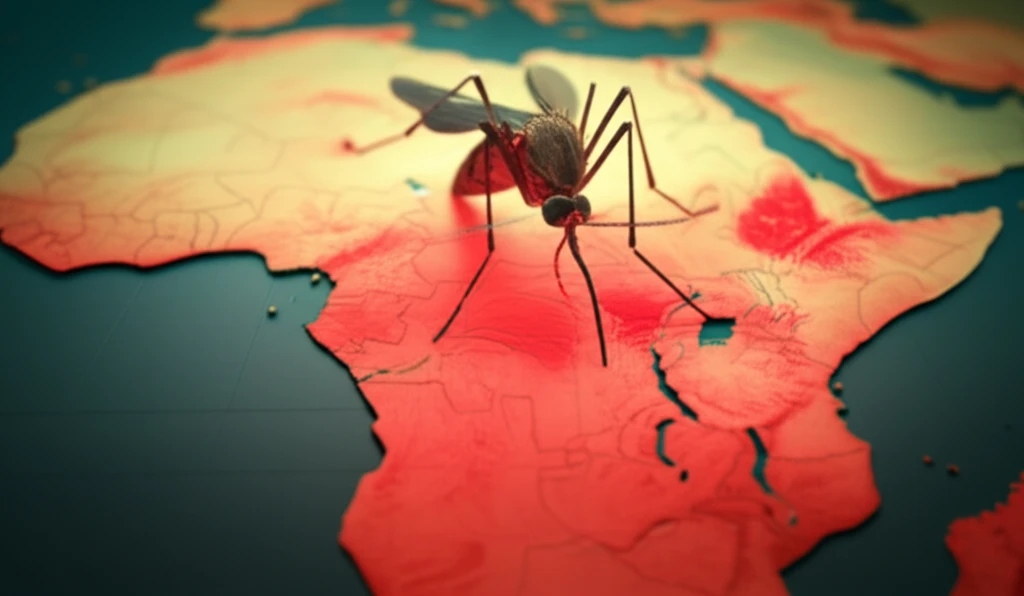
Malaria in a Warming World: How Climate Change Is Reshaping Risk Zones

"New research reveals how rising temperatures and shifting rainfall patterns are altering malaria transmission in Eastern Africa, demanding proactive public health strategies."
Malaria, a disease transmitted by mosquitoes, poses a significant threat to global public health, especially in regions like Eastern Africa. For years, efforts to combat malaria have focused on strategies such as insecticide-treated bed nets, indoor residual spraying, and antimalarial drugs. However, a new challenge is emerging: climate change. Rising temperatures and altered rainfall patterns are poised to reshape the landscape of malaria transmission, potentially undoing progress and creating new hotspots.
Recent research published in 'Geospatial Health' delves into the intricate relationship between climate change and malaria transmission in Eastern Africa. Unlike previous studies that relied on simpler models or limited climate data, this study employs a comprehensive approach, using a vast ensemble of climate projections and sophisticated disease models. This allows for a more nuanced understanding of the uncertainties and potential impacts of climate change on malaria.
The study focuses on Eastern Africa, a region highly vulnerable to climate change and with a large population at risk of malaria. By examining how different climate scenarios might affect the spatiotemporal dynamics of malaria transmission, the researchers aim to provide valuable insights for policymakers and public health officials. The goal is to inform proactive strategies that can mitigate the adverse effects of climate change and protect communities from the shifting threat of malaria.
How Will Climate Change Reshape Malaria Transmission?
The research team employed an ensemble of climate projections, incorporating various techniques to address biases and uncertainties inherent in climate models. These projections then drove two distinct epidemiological malaria models: the Liverpool Malaria Model (LMM) and the Vector-borne Disease Community Model of the International Centre for Theoretical Physics (VECTRI). By comparing the outputs of these models, the researchers aimed to gain a more robust understanding of potential future scenarios.
- Temperature Increases: The climate model ensemble generally projects warmer conditions across Eastern Africa, with temperature increases potentially exceeding 3°C in some areas by the 2080s.
- Shifting Rainfall: While there is more uncertainty regarding rainfall patterns, the models suggest a general increase in precipitation across the region, though with considerable spatial variability.
- Highland Transmission: A key finding is the potential for increased malaria transmission in the highlands of Eastern Africa, including areas of Ethiopia, Kenya, Uganda, Rwanda, Burundi, and Tanzania. This is driven primarily by rising temperatures, which make these areas more suitable for mosquito survival and parasite development.
- Lowland Reductions: Conversely, the models suggest a potential decrease in malaria transmission in some lowland areas, particularly in marginal transmission zones like South Sudan. This may be due to temperatures exceeding the optimal range for transmission.
What Does This Mean for the Future of Malaria Control?
The study underscores the urgent need for proactive and adaptive strategies to combat malaria in Eastern Africa in the face of climate change. Public health interventions need to evolve to address the shifting risk zones and protect vulnerable populations. This may involve strengthening surveillance systems, expanding access to healthcare in highland areas, and developing climate-resilient vector control strategies. By understanding the complex interplay between climate change and malaria transmission, we can better prepare for the challenges ahead and work towards a future where malaria is no longer a major threat to public health.