
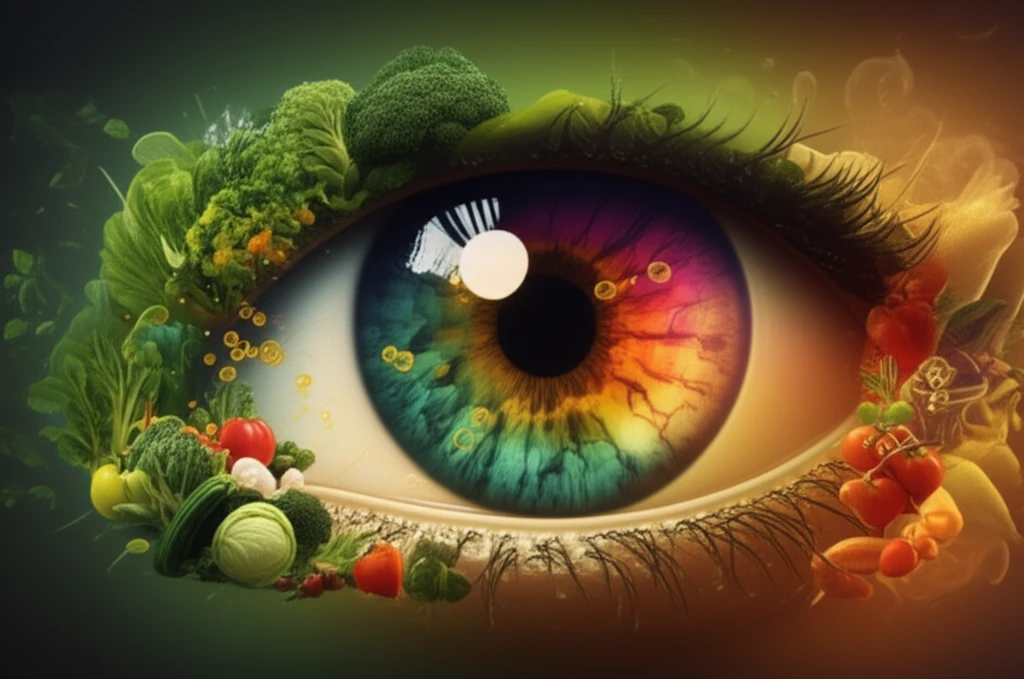
Eye protected by Lutein and Zeaxanthin.

Lutein, Zeaxanthin, and Your Eyes: How Your Diet Can Protect Your Vision

"Discover the power of macular pigment and how boosting your lutein and zeaxanthin intake can help maintain healthy vision as you age."


As we live longer, maintaining our health becomes increasingly important. Age-related conditions, including eye diseases, can significantly impact our quality of life. Age-related macular degeneration (AMD), a common eye condition, can lead to visual impairment and blindness.

Fortunately, proactive measures can be taken to protect our vision. One key factor is macular pigment (MP), which is made up of lutein (L), zeaxanthin (Z), and meso-zeaxanthin. These carotenoids act as a natural barrier against harmful blue light and provide antioxidant benefits to the retina.

A recent study investigated the relationship between macular pigment optical density (MPOD), plasma lutein and zeaxanthin levels, and diet in an elderly population. The findings highlight the importance of these nutrients in maintaining eye health and offer insights into how we can support our vision through proper nutrition.

What is Macular Pigment Optical Density (MPOD) and Why Does It Matter?

Eye protected by Lutein and Zeaxanthin.

Macular Pigment Optical Density (MPOD) refers to the concentration of protective pigments, primarily lutein and zeaxanthin, in the macula – the central part of the retina responsible for sharp, detailed vision. MPOD acts like internal sunglasses, shielding the eye from damaging blue light and neutralizing harmful free radicals.

A higher MPOD is associated with a lower risk of age-related macular degeneration (AMD). While genetics and other environmental factors play a role, MPOD is influenced by nutritional intake, making it a modifiable factor in maintaining eye health.

  • Protects Against Blue Light: Lutein and zeaxanthin absorb blue light, reducing its potential to damage the retina.
  • Antioxidant Defense: These carotenoids neutralize free radicals, preventing oxidative stress that can harm the macula.
  • Enhances Visual Function: Higher MPOD is linked to improved visual acuity and contrast sensitivity.
The Montrachet study sought to clarify the relationships between MPOD, dietary intake, and plasma levels of lutein and zeaxanthin in an elderly population. This research provides valuable insights into how lifestyle and nutrition can impact our vision as we age.

Taking Charge of Your Eye Health

By understanding the importance of macular pigment and its relationship to lutein and zeaxanthin, you can make informed choices to protect your vision. A diet rich in these nutrients, combined with a healthy lifestyle, can contribute to maintaining optimal eye health and reducing the risk of age-related macular degeneration. Prioritize your eye health today for a brighter future.

About this Article -

This article was crafted using a human-AI hybrid and collaborative approach. AI assisted our team with initial drafting, research insights, identifying key questions, and image generation. Our human editors guided topic selection, defined the angle, structured the content, ensured factual accuracy and relevance, refined the tone, and conducted thorough editing to deliver helpful, high-quality information.See our About page for more information.

This article is based on research published under:

DOI-LINK: 10.1167/iovs.15-18007, Alternate LINK

Title: Relationships Of Macular Pigment Optical Density With Plasma Lutein, Zeaxanthin, And Diet In An Elderly Population: The Montrachet Study

Subject: General Medicine

Journal: Investigative Opthalmology & Visual Science

Publisher: Association for Research in Vision and Ophthalmology (ARVO)

Authors: Seydou Alassane, Christine Binquet, Vanessa Cottet, Olivier Fleck, Niyazi Acar, Sandrine Daniel, Cécile Delcourt, Lionel Bretillon, Alain M. Bron, Catherine Creuzot-Garcher

Published: 2016-03-14

Everything You Need To Know

1

What is Macular Pigment Optical Density (MPOD) and why is it important?

Macular Pigment Optical Density, or MPOD, refers to the concentration of lutein and zeaxanthin in the macula, which is the central part of the retina responsible for detailed vision. It acts like internal sunglasses, shielding the eye from damaging blue light and neutralizing harmful free radicals. MPOD matters because a higher MPOD is associated with a lower risk of age-related macular degeneration (AMD). While genetics and other environmental factors play a role, MPOD is influenced by nutritional intake, making it a modifiable factor in maintaining eye health.

2

Why are lutein and zeaxanthin important for eye health as we age?

Lutein and zeaxanthin are crucial for maintaining eye health as we age because they make up macular pigment (MP) and act as a natural barrier against harmful blue light and provide antioxidant benefits to the retina. They protect against blue light by absorbing it, provide antioxidant defense by neutralizing free radicals, and enhance visual function, which is linked to improved visual acuity and contrast sensitivity. Without sufficient intake of lutein and zeaxanthin, the macula is more susceptible to damage, potentially leading to conditions such as age-related macular degeneration (AMD).

3

What is Age-related Macular Degeneration (AMD) and why should I be concerned about it?

Age-related Macular Degeneration (AMD) is a common eye condition that can lead to visual impairment and blindness. It is significant because it can greatly impact the quality of life as people age. Macular pigment is composed of lutein, zeaxanthin, and meso-zeaxanthin, which act as a natural barrier against harmful blue light and provide antioxidant benefits to the retina. A higher macular pigment optical density (MPOD) is associated with a lower risk of AMD.

4

What was the purpose of the Montrachet study and why is it important?

The Montrachet study sought to clarify the relationships between MPOD, dietary intake, and plasma levels of lutein and zeaxanthin in an elderly population. It is significant because this research provides valuable insights into how lifestyle and nutrition can impact our vision as we age. By understanding these relationships, individuals can make informed choices about their diet and lifestyle to protect their vision and reduce the risk of age-related macular degeneration (AMD). The study highlights the importance of proper nutrition in maintaining eye health.

5

How can I increase my intake of lutein and zeaxanthin?

You can increase your intake of lutein and zeaxanthin through dietary changes. A diet rich in these nutrients, combined with a healthy lifestyle, can contribute to maintaining optimal eye health and reducing the risk of age-related macular degeneration. While the text doesn't mention specific foods, generally, leafy green vegetables and brightly colored fruits and vegetables are good sources. It is important to ensure adequate intake through diet or, if necessary, consider supplementation after consulting with a healthcare professional.

Newsletter Subscribe

Subscribe to get the latest articles and insights directly in your inbox.