
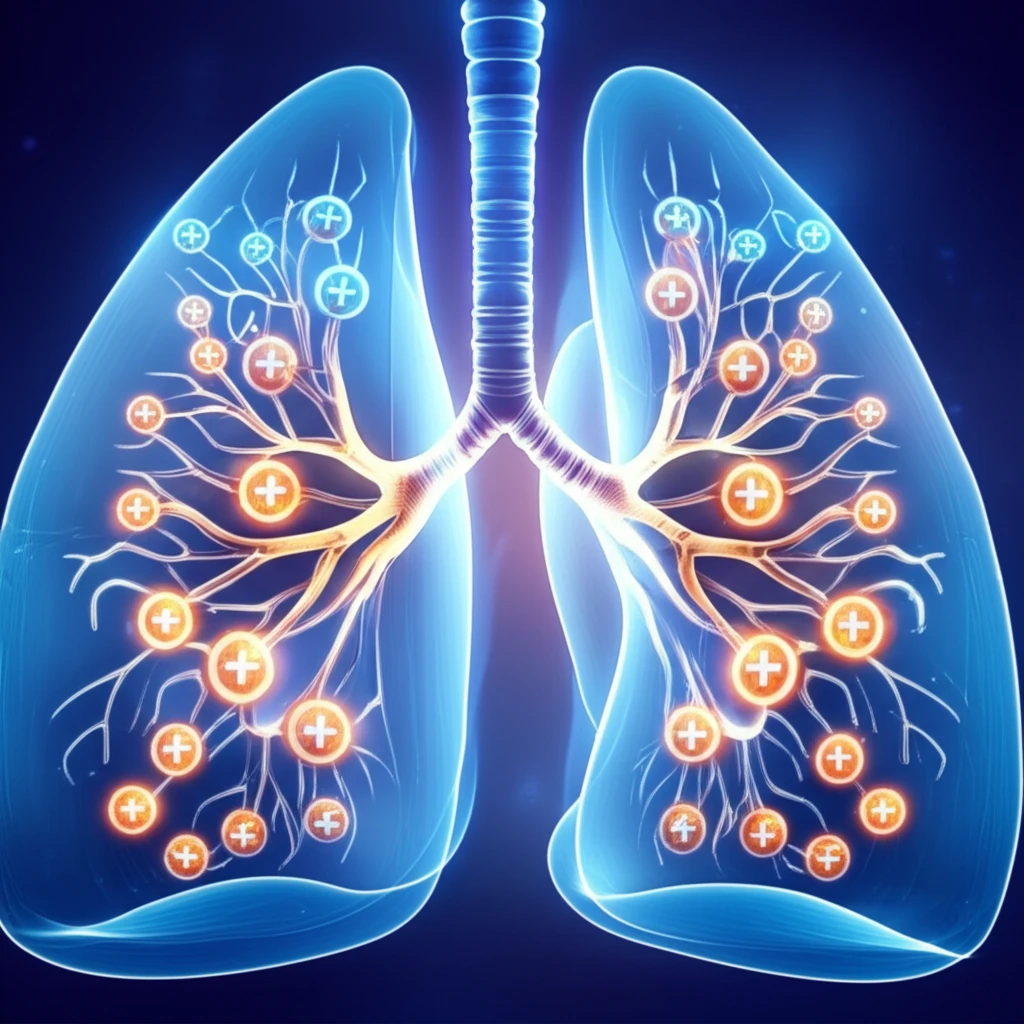
Lung Disease Breakthrough: Charge-Based Nanoparticles Target Pulmonary Endothelium

"Revolutionary research unveils a highly efficient method for targeting lung microvasculature, paving the way for advanced gene therapies."
Pulmonary vascular disease (PVD) presents a significant challenge in both pediatric and adult medicine, demanding more effective treatment strategies. Gene therapy holds immense promise, yet the development of safe and efficient delivery systems remains a critical hurdle. Traditional viral vectors, while effective, pose risks such as immune responses and random genome integration.
Researchers have focused on non-viral delivery systems, with polyethylenimine (PEI) showing considerable potential due to its high buffering capacity, which aids in intracellular compartmentalization. However, balancing PEI's transfection efficiency with its cytotoxicity has been a key challenge. Recent studies explore modifications to lower molecular weight PEI to reduce toxicity and boost effectiveness.
Now, a new study introduces an innovative approach: functionalizing hyperbranched PEI with biological fatty acids and carboxylate-terminated poly(ethylene glycol) (PEG). This method creates nanoparticles that exhibit exceptional specificity for the pulmonary microvascular endothelium, enabling successful delivery of therapeutic mRNA. The key? Tuning the surface charge of these nanoparticles.
How Charge Modification Revolutionizes Lung-Targeted Drug Delivery
The research team synthesized novel polyplexes by modifying hyperbranched PEI with fatty acids like myristic acid, linoleic acid, and PEG. These modifications were achieved through a one-pot reaction, simplifying the process and enhancing its potential for scalability. The resulting nanoparticles demonstrated a controlled hydrodynamic size and surface charge, crucial factors for in vivo applications.
- High Specificity: The nanoparticles preferentially accumulate in the lung tissue, particularly within the alveolar capillary endothelium.
- Charge Dependence: Positive surface charge is the primary driver behind the targeting efficiency. Modifying the charge with poly(acrylic acid) or heparin significantly reduces targeting.
- Microvascular Targeting: The nanoparticles are highly disseminated within the pulmonary microvasculature, a critical target for treating PVD.
Future Implications and Therapeutic Potential
This research represents a significant step forward in targeted drug delivery for pulmonary vascular diseases. By demonstrating the critical role of surface charge in directing nanoparticles to the lung endothelium, the study opens new avenues for developing more effective and selective therapies.
The ability to deliver mRNA specifically to lung cells holds promise for treating a range of conditions, including pulmonary hypertension and alveolar capillary dysplasia. Non-viral delivery systems like these offer a safer alternative to traditional viral vectors, reducing the risk of adverse immune responses and genome integration.
Further research will focus on optimizing the nanoparticle formulation, exploring different therapeutic payloads, and conducting preclinical studies to evaluate the long-term safety and efficacy of this approach. The precision targeting achieved through charge modification could revolutionize the treatment of lung diseases, offering new hope for patients with PVD.