
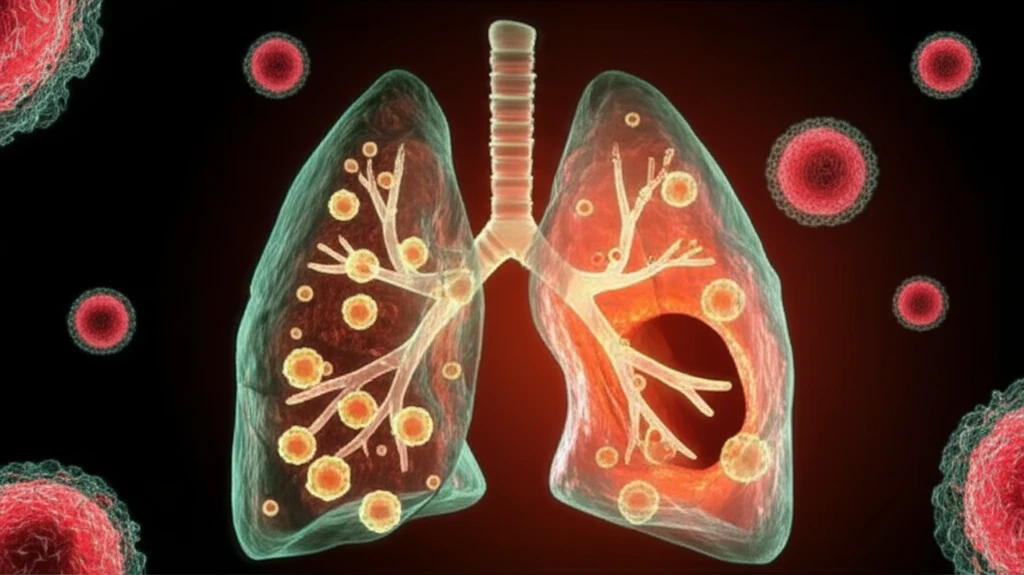
Lung Cancer Mystery: A Rare Case of Cavity-Forming Carcinoma

"Doctors report an unusual case of epithelial-myoepithelial carcinoma (EMC) in the lung, presenting as a cavitary lesion."
Lung cancer often presents in varied and complex ways, making diagnosis a continuous challenge for medical professionals. While many types of lung cancers are well-documented, rare forms occasionally emerge, defying typical expectations and requiring novel approaches to treatment. Among these rarities is epithelial-myoepithelial carcinoma (EMC), a type of cancer predominantly found in the salivary glands.
However, in extremely rare instances, EMC can originate in the lung's bronchial glands. Adding another layer of complexity, lung cancers sometimes develop cavities—hollow spaces within the tumor. Though cavitation is not uncommon in lung cancer, the combination of EMC with a cavitary lesion is exceptionally rare. In fact, medical literature has, until recently, lacked documented cases of this unusual presentation.
A recent case study published in Molecular and Clinical Oncology sheds light on this phenomenon, detailing the diagnosis and treatment of a 72-year-old man with cavity-forming pulmonary EMC. This report not only expands our understanding of lung cancer's diverse manifestations but also highlights the importance of considering rare possibilities in diagnosis.
What is Epithelial-Myoepithelial Carcinoma (EMC)?
Epithelial-myoepithelial carcinoma (EMC) is a rare type of cancer that typically starts in the salivary glands. These glands, located in the mouth and throat, produce saliva to keep the mouth moist and aid in digestion. EMC is characterized by its unique biphasic structure, meaning it has two distinct types of cells:
- Epithelial cells: These cells form the inner layer of the tumor and often appear as duct-like structures.
- Myoepithelial cells: These cells surround the epithelial cells and have a clear appearance. They play a role in supporting the structure of the glands.
Implications and Future Directions
This rare case of cavity-forming pulmonary EMC underscores the importance of considering unusual presentations of lung cancer. While the mechanism behind cavity formation in this specific case remains unclear, the report suggests that it may be linked to pre-existing cystic lesions in the lung. Further research is needed to fully understand the development and behavior of lung EMC, which could lead to more effective diagnostic and treatment approaches for this rare cancer.