
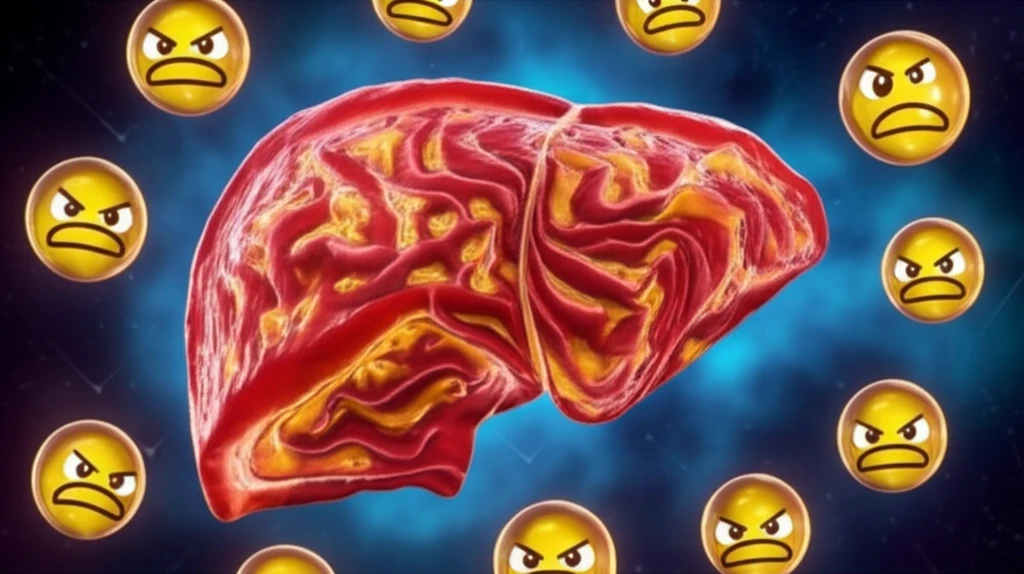
Surreal illustration of a liver cell experiencing endoplasmic reticulum stress due to bile acid toxicity.

Liver SOS: Unmasking Bile Acid's Hidden Stress Trigger

"New research reveals how bile acids can induce endoplasmic reticulum stress, leading to liver cell damage – and what you can do about it."


Bile acids are essential for digesting fats, but when their levels become too high, especially secondary bile acids produced by gut bacteria, they can harm your liver. Think of them as a double-edged sword: necessary in small amounts but toxic in excess.

Scientists have long suspected that the relative 'strength' (hydrophobicity) of these bile acids plays a role in how damaging they are. However, the precise way they cause problems at a cellular level has remained somewhat mysterious – until now.

Emerging research points to endoplasmic reticulum (ER) stress as a key factor in various diseases, including liver conditions. This article will explore how bile acids trigger ER stress, leading to potential liver damage, and what that means for your overall health.

The Bile Acid-ER Stress Connection: How It Works

Surreal illustration of a liver cell experiencing endoplasmic reticulum stress due to bile acid toxicity.

The endoplasmic reticulum (ER) is a crucial part of your cells, responsible for protein creation, folding, and calcium storage. When the ER gets overwhelmed – a situation called ER stress – it can't function properly. This triggers a cascade of events that can ultimately lead to cell damage and even cell death (apoptosis).

Recent research published in the Journal of Clinical Biochemistry and Nutrition sheds light on how bile acids contribute to this harmful process. The study, conducted on HepG2 liver cells, demonstrated a clear link between bile acid exposure and ER stress.

  • Hydrophobicity Matters: The more 'hydrophobic' (water-repelling) a bile acid is, the more stress it appears to inflict on liver cells.
  • Apoptosis Activation: Exposure to certain bile acids triggers caspase-3 activation and DNA fragmentation, both hallmarks of apoptosis (programmed cell death).
  • Calcium Overload & ROS: Bile acids can disrupt calcium levels within cells and increase the production of reactive oxygen species (ROS), further contributing to ER stress.
  • TGF-β Induction: Bile acids can stimulate the production of transforming growth factor-beta (TGF-β), a protein known to promote liver fibrosis (scarring).
In essence, the study suggests that bile acids, particularly the more hydrophobic ones, disrupt the normal functioning of the ER, leading to a stress response that can ultimately cause liver cell damage.

Protecting Your Liver: What You Can Do

While this research highlights a concerning pathway, it also provides valuable insights into protecting your liver. The key takeaway is that managing bile acid levels and minimizing ER stress are crucial.

Here are some strategies to consider:

<ul> <li><b>Support Healthy Gut Bacteria:</b> Since secondary bile acids are produced by gut bacteria, maintaining a balanced gut microbiome is essential. This can be achieved through a diet rich in fiber, probiotics, and fermented foods.</li> <li><b>Limit Alcohol Consumption:</b> Excessive alcohol intake can further stress the liver and exacerbate the effects of bile acids.</li> <li><b>Consider Ursodeoxycholic Acid (UDCA):</b> UDCA is a hydrophilic bile acid sometimes prescribed to help improve bile flow and reduce the toxicity of other bile acids. However, consult your doctor before starting any new supplements or medications.</li> <li><b>Dietary Adjustments:</b> Reduce intake of processed foods and unhealthy fats, which can increase the burden on the liver. Focus on whole, unprocessed foods, lean protein, and plenty of fruits and vegetables.</li> <li><b>Consult Your Doctor:</b> If you have concerns about your liver health or suspect you may have elevated bile acid levels, it's essential to consult your doctor for proper diagnosis and management.</li> </ul>

About this Article -

This article was crafted using a human-AI hybrid and collaborative approach. AI assisted our team with initial drafting, research insights, identifying key questions, and image generation. Our human editors guided topic selection, defined the angle, structured the content, ensured factual accuracy and relevance, refined the tone, and conducted thorough editing to deliver helpful, high-quality information.See our About page for more information.

This article is based on research published under:

DOI-LINK: 10.3164/jcbn.13-46, Alternate LINK

Title: The Involvement Of Endoplasmic Reticulum Stress In Bile Acid-Induced Hepatocellular Injury

Subject: Clinical Biochemistry

Journal: Journal of Clinical Biochemistry and Nutrition

Publisher: The Society for Free Radical Research Japan

Authors: Tetsuo Adachi, Tomoyuki Kaminaga, Hiroyuki Yasuda, Tetsuro Kamiya, Hirokazu Hara

Published: 2014-01-01

Everything You Need To Know

1

Why are bile acids considered a double-edged sword for liver health?

Bile acids are crucial for fat digestion, but elevated levels, especially of secondary bile acids, can negatively affect the liver. They can be considered a double-edged sword, being necessary in small amounts but harmful in excess. These acids, particularly the more hydrophobic ones, can disrupt the endoplasmic reticulum (ER) function, leading to a stress response and potential liver cell damage.

2

What exactly is endoplasmic reticulum (ER) stress, and how does it impact liver cells?

The endoplasmic reticulum (ER) is critical for protein creation, folding, and calcium storage within cells. When the ER is overwhelmed, a condition known as ER stress occurs, disrupting its normal function. This stress can trigger a cascade of events, including caspase-3 activation, DNA fragmentation, calcium overload, increased reactive oxygen species (ROS), and transforming growth factor-beta (TGF-β) induction, ultimately leading to cell damage and apoptosis (cell death).

3

How does the 'hydrophobicity' of bile acids affect their potential to harm the liver?

Hydrophobicity, or the water-repelling nature of bile acids, plays a significant role in how damaging they are to liver cells. The more hydrophobic a bile acid is, the more stress it inflicts on the endoplasmic reticulum (ER) within liver cells. This increased stress contributes to liver cell damage and the development of liver conditions. This research highlights why managing the types of bile acids and their hydrophobicity is crucial for liver health.

4

In what specific ways do bile acids contribute to cellular damage and cell death in the liver?

Recent research indicates that exposure to bile acids can trigger caspase-3 activation and DNA fragmentation, both of which are key indicators of apoptosis, or programmed cell death. Additionally, bile acids can disrupt calcium levels within cells and increase the production of reactive oxygen species (ROS), further exacerbating ER stress and contributing to liver cell damage. Bile acids can also stimulate the production of transforming growth factor-beta (TGF-β), a protein that promotes liver fibrosis (scarring).

5

How can I use this information about bile acids and ER stress to protect my liver, and what lifestyle changes might be beneficial?

Managing bile acid levels and minimizing endoplasmic reticulum (ER) stress are essential for protecting your liver. While the research highlights the specific mechanisms through which bile acids can cause liver damage, it doesn’t explicitly detail specific dietary or lifestyle interventions. Further research would be needed to determine the most effective strategies for lowering bile acid levels and mitigating ER stress to promote overall liver health. However, maintaining a healthy lifestyle through diet and exercise are recommended.

Newsletter Subscribe

Subscribe to get the latest articles and insights directly in your inbox.