
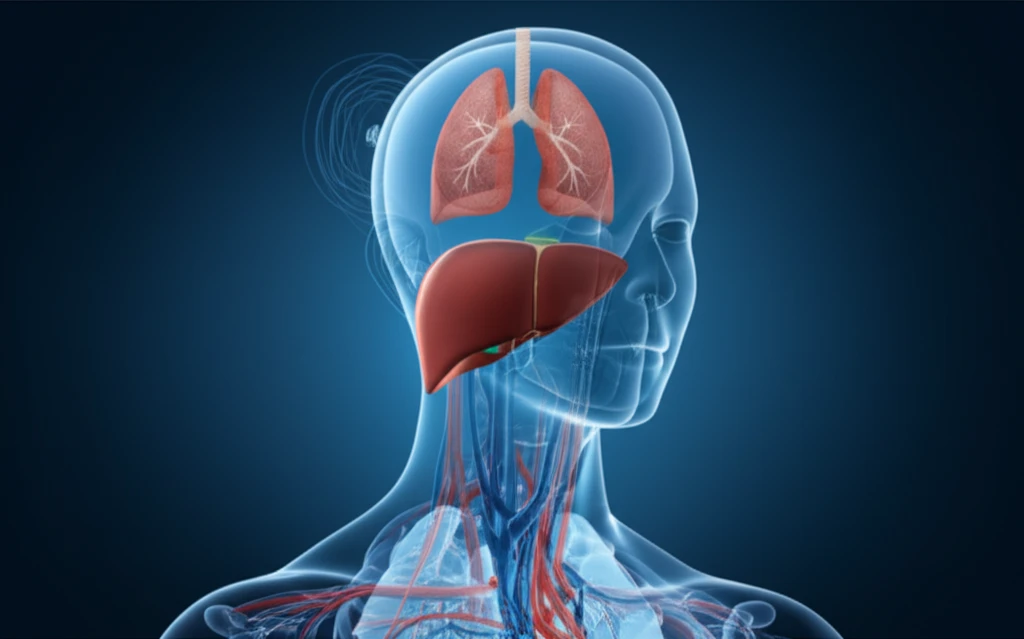
Balancing lung health and liver safety in pulmonary hypertension treatment

Liver Health Alert: Are Your PAH Meds Putting You at Risk?

"A deep dive into the safety of pulmonary hypertension treatments and what you need to know to protect your liver."


Pulmonary hypertension (PAH) is a serious condition and managing it often involves a combination of medications. While these drugs can significantly improve your quality of life, it's essential to be aware of their potential side effects. Some medications used to treat PAH can, in rare cases, affect the liver, which is why ongoing research and monitoring are so important.

A recent analysis of the AMBITION trial sheds light on the liver safety of ambrisentan (an endothelin receptor antagonist, or ERA) when used alone or in combination with tadalafil (a phosphodiesterase-5 inhibitor). This study provides valuable insights for both patients and healthcare providers, helping to inform treatment decisions and monitoring strategies.

This article breaks down the key findings of the AMBITION trial analysis, explaining what they mean for your liver health if you're taking these medications. We'll cover the potential risks, how they're monitored, and what to discuss with your doctor to ensure your treatment plan is as safe and effective as possible.

Understanding the AMBITION Trial and Liver Safety

Balancing lung health and liver safety in pulmonary hypertension treatment

The AMBITION trial was a significant study in the field of pulmonary hypertension, designed to evaluate the effectiveness of initial combination therapy with ambrisentan and tadalafil. Now, a new analysis has focused on the liver safety aspect of these treatments. Researchers looked at data from 596 patients with PAH who were randomly assigned to receive ambrisentan or tadalafil as a single therapy, or a combination of both. They specifically looked for elevations in liver enzymes (ALT/AST) and bilirubin, which can indicate liver problems.

The study found that elevations in ALT/AST levels (more than three times the upper limit of normal) occurred in a small percentage of patients:

  • 3.4% to 3.7% of patients during the study period, with an annualized incidence of 2.1% to 2.93%.
  • The majority of these patients had elevations that were only mildly elevated (between 3 and 5 times the upper limit of normal).
  • A very small number of patients (0.5%) had ALT/AST elevations combined with elevated bilirubin, a condition that raises more concern for potential drug-induced liver injury.
Importantly, the researchers concluded that ambrisentan, whether used alone or with tadalafil, was not associated with drug-induced liver injury in this study. The few patients who did experience liver enzyme elevations often had other probable causes, such as cardiogenic shock, liver metastases, or lymphoma.

What This Means for You and Your Treatment

The AMBITION trial analysis offers reassurance regarding the liver safety of ambrisentan and tadalafil. However, it's crucial to remember that all medications carry potential risks, and individual responses can vary. Regular monitoring of liver function remains an important part of managing PAH.

Here's what you should discuss with your doctor:

<ul> <li>Your individual risk factors for liver problems.</li> <li>The potential side effects of all your PAH medications.</li> <li>The schedule for monitoring your liver function.</li> <li>Any new symptoms you experience that could indicate liver issues (such as jaundice, abdominal pain, or fatigue).</li> </ul>

About this Article -

This article was crafted using a human-AI hybrid and collaborative approach. AI assisted our team with initial drafting, research insights, identifying key questions, and image generation. Our human editors guided topic selection, defined the angle, structured the content, ensured factual accuracy and relevance, refined the tone, and conducted thorough editing to deliver helpful, high-quality information.See our About page for more information.

Everything You Need To Know

1

What was the primary focus of the AMBITION trial concerning pulmonary hypertension treatments?

The AMBITION trial focused on evaluating the effectiveness of initial combination therapy using ambrisentan and tadalafil for pulmonary hypertension. A specific analysis examined liver safety, monitoring patients for elevations in liver enzymes (ALT/AST) and bilirubin, which are indicators of potential liver issues. The trial's design involved randomly assigning patients with PAH to receive either ambrisentan alone, tadalafil alone, or a combination of both, allowing researchers to compare the liver safety profiles of these treatment approaches.

2

According to the AMBITION trial analysis, what were the rates of liver enzyme elevations observed in patients taking ambrisentan and tadalafil?

The analysis of the AMBITION trial indicated that elevations in ALT/AST levels (more than three times the upper limit of normal) occurred in 3.4% to 3.7% of patients during the study period, with an annualized incidence of 2.1% to 2.93%. Most of these patients experienced only mildly elevated liver enzyme levels. A very small percentage of patients (0.5%) had ALT/AST elevations combined with elevated bilirubin, raising concerns for potential drug-induced liver injury. However, the researchers concluded that ambrisentan, whether used alone or with tadalafil, was not associated with drug-induced liver injury in this study.

3

How should the findings from the AMBITION trial influence the management of pulmonary hypertension, particularly concerning liver health?

The AMBITION trial analysis suggests that ambrisentan and tadalafil do not pose a significant risk to the liver when used to treat pulmonary hypertension. However, regular monitoring of liver function is essential. This is because all medications carry potential risks and individual responses can vary. Regular monitoring can help detect any potential liver issues early, allowing for timely intervention and adjustments to the treatment plan.

4

How do ambrisentan and tadalafil work in the body to treat pulmonary hypertension, and why is this important for understanding their effects?

Endothelin receptor antagonists (ERAs) like ambrisentan, work by blocking the action of endothelin, a substance that causes blood vessels to narrow. By blocking endothelin, these drugs help to relax and widen the blood vessels in the lungs, reducing blood pressure and improving blood flow. Phosphodiesterase-5 inhibitors, such as tadalafil, work by increasing the levels of nitric oxide, another substance that helps relax blood vessels. These drugs are effective for pulmonary hypertension because they target different pathways involved in regulating blood vessel tone and pressure in the lungs. Combining these drugs can provide a synergistic effect, improving both symptoms and exercise capacity.

5

Beyond ambrisentan and tadalafil, what other pulmonary hypertension medications might impact liver health, and how should these be monitored?

While the AMBITION trial analysis focused on ambrisentan and tadalafil, other PAH medications also require consideration for liver safety. For example, bosentan is another ERA that has been associated with liver enzyme elevations. Sildenafil is another phosphodiesterase-5 inhibitor. Prostanoids (e.g., epoprostenol, treprostinil) and prostacyclin receptor agonists (e.g., selexipag) are also used to treat PAH. It's essential to discuss the potential liver-related risks of all medications with your healthcare provider and undergo regular monitoring, as recommended.

Newsletter Subscribe

Subscribe to get the latest articles and insights directly in your inbox.