
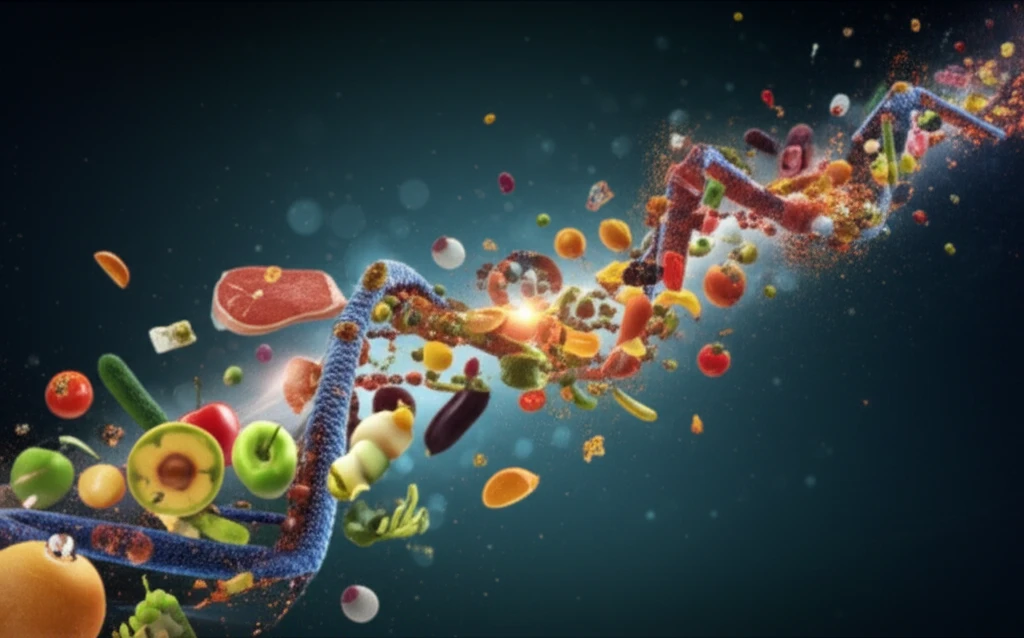
DNA helix intertwining food, symbolizing Listeria genome sequencing for food safety.

Listeria Traced: How Food Sequencing is Keeping Your Plate Safe

"Decoding 510 Listeria Strains: A Genome-Level Look at Food Safety in Northern Italy"


Foodborne illnesses are a significant public health concern, and among them, listeriosis stands out due to its severity and potential for widespread outbreaks. Listeriosis, caused by the bacterium Listeria monocytogenes, can result in severe illness, particularly among pregnant women, newborns, the elderly, and individuals with weakened immune systems. The ability to rapidly and accurately trace the sources of Listeria outbreaks is, therefore, critical for effective public health interventions.

Traditional methods of tracking foodborne pathogens often fall short when faced with complex, multi-state, or international outbreaks. These methods may lack the precision needed to differentiate between closely related strains, leading to delays in identifying the contaminated food products and implementing control measures. However, the advent of whole-genome sequencing (WGS) has revolutionized the field of food safety, offering an unprecedented level of detail in tracing the origins and spread of Listeria monocytogenes.

In a recent study, researchers utilized WGS to analyze 510 Listeria monocytogenes strains isolated from food sources and human listeriosis cases in Northern Italy. This comprehensive genomic analysis provides valuable insights into the genetic diversity, distribution, and potential transmission pathways of Listeria in a specific geographical region. By understanding the genomic characteristics of Listeria strains, scientists and public health officials can improve outbreak detection, source tracking, and risk assessment, ultimately enhancing food safety and protecting public health.

Why Decoding Listeria's Genome Matters?

DNA helix intertwining food, symbolizing Listeria genome sequencing for food safety.

Whole-genome sequencing (WGS) has emerged as a game-changing tool in food safety, particularly in tracking and controlling Listeria monocytogenes outbreaks. Unlike traditional methods that analyze only a few genetic markers, WGS provides a comprehensive snapshot of the entire bacterial genome. This high-resolution data allows scientists to differentiate between closely related Listeria strains with exceptional accuracy, even those that appear identical using conventional typing methods.

The benefits of WGS in Listeria surveillance and outbreak response are multifold:

  • Enhanced Traceability: WGS enables the precise tracing of Listeria strains to their sources, whether it's a specific food product, processing environment, or geographical location.
  • Improved Outbreak Detection: By comparing the genomes of Listeria isolates from different cases, WGS can identify clusters of related infections, even if they occur across different regions or time periods.
  • Better Risk Assessment: WGS can reveal the presence of virulence genes and antimicrobial resistance markers in Listeria strains, providing valuable information for assessing the potential severity of infections and guiding treatment decisions.
  • Understanding Transmission Pathways: WGS can help elucidate the complex pathways through which Listeria spreads, from farm to table, enabling targeted interventions to prevent contamination.
In the context of the Northern Italy study, WGS allowed researchers to gain a detailed understanding of the genetic diversity and distribution of Listeria monocytogenes in the region. By comparing the genomes of Listeria strains from food isolates and human cases, they could identify potential links between specific food sources and human infections, shedding light on the most critical contamination pathways.

Looking Ahead: The Future of Food Safety

The application of whole-genome sequencing to Listeria monocytogenes surveillance and outbreak response represents a significant advancement in food safety. As WGS technology becomes more accessible and affordable, it is poised to become an integral part of routine food safety monitoring programs worldwide. By leveraging the power of genomics, we can better protect public health and ensure the safety of our food supply. Moving forward, the integration of WGS data with epidemiological information and food production data will further enhance our ability to predict, prevent, and respond to Listeria outbreaks, paving the way for a safer and more secure food system.

About this Article -

This article was crafted using a human-AI hybrid and collaborative approach. AI assisted our team with initial drafting, research insights, identifying key questions, and image generation. Our human editors guided topic selection, defined the angle, structured the content, ensured factual accuracy and relevance, refined the tone, and conducted thorough editing to deliver helpful, high-quality information.See our About page for more information.

Everything You Need To Know

1

What is Listeriosis, and why is it a significant concern?

Listeriosis is a severe illness caused by the bacterium *Listeria monocytogenes*. It is particularly dangerous for vulnerable populations, including pregnant women, newborns, the elderly, and individuals with weakened immune systems. The severity stems from its potential to cause serious infections and outbreaks, making it a significant public health concern. The ability to accurately trace the sources of *Listeria monocytogenes* is critical for effective public health interventions to prevent and control the spread of the bacterium.

2

What is whole-genome sequencing (WGS), and how does it work?

Whole-genome sequencing (WGS) is a groundbreaking method employed to analyze the entire genetic makeup of *Listeria monocytogenes*. Unlike traditional methods that only examine a few genetic markers, WGS provides a comprehensive snapshot of the bacterial genome. This allows scientists to differentiate between closely related strains with exceptional accuracy. It helps in enhanced traceability of *Listeria monocytogenes*, improved outbreak detection, better risk assessment, and understanding transmission pathways.

3

How does WGS improve the tracing of *Listeria monocytogenes* outbreaks?

WGS significantly improves the tracing of *Listeria monocytogenes* to its origin. It enables precise identification of the source, whether a specific food product, processing environment, or geographical location. By comparing the genomes of isolates, WGS can identify clusters of related infections, even across different regions or time periods. This detailed analysis allows for more effective public health interventions to contain outbreaks.

4

How was WGS used in the study conducted in Northern Italy?

The use of WGS in Northern Italy allowed researchers to gain a detailed understanding of the genetic diversity and distribution of *Listeria monocytogenes* in the region. By comparing genomes from food isolates and human cases, scientists could identify potential links between specific food sources and human infections. This helps in pinpointing the most critical contamination pathways within the region. It helps in creating a safer food system.

5

What is the future of food safety with the use of WGS?

As WGS technology becomes more accessible and affordable, it is expected to become an integral part of routine food safety monitoring programs worldwide. The integration of WGS data with other sources will further enhance the ability to predict, prevent, and respond to *Listeria monocytogenes* outbreaks. This advancement is pivotal in protecting public health and ensuring the safety of the food supply, paving the way for a safer and more secure food system by leveraging the power of genomics.

Newsletter Subscribe

Subscribe to get the latest articles and insights directly in your inbox.