
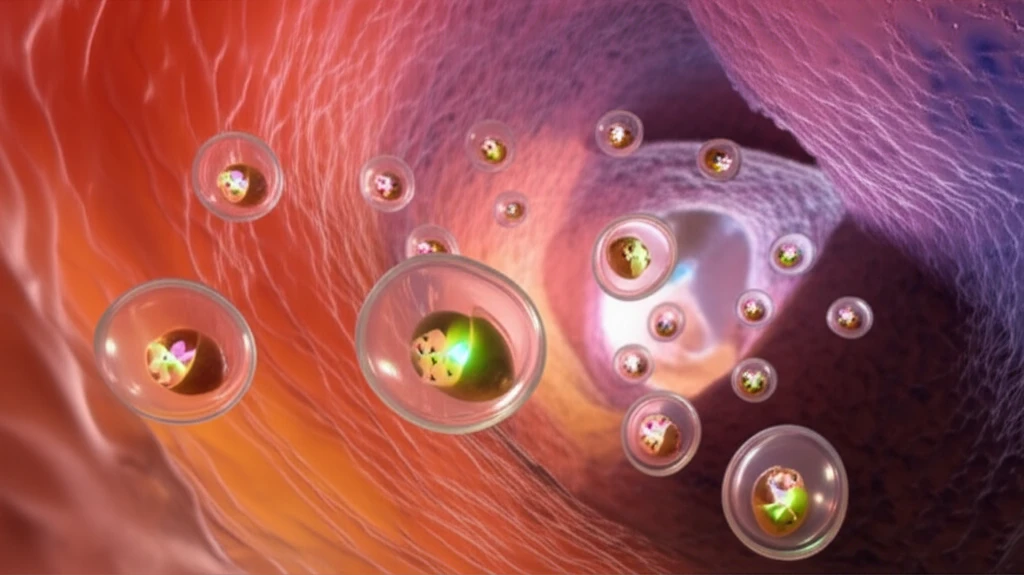
Surreal illustration of Liposils navigating the digestive system.

Liposil Innovations: The Future of Drug Delivery?

"Explore how silica-coated liposomes (Liposils) are revolutionizing pharmaceutical applications with enhanced drug delivery and stability."


Liposomes, tiny spheres made of lipid bilayers, have long been studied as potential drug carriers. They can encapsulate both water-soluble and fat-soluble drugs, protect them from degradation, and deliver them directly to target cells or tissues. This makes them valuable in treating various diseases, including cancer and infections.

However, liposomes face challenges, especially when taken orally. The harsh environment of the digestive system can break them down before they reach their target. That's where Liposils come in. Liposils are liposomes coated with a layer of silica, a compound found in sand and glass. This coating acts like a shield, protecting the liposome and its cargo from degradation, and potentially improving how well the drug is absorbed by the body.

Recent research explores innovative methods for creating Liposils, focusing on making the process faster and more efficient. These advancements could pave the way for wider use of Liposils in oral drug delivery, unlocking new possibilities for treating diseases and improving patient outcomes.

Why Silica Coating Matters for Oral Drug Delivery?

Surreal illustration of Liposils navigating the digestive system.

Oral administration is a preferred route for drug delivery because it is non-invasive and convenient. However, the gastrointestinal tract presents a formidable barrier. Enzymes, pH variations, and interactions with the gut lining can all degrade drugs before they can be absorbed into the bloodstream. Liposils address these challenges through:

  • Protection: The silica coating shields the liposome from enzymatic degradation and extreme pH conditions in the stomach.
  • Sustained Release: Silica can control the rate at which the drug is released, providing a sustained therapeutic effect.
  • Improved Stability: The coating enhances the overall stability of the liposome, preventing aggregation and premature drug leakage.
  • Enhanced Bioavailability: By protecting the drug and promoting its uptake in the intestines, Liposils can significantly increase the amount of drug that reaches the bloodstream.

Researchers are exploring different types of silica coatings to optimize these benefits. The goal is to create Liposils that are robust enough to survive the digestive process but also release their drug payload at the right time and location.

The Future of Liposil Technology

The development of Liposils represents a significant step forward in drug delivery technology. By combining the advantages of liposomes with the protective properties of silica, scientists are creating more effective and reliable oral medications.

While challenges remain, such as optimizing the coating process and ensuring biocompatibility, the potential benefits of Liposils are substantial. Future research will likely focus on:

<ul> <li>Developing targeted Liposils that can deliver drugs directly to specific cells or tissues.</li> <li>Exploring new silica materials and coating techniques to further enhance drug protection and release.</li> <li>Conducting clinical trials to evaluate the safety and efficacy of Liposils in humans.</li> </ul> With continued innovation, Liposils could revolutionize the way we treat diseases, offering improved outcomes and a better quality of life for patients.

About this Article -

This article was crafted using a human-AI hybrid and collaborative approach. AI assisted our team with initial drafting, research insights, identifying key questions, and image generation. Our human editors guided topic selection, defined the angle, structured the content, ensured factual accuracy and relevance, refined the tone, and conducted thorough editing to deliver helpful, high-quality information.See our About page for more information.

This article is based on research published under:

DOI-LINK: 10.4172/2157-7439.1000450, Alternate LINK

Title: Liposil Nanocarriers For Pharmaceutical Applications: Synthesis Innovations

Subject: Pharmaceutical Science

Journal: Journal of Nanomedicine & Nanotechnology

Publisher: OMICS Publishing Group

Authors: Gonçalves Mc, Rodrigues Am, Sabino A, Corvo Ml, Martins Mb

Published: 2017-01-01

Everything You Need To Know

1

What exactly are Liposils, and how do they work to improve drug delivery?

Liposils are liposomes coated with a layer of silica. This silica coating protects the liposome and its drug cargo from degradation in the harsh environment of the digestive system, particularly when taken orally. This protection enhances the drug's stability, controls its release rate, and improves its bioavailability, allowing more of the drug to reach the bloodstream and target tissues effectively.

2

What are the main advantages of using a silica coating on Liposils for oral drug delivery?

The silica coating on Liposils offers several key advantages for oral drug delivery. First, it provides protection against enzymatic degradation and extreme pH conditions in the stomach. Second, it enables sustained drug release, maintaining therapeutic effects over a longer period. Third, it enhances the overall stability of the liposome, preventing aggregation and premature drug leakage. Finally, it improves bioavailability by promoting drug uptake in the intestines, leading to a higher concentration of the drug in the bloodstream.

3

What are the differences between liposomes and Liposils? Why is the silica coating so important?

Liposomes are tiny spheres composed of lipid bilayers that can encapsulate drugs, while Liposils are liposomes coated with silica. Liposomes alone face challenges, especially when administered orally, due to their susceptibility to degradation in the digestive system. Liposils overcome this limitation by providing a protective silica coating that shields the liposome and its cargo from enzymatic breakdown and harsh pH conditions, thus enhancing drug delivery and stability compared to traditional liposomes.

4

What kind of future research and development can we expect to see regarding Liposil technology?

Future research on Liposils will likely focus on optimizing the silica coating to ensure it is robust enough to withstand the digestive process while still allowing for controlled drug release at the appropriate time and location. This includes exploring different types of silica coatings and refining synthesis techniques to make the production of Liposils faster and more efficient. Further research is needed to fully realize the potential of Liposils and improve the way that oral medications are delivered and absorbed by the body.

5

What are the potential implications of Liposils for the future of medical treatments and patient outcomes?

The improved protection and bioavailability offered by Liposils could lead to more effective treatments for various diseases, especially those requiring oral medications. By preventing drug degradation in the digestive system and ensuring a higher concentration of the drug reaches the target tissues, Liposils can enhance therapeutic outcomes. This could result in reduced dosage requirements, fewer side effects, and improved patient compliance, ultimately transforming how we approach oral drug delivery and patient care.

Newsletter Subscribe

Subscribe to get the latest articles and insights directly in your inbox.