
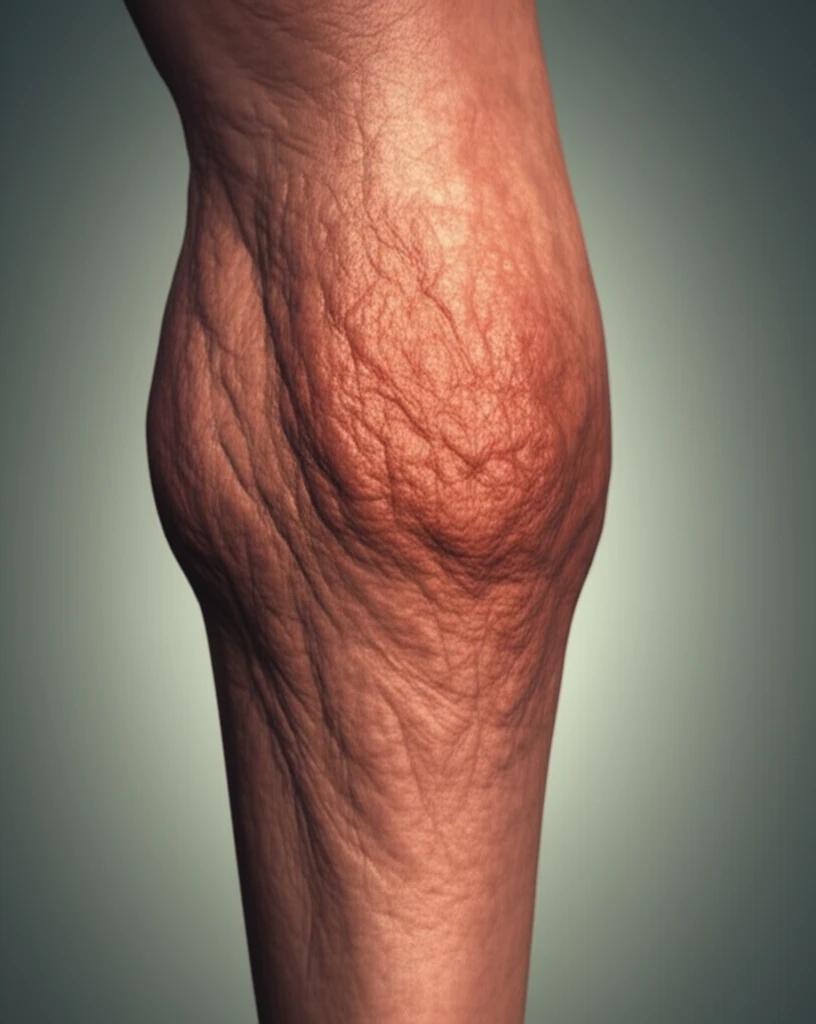
Illustration of lower leg with lipodermatosclerosis symptoms.

Lipodermatosclerosis: When Vein Issues Cause Skin Problems

"Unveiling a Common Yet Misunderstood Skin Condition Linked to Chronic Venous Insufficiency"


Have you ever noticed changes in the skin on your lower legs, such as thickening, discoloration, or a tight, 'bound-down' feeling? It might be lipodermatosclerosis, a condition often linked to problems with your veins. While it can sometimes be mistaken for other issues like cellulitis or even thrombophlebitis, understanding the connection to vein health is key for proper diagnosis and treatment.

Lipodermatosclerosis develops when chronic venous insufficiency, a condition where veins struggle to efficiently return blood from the legs to the heart, leads to increased pressure in the veins. This increased pressure causes capillaries to become more permeable, resulting in leakage of fluids and proteins into the surrounding tissues. Over time, this process triggers inflammation, fibrosis (scarring), and fat necrosis (death of fat tissue) in the affected area.

This article will delve into the causes, symptoms, diagnosis, and treatment options for lipodermatosclerosis. We'll explore how to differentiate it from other conditions and highlight the importance of addressing underlying venous issues for effective management.

Recognizing Lipodermatosclerosis: Key Symptoms to Watch For

Illustration of lower leg with lipodermatosclerosis symptoms.

Lipodermatosclerosis often presents with distinct visual and tactile changes to the skin of the lower legs. Recognizing these signs is the first step toward seeking appropriate medical attention:

Initially, lipodermatosclerosis can be mistaken for other conditions due to its presentation. The early stages of lipodermatosclerosis often manifest as:

  • Painful, red, and indurated (hardened) plaques on the lower legs.
  • The skin may feel tight, thickened, and 'bound-down'.
  • The affected area is commonly on the medial (inner) aspect of the lower leg, near the ankle.
  • In advanced cases, the leg may develop an 'inverted champagne bottle' appearance due to swelling above the ankle and narrowing at the ankle itself.
It's important to note that not everyone experiences the same symptoms, and the severity can vary. If you notice any of these changes in your lower legs, consult a healthcare professional for an accurate diagnosis.

Managing Lipodermatosclerosis: Treatment and Prevention

While there's no cure for lipodermatosclerosis, several treatment options can help manage symptoms and prevent the condition from worsening. Addressing the underlying chronic venous insufficiency is crucial for long-term management.

Compression therapy, using specialized stockings or bandages, is a cornerstone of treatment. Compression helps to improve blood flow in the legs, reduce swelling, and support the veins. Medications like stanozolol and other therapies may be prescribed to reduce inflammation and improve skin health.

In some cases, surgical procedures may be necessary to correct underlying venous abnormalities. Lifestyle modifications, such as regular exercise, weight management, and elevating the legs, can also play a significant role in managing symptoms and preventing progression. Consulting with a healthcare professional is essential to determine the most appropriate treatment plan based on your individual needs.

About this Article -

This article was crafted using a human-AI hybrid and collaborative approach. AI assisted our team with initial drafting, research insights, identifying key questions, and image generation. Our human editors guided topic selection, defined the angle, structured the content, ensured factual accuracy and relevance, refined the tone, and conducted thorough editing to deliver helpful, high-quality information.See our About page for more information.

This article is based on research published under:

DOI-LINK: 10.1100/tsw.2010.60, Alternate LINK

Title: Lipodermatosclerosis: A Commonly Misdiagnosed Complication Of Chronic Venous Insufficiency

Subject: General Environmental Science

Journal: The Scientific World JOURNAL

Publisher: Hindawi Limited

Authors: Mohammad Kazem Fallahzadeh, Mohammad Khalesi, Mohammad Reza Namazi

Published: 2010-01-01

Everything You Need To Know

1

What is Lipodermatosclerosis?

Lipodermatosclerosis is a skin condition that is often linked to Chronic Venous Insufficiency. This means there is a problem with the veins in the legs, specifically their ability to efficiently return blood to the heart. This leads to increased pressure in the veins. The increased pressure causes capillaries to become more permeable, resulting in leakage of fluids and proteins into the surrounding tissues. The process triggers inflammation, fibrosis (scarring), and fat necrosis (death of fat tissue) in the affected area. If you are experiencing this you should consult a healthcare professional.

2

What are the symptoms of Lipodermatosclerosis?

Common symptoms of Lipodermatosclerosis include painful, red, and hardened plaques on the lower legs. The skin may feel tight and thickened. It often occurs on the inner part of the lower leg, near the ankle. In advanced cases, the leg may develop an 'inverted champagne bottle' appearance due to swelling above the ankle and narrowing at the ankle itself. If you notice any of these changes in your lower legs, consult a healthcare professional for an accurate diagnosis.

3

What causes Lipodermatosclerosis?

The underlying cause of Lipodermatosclerosis is typically Chronic Venous Insufficiency. This condition prevents the veins from effectively returning blood from the legs to the heart. The increased pressure in the veins then leads to the skin changes associated with Lipodermatosclerosis. Therefore, addressing Chronic Venous Insufficiency is crucial for effective management.

4

How is Lipodermatosclerosis treated?

While there isn't a cure for Lipodermatosclerosis, the treatment focuses on managing symptoms and preventing the condition from worsening. This includes addressing the underlying cause, which is Chronic Venous Insufficiency. Treatment options may vary, but addressing the venous issues is key for long-term management of the condition. Consulting with a healthcare professional is very important for diagnosis and treatment.

5

Why is it important to get an accurate diagnosis for Lipodermatosclerosis?

Lipodermatosclerosis can be mistaken for other conditions, such as cellulitis or thrombophlebitis. It is important to get the right diagnosis from a healthcare professional. Recognizing the symptoms and understanding the link to Chronic Venous Insufficiency is important. Correct diagnosis is key for proper treatment and management of the condition.

Newsletter Subscribe

Subscribe to get the latest articles and insights directly in your inbox.