
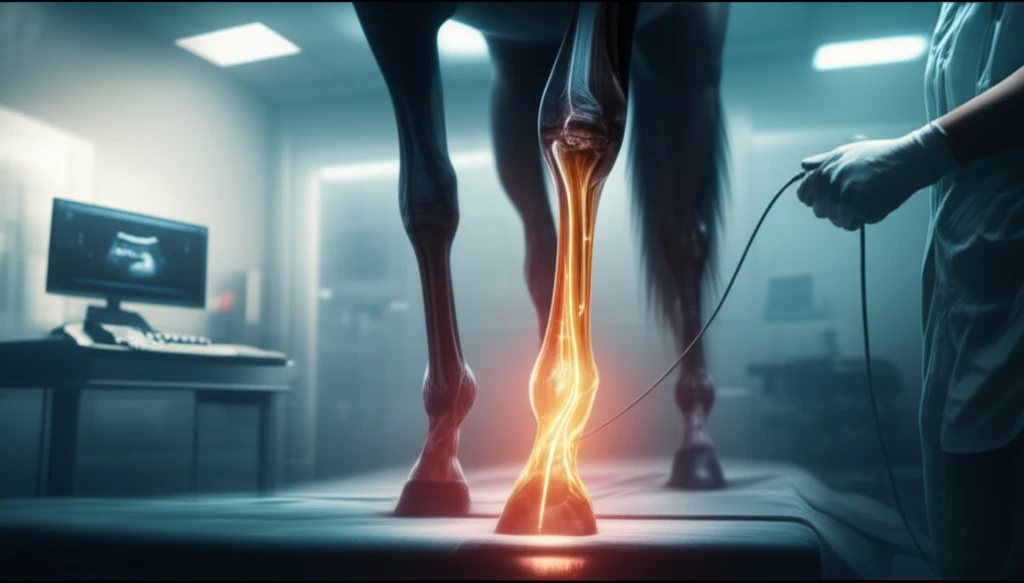
Ultrasound-guided tibial nerve block in horse leg

Limping No More: How Ultrasound-Guided Nerve Blocks Are Revolutionizing Equine Lameness Diagnosis

"Discover the innovative technique transforming lameness diagnosis in horses, providing quicker, more accurate results and minimizing risks."


For horse owners, few things are as concerning as a sudden or persistent limp. Lameness, as it's technically known, can stem from a variety of issues, making accurate diagnosis a crucial first step in effective treatment. Traditional diagnostic methods, like nerve blocks, have long been a mainstay in veterinary practice. However, these techniques sometimes fall short, leading to frustration for both veterinarians and horse owners.

Nerve blocks, which involve injecting local anesthetic near a specific nerve to numb an area, are frequently used to pinpoint the source of pain causing the lameness. When performed 'blindly,' without the aid of imaging technology, these injections can be less precise. This can result in inconsistent results, requiring multiple attempts and potentially delaying the correct diagnosis.

Enter ultrasonography – a game-changing technology that's transforming how equine veterinarians approach nerve blocks. By using ultrasound to guide the injection, vets can now visualize the exact location of the nerve, ensuring the anesthetic is delivered precisely where it needs to be. This precision not only improves the accuracy of the nerve block but also minimizes the risks associated with traditional blind injections.

What is an Ultrasound-Guided Tibial Nerve Block and How Does it Work?

Ultrasound-guided tibial nerve block in horse leg

The tibial nerve, a major branch of the sciatic nerve, plays a vital role in the hindlimb's function. Blocking this nerve is often necessary to diagnose lameness affecting the lower leg and foot. An ultrasound-guided tibial nerve block involves using real-time ultrasound imaging to guide the placement of the needle and injection of local anesthetic near the tibial nerve. This ensures accurate and effective numbing of the target area.

The procedure, as detailed in the original research, involves a few key steps:

  • Preparation: The horse is gently restrained, and the injection site on the caudomedial aspect of the crus (lower leg) is clipped and cleaned.
  • Imaging: A microconvex ultrasound probe is used to visualize the tibial nerve in a transverse section, about 8-10 cm proximal to the point of the hock. The nerve appears as an oval structure with distinct fascicles (bundles of nerve fibers).
  • Needle Insertion: The needle is carefully inserted, guided by the ultrasound image, to the caudal aspect of the tibial nerve.
  • Injection: Half of the anesthetic solution (typically 5-8 mL) is injected near the nerve. A second injection is made similarly, cranial to the probe, to ensure complete coverage of the nerve.
  • Confirmation: The veterinarian confirms the correct placement and spread of the anesthetic solution around the tibial nerve using ultrasound.
This technique ensures the anesthetic solution stays within the superficial caudal crural compartment, avoiding unwanted intravenous or intramuscular injections. The precision of ultrasound guidance also allows for a smaller volume of anesthetic solution to be used, reducing the risk of proximal diffusion (spread to other areas).

The Future of Lameness Diagnosis: Precision and Accuracy

Ultrasound-guided nerve blocks represent a significant advancement in equine lameness diagnosis. By providing real-time visualization and precise needle placement, this technique improves the accuracy and effectiveness of nerve blocks while minimizing potential risks. This translates to faster, more reliable diagnoses, ultimately leading to better outcomes for horses experiencing lameness.

About this Article -

This article was crafted using a human-AI hybrid and collaborative approach. AI assisted our team with initial drafting, research insights, identifying key questions, and image generation. Our human editors guided topic selection, defined the angle, structured the content, ensured factual accuracy and relevance, refined the tone, and conducted thorough editing to deliver helpful, high-quality information.See our About page for more information.

Everything You Need To Know

1

What does it mean when a horse is lame?

Lameness in horses refers to any alteration in their gait, often manifesting as a limp. It's significant because identifying the underlying cause of lameness is the first critical step towards effective treatment. Lameness can arise from various sources, including injuries to muscles, tendons, ligaments, or bones. Without an accurate diagnosis of the source of the pain, treatments may be ineffective or misdirected, potentially prolonging the horse's discomfort and recovery time.

2

What are traditional nerve blocks, and why are they important?

Traditional nerve blocks involve injecting a local anesthetic near a specific nerve to numb an area, aiming to pinpoint the source of pain causing lameness. These are important because they help veterinarians isolate which area is causing the horse discomfort. However, when performed 'blindly' without imaging, they can lack precision, leading to inconsistent results, multiple attempts, and delays in accurate diagnosis. This imprecision can cause frustration for both veterinarians and owners, making the process longer and potentially less effective.

3

What is an ultrasound-guided nerve block, and why is it better?

An ultrasound-guided nerve block uses ultrasound technology to visualize the exact location of a nerve before injecting local anesthetic. This is a significant advancement because it improves the accuracy and effectiveness of nerve blocks while minimizing risks associated with traditional 'blind' injections. By seeing the nerve, veterinarians can ensure the anesthetic is delivered precisely where it needs to be, reducing the chance of missing the target or affecting unintended areas. This precision leads to faster, more reliable diagnoses and better outcomes for horses.

4

What is an Ultrasound-Guided Tibial Nerve Block and when is it used?

An ultrasound-guided tibial nerve block specifically targets the tibial nerve, a major branch of the sciatic nerve that affects the hindlimb's function. This procedure involves using real-time ultrasound imaging to guide the placement of the needle and injection of local anesthetic near the tibial nerve. This is important when diagnosing lameness affecting the lower leg and foot. The precision of ultrasound guidance ensures accurate and effective numbing of the target area, allowing veterinarians to accurately assess the tibial nerve's involvement in the lameness.

5

How do vets confirm that the Ultrasound-Guided Tibial Nerve Block is working well?

During an ultrasound-guided tibial nerve block, the veterinarian confirms the correct placement and spread of the anesthetic solution around the tibial nerve using ultrasound. This is crucial because it ensures that the anesthetic is effectively blocking the nerve without unwanted spread to other areas. This confirmation step helps avoid intravenous or intramuscular injections, reduces the risk of proximal diffusion (spread to other areas), and allows for a smaller volume of anesthetic solution to be used, further minimizing potential complications.

Newsletter Subscribe

Subscribe to get the latest articles and insights directly in your inbox.