
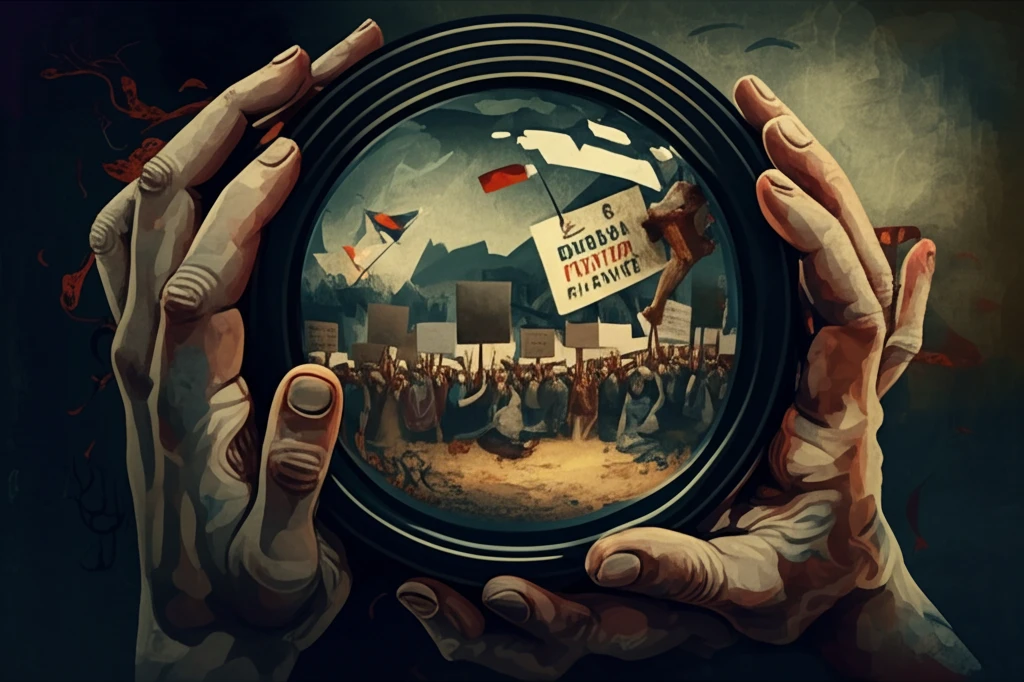
Lights, Camera, Activism: How Filmmakers Are Changing the World

"Unveiling the power of documentary filmmaking in addressing human rights and social injustices."
In an era defined by rapid information dissemination and heightened social consciousness, documentary filmmaking has emerged as a potent force for driving change. Filmmakers are no longer passive observers; they are active participants, leveraging their craft to shed light on critical issues, challenge prevailing narratives, and inspire action.
This transformation marks a significant shift in the role of media, underscoring the power of visual storytelling to transcend boundaries and ignite conversations on critical social issues. From exposing human rights abuses to promoting environmental sustainability, these cinematic activists are redefining the landscape of advocacy.
This article delves into the compelling world of activist filmmaking, spotlighting directors who confront the aftermath of genocide, challenge societal perceptions, and navigate complex ethical dilemmas in their quest for justice and reconciliation. Join us as we uncover the profound impact of their work and explore how these dedicated individuals are using their art to make a tangible difference.
Current Landscape
Filmmakers engaging in activism represent a growing but difficult-to-quantify segment of the media landscape. While comprehensive statistics on activist filmmaking's reach and measurable impact remain limited, the practice spans documentary, narrative, and experimental forms across global cinema. The field's influence is often assessed through festival programming, audience engagement metrics, and policy discourse rather than standardized industry data.
Conventional Methods
Activist filmmakers typically employ strategies including direct documentation of social movements, character-driven narratives that humanize systemic issues, and strategic distribution through festivals, community screenings, and digital platforms. These approaches face inherent limitations in measuring causal impact on policy or public opinion, and often struggle with sustainable funding models and reaching audiences beyond sympathetic viewers.
Historical Foundations
The lineage of activist cinema extends from early 20th-century workers' film collectives through the political cinema movements of the 1960s and 1970s in Latin America, Europe, and the United States. Key historical milestones include the emergence of cinema verité as a tool for social witness, the rise of human rights film festivals from the 1980s onward, and the increasing integration of activist media into mainstream documentary funding and distribution channels over recent decades.
Filmmakers as Activists: Uncovering Truths and Inspiring Change
Filmmakers operating as activists often delve into stories that mainstream media overlooks or intentionally avoids. They aim to give voice to marginalized communities, challenge dominant narratives, and expose systemic injustices. By doing so, they contribute to public awareness, foster empathy, and prompt action.
- Exposing Injustice: By focusing on the stories of those affected, films can reveal truths that might otherwise remain hidden.
- Challenging Perceptions: Documentaries can disrupt biased or incomplete media portrayals, offering a more nuanced understanding.
- Promoting Dialogue: Activist films often spark public debate, encouraging viewers to engage with complex issues and consider different perspectives.
Defining Activism in Film
Contemporary reference sources converge on a broad definition of activism as efforts to promote, impede, direct, or intervene in social, political, economic, or environmental reform toward a perceived common good (Wikipedia). An activist is consistently described as a person who advocates or practices activism through strong actions such as public protests in support of or opposition to controversial issues (Merriam-Webster, Cambridge Dictionary, Vocabulary.com). These definitions encompass campaigning for social change through various forms of participation including marches, advocacy, and organized efforts.
Beyond Protest
Sustainable Business Magazine notes that popular conceptions of activists often narrow to images of passionate protesters, but activism encompasses many different ways of working for positive change beyond public demonstrations. This broader framing suggests that evaluating activist filmmaking solely by its capacity to mobilize street protests may overlook its quieter, long-term contributions to cultural narratives, policy discourse, and community organizing.
Activist Cinema Frameworks
Scholarly analysis traces activist and human rights-focused films from the 1970s to the present, examining case studies from San Francisco, Brazil, Bristol and elsewhere while addressing contentious questions about whether such films achieve humanitarian aims or risk becoming 'cinema of suffering' (JSTOR). Practitioner perspectives emphasize the intersection of filmmaking and social activism as a powerful platform blending artistic expression with justice pursuit, raising awareness and inspiring collective action (Factual America). Film theory defines activist cinema as work made with the explicit goal of pushing social or political change, challenging dominant ideology, representing marginalized communities, and shaping public debate (Fiveable). Curated selections highlight essential human rights cinema depicting global struggles, positioning these works as critical viewing for understanding resistance movements (CinéNoir).
The Future of Activist Filmmaking
Activist filmmaking’s success lies in its capacity to bridge the gap between information and empathy, compelling audiences to confront uncomfortable truths and consider their role in creating a more just and equitable world. As technology continues to evolve and democratize media production, we can anticipate even greater innovation and impact from this vital form of storytelling.
Synthesis
Activist filmmaking operates at the intersection of artistic practice and social intervention, drawing on a century-long tradition while adapting to contemporary distribution landscapes. The field's definitional breadth — spanning explicit advocacy to subtle narrative intervention — complicates unified assessment but reflects the diversity of strategies filmmakers employ. Ongoing debates about efficacy, representation ethics, and the risk of aestheticizing suffering remain central to the practice's evolution.
Future Directions
Emerging technologies including immersive media, algorithmic distribution, and decentralized funding models present both opportunities and challenges for activist filmmakers. The field appears poised for continued experimentation with form, audience engagement strategies, and impact measurement frameworks. Climate justice, digital rights, and displacement narratives are likely to shape thematic priorities in coming years.
Systemic Context
Activist filmmaking exists within broader media ecosystems shaped by platform economics, censorship regimes, funding dependencies, and attention economies that privilege certain stories and storytellers. Structural inequities in production resources, distribution access, and archival preservation disproportionately affect filmmakers from marginalized communities whose perspectives are often central to activist cinema's mission.
Human Impact
Beyond policy outcomes, activist films often serve as tools for community building, historical preservation, and personal transformation for both subjects and audiences. Participants in documented movements frequently describe the filming process itself as validating and strategically useful. Audiences report increased empathy, awareness, and in some cases behavioral change, though longitudinal studies of such effects remain scarce.