
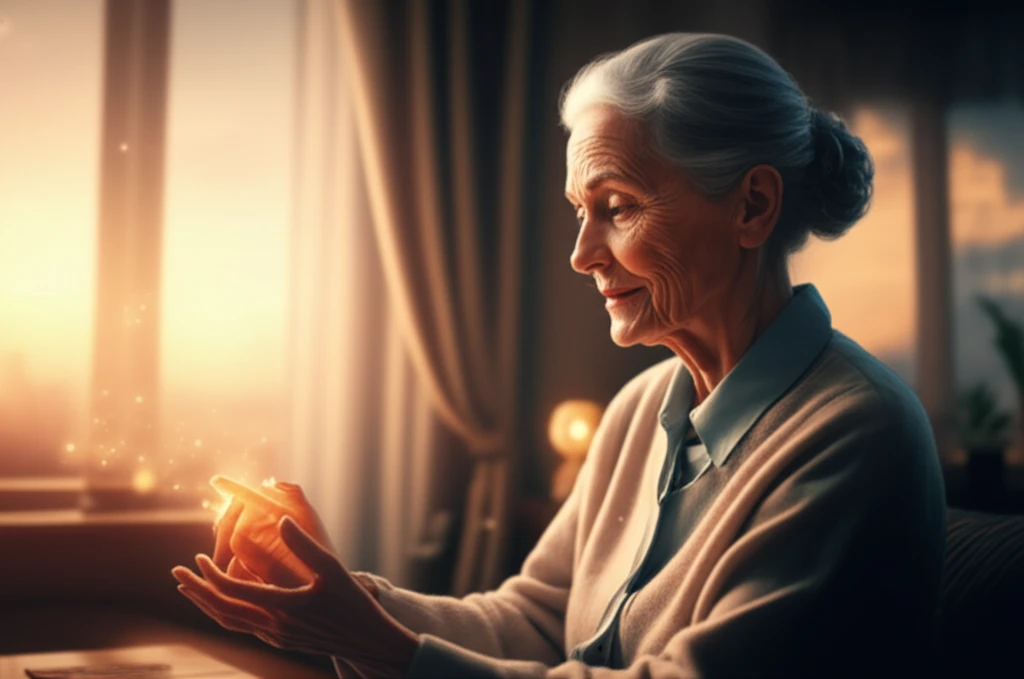
Serene room with light therapy for dementia

Light Up Their Lives: How to Use Light Therapy for Dementia Patients

"Discover how tailored lighting solutions can significantly improve the well-being of individuals with dementia."


The increasing number of individuals affected by dementia presents significant challenges to healthcare and social support systems. Traditional care models are evolving to incorporate environmental factors that can directly impact patient well-being. Among these, the strategic use of light and color has emerged as a promising non-pharmacological intervention.

Light therapy offers a way to tap into the sensory experiences of dementia patients, even when cognitive abilities decline. By carefully adjusting the color and intensity of light, care providers can create environments that foster emotional comfort, stimulate memory, and regulate crucial sleep-wake cycles.

This article explores how tailored lighting solutions can significantly improve the quality of life for individuals with dementia, drawing from expert insights presented at the "Light for Dementia Patients" workshop at the Trilux Akademie.

The Power of Light: Enhancing Well-being Through Sensory Stimulation

Serene room with light therapy for dementia

For dementia patients, cognitive decline often leads to a greater reliance on sensory input. Visual cues, in particular, become vital for orientation and emotional connection. Thoughtfully designed lighting schemes can leverage this heightened sensitivity to create more supportive and engaging environments.

The key is to move beyond generic lighting solutions and embrace personalized approaches. Factors to consider include:

  • Color Temperature: Different color temperatures (warm vs. cool light) can evoke different emotional responses. Warmer tones are generally more soothing, while cooler tones can enhance alertness.
  • Light Intensity: Avoid harsh, glaring light, which can cause agitation. Instead, opt for soft, diffused lighting that minimizes shadows and maximizes visual comfort.
  • Light Distribution: Ensure even light distribution throughout the space to reduce disorientation and improve visibility.
  • Individual Preferences: Consider the individual preferences of each patient when designing lighting schemes. What colors and light levels do they find most comforting and stimulating?
By carefully considering these factors, you can create lighting environments that promote relaxation, reduce anxiety, and stimulate positive memories. This approach aligns with a growing recognition of the importance of sensory-based interventions in dementia care.

Restoring the Rhythm: Circadian Lighting for Dementia Patients

One of the most significant challenges in dementia care is the disruption of the circadian rhythm, the body's natural sleep-wake cycle. This disruption can lead to:

<ul> <li>Sleep disturbances</li> <li>Increased agitation and confusion</li> <li>Worsened cognitive function</li> </ul>

Dynamic lighting systems that mimic the changing light patterns of the natural day can help to re-establish a healthy circadian rhythm. These systems gradually shift in color temperature and intensity throughout the day, promoting alertness during daylight hours and relaxation in the evening. By entraining the circadian rhythm, these systems can improve sleep quality, reduce behavioral disturbances, and enhance overall well-being.

About this Article -

This article was crafted using a human-AI hybrid and collaborative approach. AI assisted our team with initial drafting, research insights, identifying key questions, and image generation. Our human editors guided topic selection, defined the angle, structured the content, ensured factual accuracy and relevance, refined the tone, and conducted thorough editing to deliver helpful, high-quality information.See our About page for more information.

Everything You Need To Know

1

What exactly is light therapy and how does it help dementia patients?

Light therapy uses tailored lighting solutions to improve the well-being of individuals with dementia. It adjusts the color and intensity of light to create environments that foster emotional comfort, stimulate memory, and regulate sleep-wake cycles. This approach taps into the sensory experiences of dementia patients, becoming especially vital as cognitive abilities decline. The goal is to move away from generic lighting to embrace personalized approaches, based on individual needs.

2

What is 'circadian lighting,' and how does it address sleep-wake cycle problems in dementia?

Disruption of the circadian rhythm, the body's natural sleep-wake cycle, is a significant challenge in dementia care. Circadian lighting aims to restore this rhythm by mimicking natural daylight patterns. This involves using brighter, cooler light during the day to promote alertness and activity, and warmer, dimmer light in the evening to encourage relaxation and sleep. Regular exposure to consistent light patterns can help regulate the body's internal clock, improving sleep quality and reducing daytime drowsiness.

3

What key factors should be considered when designing lighting for individuals living with dementia?

When designing lighting schemes for dementia patients, several factors must be taken into account to promote relaxation, reduce anxiety, and stimulate positive memories. This includes considering color temperature (warm vs. cool light), light intensity (avoiding harsh, glaring light), light distribution (ensuring even light distribution throughout the space), and individual preferences (what colors and light levels do they find most comforting and stimulating).

4

What was discussed at the "Light for Dementia Patients" workshop at the Trilux Akademie?

The "Light for Dementia Patients" workshop at the Trilux Akademie focused on how tailored lighting solutions can significantly improve the quality of life for individuals with dementia. It emphasized the power of light in enhancing well-being through sensory stimulation, as visual cues become vital for orientation and emotional connection in dementia patients. These workshops are important for sharing expert insights and promoting best practices in dementia care.

5

Besides light, are there other therapies that could be used alongside lighting to help dementia patients?

While the discussion covers the benefits of light therapy, the impact of sound and other sensory stimuli could enhance the therapeutic environment. Integrating personalized soundscapes or aromatherapy, alongside light therapy, could further improve emotional comfort and cognitive function. More research into multi-sensory environments is needed to fully optimize dementia care.

Newsletter Subscribe

Subscribe to get the latest articles and insights directly in your inbox.