
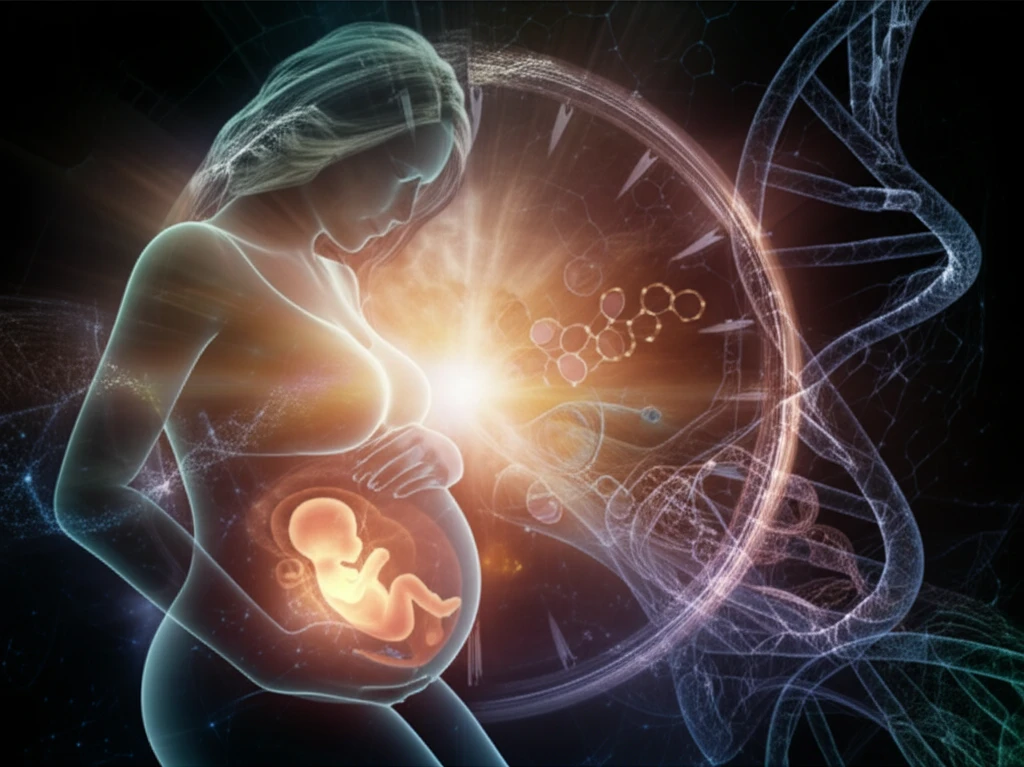
Illustration of a pregnant woman with light shining on her.

Light & Life: How Exposure During Pregnancy Shapes Your Baby's Future

"New research sheds light on the impact of environmental light on maternal and fetal health, offering insights into the importance of a healthy pregnancy."


Pregnancy is a transformative journey, a period of immense change and sensitivity. As expectant mothers navigate this experience, they're often bombarded with advice, focusing on nutrition, exercise, and stress management. However, there's another crucial element that might be overlooked: light. Recent research has uncovered a fascinating connection between light exposure during pregnancy and both maternal and fetal health.

This isn't just about the amount of light, but also the type and timing. Environmental light, with its cycles of brightness and darkness, plays a pivotal role in regulating our internal body clock, known as the circadian rhythm. This rhythm influences numerous physiological processes, including hormone production, sleep patterns, and even the development of a growing fetus. Understanding this relationship is key to ensuring a healthy pregnancy.

This article explores the findings of a recent study, examining how different light conditions during pregnancy can affect both the mother and the developing baby. We'll delve into the research, discuss the implications, and offer practical takeaways for expectant parents, empowering them with knowledge to make informed choices during this critical time.

The Science Behind Light and Pregnancy: What the Research Reveals

Illustration of a pregnant woman with light shining on her.

The study, which focused on mice, aimed to evaluate the impact of various environmental lighting conditions on reproductive parameters and fetal development. Researchers divided pregnant mice into three groups: one exposed to a light/dark cycle, another to constant light, and a third to constant darkness. The researchers then meticulously measured maternal and fetal characteristics, including weight, size, and placental development, using statistical analysis to compare the groups.

The results yielded some intriguing insights. Researchers found no significant differences in maternal variables, like weight or uterine characteristics, across the different light exposure groups. However, the fetal outcomes presented a different picture. Significant variations emerged in fetal measurements, with those in the light group showing higher average values.

  • Fetal Development: The study revealed that fetuses exposed to light exhibited more favorable morphometric features, indicating better development.
  • Placental Health: Histological evaluations showed that placental structures appeared normal across all groups, suggesting that light exposure didn't negatively affect placental function.
  • Uterine Impact: The evaluation of the uterus in light/dark and light groups revealed a discrete to moderate number of endometrial glands.
These findings suggest that while the mother's reproductive parameters might not be directly influenced by light exposure, the developing fetus seems to benefit from a light-rich environment. The study underscores the importance of considering environmental factors during pregnancy, especially in relation to the baby's well-being.

Illuminating the Path to a Healthy Pregnancy

This research provides valuable insights into the impact of environmental factors on pregnancy. It also opens doors for further investigation into how light exposure affects human pregnancies. By understanding these connections, expectant parents can make informed decisions to support their well-being and their baby's health. These findings highlight the need for comprehensive prenatal care that considers all aspects of a mother's environment, including light exposure, for the best possible outcomes.

About this Article -

This article was crafted using a human-AI hybrid and collaborative approach. AI assisted our team with initial drafting, research insights, identifying key questions, and image generation. Our human editors guided topic selection, defined the angle, structured the content, ensured factual accuracy and relevance, refined the tone, and conducted thorough editing to deliver helpful, high-quality information.See our About page for more information.

Everything You Need To Know

1

How does environmental light affect pregnancy?

Environmental light, including the type and timing of exposure, significantly impacts pregnancy. The cyclical nature of brightness and darkness regulates the circadian rhythm, which influences vital physiological processes such as hormone production, sleep patterns, and fetal development. Exposure to environmental light is essential for a healthy pregnancy, influencing both maternal and fetal well-being, and should be considered alongside nutrition, exercise, and stress management.

2

What did the study on mice reveal about light exposure during pregnancy?

The mice study investigated the impact of different environmental lighting conditions during pregnancy. The study revealed that fetuses exposed to light exhibited more favorable morphometric features, indicating better development. While maternal reproductive parameters, such as weight and uterine characteristics, remained consistent across all groups, the developing fetus benefited from the light-rich environment. Histological evaluations also confirmed that placental structures appeared normal across all groups, suggesting light exposure didn't negatively affect placental function.

3

What is the circadian rhythm, and why is it important during pregnancy?

The circadian rhythm is the body's internal clock that regulates various physiological processes, including hormone production and sleep patterns. During pregnancy, the circadian rhythm is especially crucial as it also influences the development of the growing fetus. Environmental light plays a pivotal role in regulating the circadian rhythm, making adequate and appropriate light exposure vital for both the mother's and the baby's health.

4

How might light exposure affect human pregnancies based on the research?

The findings suggest that light exposure during pregnancy is important for fetal development, and although the research was conducted on mice, it implies that considering environmental factors, especially light exposure, is vital for human pregnancies. Proper light exposure may promote better fetal development and overall well-being. Further research is necessary to fully understand how different light conditions impact human pregnancies, but these initial findings highlight the need for comprehensive prenatal care that considers all aspects of a mother's environment.

5

What practical steps can expectant parents take based on the findings about light and pregnancy?

Expectant parents can take several informed steps based on these findings. Ensuring exposure to natural environmental light during the day can help regulate the mother's circadian rhythm and potentially benefit fetal development. While constant light or darkness didn't negatively affect placental health in the study, maintaining a regular light/dark cycle is essential for overall well-being. These insights emphasize the need for comprehensive prenatal care that considers environmental factors, including light exposure, to support a healthy pregnancy.

Newsletter Subscribe

Subscribe to get the latest articles and insights directly in your inbox.