
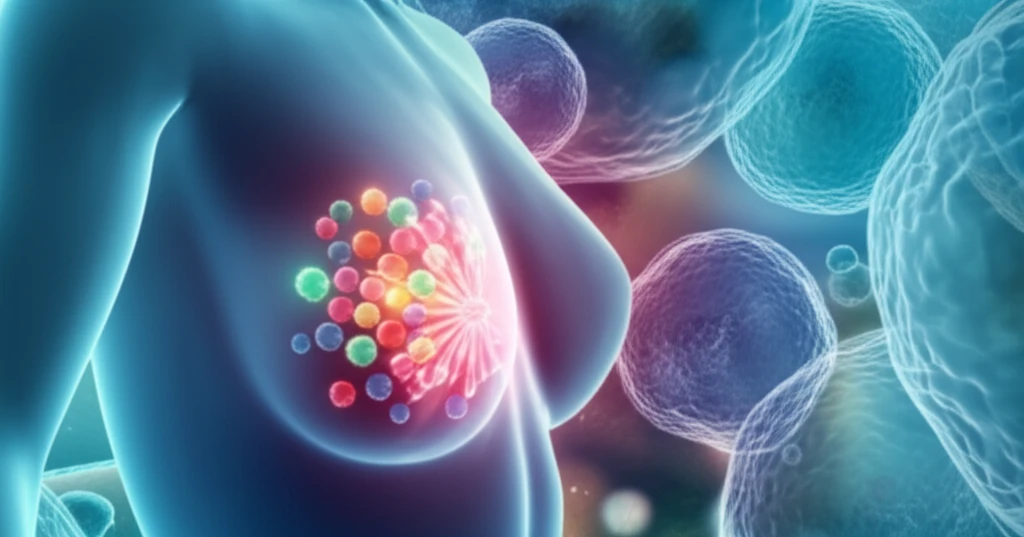
Illustration depicting leptin's interaction with breast cancer cells, highlighting the hormone's influence on tumor growth and spread, with bright and dim spheres representing the effects of leptin.

Leptin and Breast Cancer: What You Need to Know About This Critical Connection

"Unraveling the Link: How Leptin's Role in Breast Cancer Impacts Diagnosis, Treatment, and Your Overall Health."


Breast cancer remains a significant health concern for women globally, with millions affected each year. While advancements in treatment have improved survival rates, ongoing research focuses on understanding the disease's complexities and identifying innovative approaches to detection and care. One area of intense study involves the hormone leptin, a key player in appetite regulation and metabolism, and its surprising connection to breast cancer.

Emerging evidence suggests that leptin may influence breast cancer development, progression, and response to treatment. This article delves into the scientific link between leptin and breast cancer, exploring the latest findings on how this hormone impacts the disease. We'll examine the role of leptin in breast cancer, the factors that contribute to its expression, and what this means for prevention, early detection, and future treatment options.

Our exploration of the leptin-breast cancer connection will provide essential insights, equipping you with the knowledge to take proactive steps toward better breast health. We'll cover the scientific basis of leptin's role, the impact of diet and lifestyle, and the potential for new therapeutic approaches. This information will empower you to make informed decisions regarding your health and participate actively in conversations about breast cancer prevention and care.

Decoding Leptin: Understanding Its Role and Impact in Breast Cancer

Illustration depicting leptin's interaction with breast cancer cells, highlighting the hormone's influence on tumor growth and spread, with bright and dim spheres representing the effects of leptin.

Leptin, often referred to as the "satiety hormone," primarily regulates appetite and energy balance. Produced mainly by fat cells (adipocytes), leptin signals the brain to suppress hunger and increase metabolism. However, research indicates that leptin also plays a much broader role in the body, affecting inflammation, immune function, and, as it turns out, breast cancer.

In breast cancer, leptin can act as a signaling molecule that influences tumor growth, progression, and response to therapy. Elevated leptin levels have been linked to increased risk, particularly in postmenopausal women, due to its influence on cellular processes that can foster the development and spread of cancer. This highlights the hormone's potential significance in both the development and management of the disease. Studies have shown that higher levels of leptin can influence the likelihood of cancer recurrence and overall survival rates.

  • Tumor Growth and Proliferation: Leptin can stimulate the growth of breast cancer cells by activating specific signaling pathways.
  • Metastasis and Invasion: Leptin can promote the spread of cancer cells to other parts of the body, increasing the risk of metastasis.
  • Angiogenesis: Leptin can stimulate the formation of new blood vessels (angiogenesis), providing tumors with the nutrients they need to grow.
  • Treatment Resistance: Elevated leptin levels may reduce the effectiveness of certain cancer treatments, making tumors harder to eradicate.
  • Hormone Receptor Effects: Leptin can influence the function of hormone receptors, such as estrogen and progesterone receptors, which affect tumor behavior and response to hormonal therapies.
The association of leptin with breast cancer underscores the importance of understanding the hormone's role in cancer development. These insights pave the way for targeted therapies, risk assessments, and the possibility of enhanced outcomes for patients diagnosed with breast cancer.

Empowering Action: Taking Control of Your Breast Health

By understanding the role of leptin in breast cancer, you can take proactive steps to protect your health and well-being. Prioritizing a balanced diet, regular physical activity, and routine screenings can significantly reduce your risk and improve your chances of early detection. Stay informed, be your own advocate, and work with your healthcare team to develop a personalized strategy for optimal health. Armed with knowledge, you can navigate your health journey with confidence and resilience.

About this Article -

This article was crafted using a human-AI hybrid and collaborative approach. AI assisted our team with initial drafting, research insights, identifying key questions, and image generation. Our human editors guided topic selection, defined the angle, structured the content, ensured factual accuracy and relevance, refined the tone, and conducted thorough editing to deliver helpful, high-quality information.See our About page for more information.

This article is based on research published under:

DOI-LINK: 10.1186/s12905-017-0459-y, Alternate LINK

Title: Immunohistochemical Staining Of Leptin Is Associated With Grade, Stage, Lymph Node Involvement, Recurrence, And Hormone Receptor Phenotypes In Breast Cancer

Subject: Obstetrics and Gynecology

Journal: BMC Women's Health

Publisher: Springer Science and Business Media LLC

Authors: Mohamad Nidal Khabaz, Amer Abdelrahman, Nadeem Butt, Lila Damnhory, Mohamed Elshal, Alia M. Aldahlawi, Swsan Ashoor, Basim Al-Maghrabi, Pauline Dobson, Barry Brown, Kaltoom Al-Sakkaf, Mohmmad Al-Qahtani, Jaudah Al-Maghrabi

Published: 2017-11-09

Everything You Need To Know

1

How does leptin, the satiety hormone, relate to breast cancer, and why is this connection important for understanding the disease?

Leptin, primarily known for regulating appetite and energy balance, can influence tumor growth, progression, and response to therapy in breast cancer. Elevated leptin levels have been linked to increased risk, especially in postmenopausal women, because it affects cellular processes that foster cancer development and spread. Understanding this connection is crucial for potentially developing targeted therapies, improving risk assessments, and enhancing outcomes for individuals diagnosed with breast cancer. Leptin's broader role in inflammation and immune function further underscores its significance in breast cancer research.

2

In what specific ways can leptin impact the development and progression of breast cancer, according to recent studies?

Studies indicate that leptin can influence breast cancer in several critical ways. It can stimulate the growth of breast cancer cells by activating specific signaling pathways, promote the spread of cancer cells to other parts of the body (metastasis), stimulate the formation of new blood vessels (angiogenesis) to feed tumors, reduce the effectiveness of certain cancer treatments, and influence the function of hormone receptors like estrogen and progesterone receptors. These effects highlight the multifaceted role of leptin in fostering tumor development and resistance to therapy. Furthermore, the specific signaling pathways activated by leptin are an area of ongoing research to find targeted interventions.

3

What proactive steps can individuals take to manage their leptin levels and potentially reduce their risk or improve their outcomes related to breast cancer?

Individuals can take several proactive steps to manage their leptin levels. Prioritizing a balanced diet, engaging in regular physical activity, and undergoing routine screenings are key. A balanced diet helps maintain healthy weight and leptin levels, while regular physical activity can improve metabolic function and reduce fat cell production, which primarily produce leptin. Routine screenings are crucial for early detection, which allows for more effective intervention strategies. Consulting with healthcare professionals to develop a personalized strategy is also essential.

4

How do hormone receptors affect tumor behavior and what is the link to leptin?

Hormone receptors, such as estrogen and progesterone receptors, significantly influence tumor behavior in breast cancer. Leptin can modulate the function of these hormone receptors, impacting how tumors respond to hormonal therapies. This modulation can affect tumor growth, proliferation, and overall response to treatment. Understanding how leptin interacts with these receptors is vital for developing more effective and targeted therapeutic approaches.

5

What is the impact of diet and lifestyle on the role of leptin in breast cancer, and what are the potential therapeutic approaches?

Diet and lifestyle significantly influence leptin's role in breast cancer. High-fat diets and sedentary lifestyles can lead to elevated leptin levels, potentially increasing breast cancer risk and progression. Conversely, a balanced diet and regular physical activity can help maintain healthy leptin levels, reducing the risk. Potential therapeutic approaches include interventions targeting leptin signaling pathways to inhibit tumor growth and metastasis. Lifestyle modifications, such as dietary changes and exercise, can also be integrated into treatment plans to improve outcomes. Further research into leptin-targeted therapies holds promise for enhancing breast cancer treatment strategies.

Newsletter Subscribe

Subscribe to get the latest articles and insights directly in your inbox.