
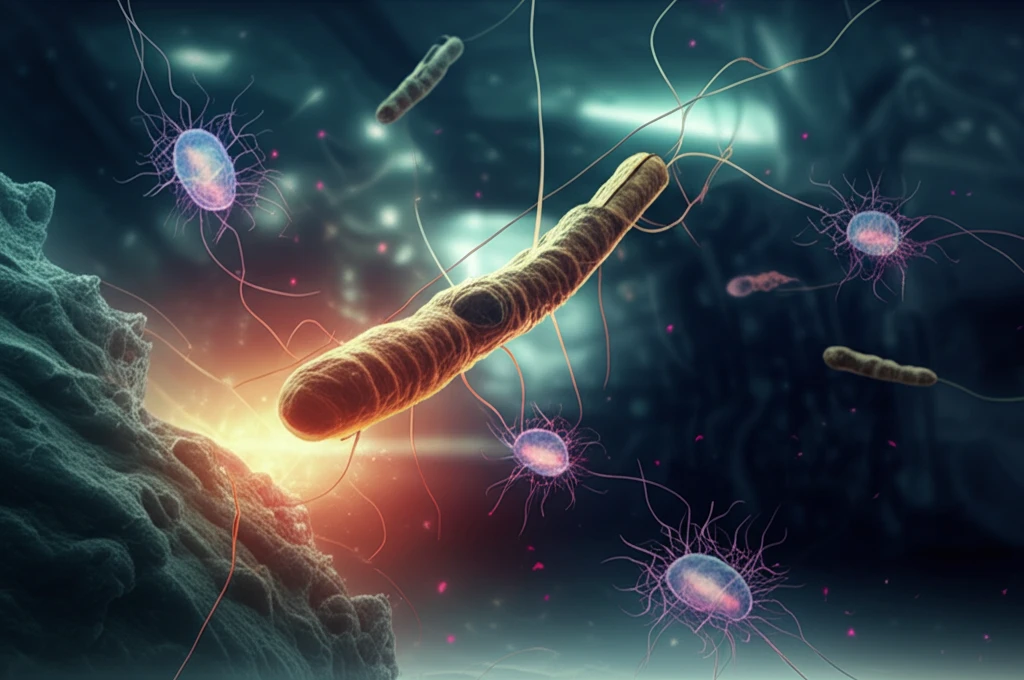
Microscopic view of Leishmania parasites under attack, symbolizing drug resistance and scientific discovery.

Leishmaniasis Breakthrough: Can Overexpression of APX Be the Key to New Treatments?

"New research explores how ascorbate peroxidase (APX) in Leishmania braziliensis offers clues to overcoming antimony resistance and paves the way for innovative therapies."


Leishmaniasis is a parasitic disease affecting millions worldwide, caused by protozoan parasites of the Leishmania genus. Transmitted through sandfly bites, it manifests in several forms, including cutaneous, mucocutaneous, and visceral leishmaniasis. Leishmania braziliensis, a species prevalent in the Americas, is responsible for many cases of cutaneous and mucocutaneous leishmaniasis.

Current treatments rely heavily on antimonial drugs, like Glucantime and Pentostam. These medications, though effective, are facing increasing challenges due to growing antimony resistance, especially in regions like India, where treatment failure rates have soared. Scientists are actively exploring resistance mechanisms.

Recent studies point to the enzyme ascorbate peroxidase (APX) as a key player in the parasite's defense against oxidative stress. Found in the trypanothione pathway, APX converts hydrogen peroxide into water, safeguarding the parasite from damage. This discovery has sparked interest in targeting APX to develop new therapeutic strategies.

How Does APX Overexpression Protect Leishmania?

Microscopic view of Leishmania parasites under attack, symbolizing drug resistance and scientific discovery.

Researchers investigated the role of APX by genetically modifying Leishmania braziliensis to overexpress the APX gene. Using Western blot analysis, the team confirmed that the modified parasites had significantly higher APX protein levels compared to the wild-type strain. This overexpression led to an eightfold increase in antimony resistance.

Further tests revealed that these APX-overexpressing clones were also more tolerant to hydrogen peroxide, demonstrating APX's role in neutralizing oxidative stress. This finding is crucial, as oxidative stress is a significant factor in the effectiveness of antimonial drugs.

  • Increased Antimony Resistance: Parasites with overexpressed APX were significantly more resistant to antimony treatment.
  • Enhanced Oxidative Stress Defense: APX overexpression boosted the parasites' ability to handle hydrogen peroxide, a key oxidative stressor.
  • Interaction with Isoniazid: The antibacterial agent isoniazid, which interacts with APX, showed enhanced anti-leishmanial effects when combined with antimony.
Interestingly, when combined with isoniazid—an antibacterial agent known to interact with APX—antimony showed a more potent effect on the Leishmania parasites. This suggests that isoniazid enhances the efficacy of antimonial drugs, presenting a promising avenue for combination therapies.

What Does This Mean for Future Leishmaniasis Treatments?

The study highlights the significance of APX in Leishmania braziliensis's defense mechanisms, confirming its role in antimony resistance. By understanding how APX functions, scientists can develop more effective strategies to combat leishmaniasis. This could include drugs that specifically target APX or combination therapies that exploit the interaction between APX and existing medications.

About this Article -

This article was crafted using a human-AI hybrid and collaborative approach. AI assisted our team with initial drafting, research insights, identifying key questions, and image generation. Our human editors guided topic selection, defined the angle, structured the content, ensured factual accuracy and relevance, refined the tone, and conducted thorough editing to deliver helpful, high-quality information.See our About page for more information.

This article is based on research published under:

DOI-LINK: 10.1590/0074-02760180377, Alternate LINK

Title: Ascorbate Peroxidase Overexpression Protects Leishmania Braziliensis Against Trivalent Antimony Effects

Subject: Microbiology (medical)

Journal: Memórias do Instituto Oswaldo Cruz

Publisher: FapUNIFESP (SciELO)

Authors: Douglas De Souza Moreira, Mariana Vieira Xavier, Silvane Maria Fonseca Murta

Published: 2018-01-01

Everything You Need To Know

1

What is Leishmaniasis, and what are its different forms?

Leishmaniasis is a parasitic disease caused by protozoan parasites of the *Leishmania* genus. It's transmitted through sandfly bites and manifests in several forms, including cutaneous, mucocutaneous, and visceral leishmaniasis. The specific form depends on the infecting *Leishmania* species and the host's immune response. *Leishmania braziliensis* is often associated with cutaneous and mucocutaneous forms.

2

How does the enzyme ascorbate peroxidase (APX) contribute to drug resistance in *Leishmania braziliensis*?

APX, a critical enzyme in the *Leishmania* parasite, plays a key role in defending against oxidative stress. By converting hydrogen peroxide into water within the trypanothione pathway, APX protects *Leishmania braziliensis* from damage. Research has shown that overexpression of APX leads to increased antimony resistance. This is because APX helps the parasite neutralize the toxic effects of antimonial drugs, which rely on inducing oxidative stress to kill the parasite.

3

What is the significance of the interaction between APX and isoniazid in the treatment of leishmaniasis?

The interaction between APX and isoniazid offers a promising avenue for combination therapies. Isoniazid, an antibacterial agent, is known to interact with APX. When combined with antimony, isoniazid enhances the antileishmanial effects. This suggests that targeting APX can increase the efficacy of existing antimonial drugs. This interaction indicates that drugs that target APX can restore the efficiency of current treatments.

4

How was the role of APX in antimony resistance investigated in the study?

Researchers investigated the role of APX by genetically modifying *Leishmania braziliensis* to overexpress the APX gene. They used Western blot analysis to confirm that the modified parasites had significantly higher APX protein levels compared to the wild-type strain. The overexpression led to an eightfold increase in antimony resistance, and also showed that these APX-overexpressing clones were also more tolerant to hydrogen peroxide, thus confirming APX's role in neutralizing oxidative stress.

5

What are the potential implications of targeting APX for future leishmaniasis treatments?

Targeting APX offers several promising avenues for future leishmaniasis treatments. By understanding how APX functions in *Leishmania braziliensis*'s defense mechanisms, scientists can develop more effective strategies to combat the disease. This could include drugs that specifically target APX, inhibiting its activity and making the parasite more vulnerable to existing antimonial drugs. Another approach is combination therapies that exploit the interaction between APX and existing medications like isoniazid, potentially enhancing treatment efficacy and overcoming drug resistance. The discovery of APX's role opens doors for innovative treatments, particularly in regions where antimony resistance is prevalent.

Newsletter Subscribe

Subscribe to get the latest articles and insights directly in your inbox.