
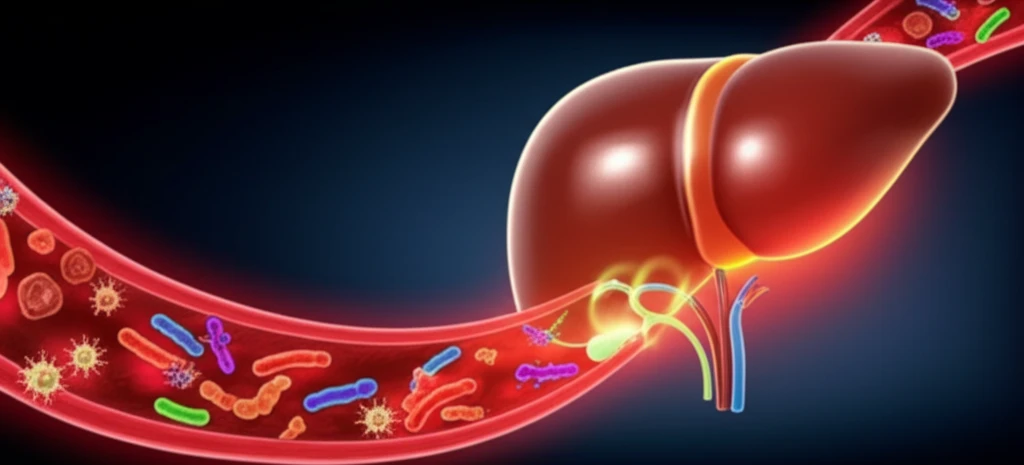
Leaky Gut and Liver Disease: Unlocking the Connection

"New research reveals how gut bacteria translocation contributes to autoimmune cholangitis, offering potential therapeutic targets."
The gut and the liver, seemingly separate organs, are in constant communication. This "gut-liver axis" plays a crucial role in maintaining overall health. When this communication breaks down, it can lead to various diseases, including autoimmune cholangitis, a chronic liver disease characterized by inflammation and damage to the bile ducts.
Recent studies have highlighted the significance of gut microbiota, the trillions of bacteria and other microorganisms residing in our intestines, in the development of liver diseases. Disruptions in the composition and function of gut microbiota, known as dysbiosis, can compromise the intestinal barrier, leading to a "leaky gut." This allows bacteria and their products to translocate from the gut into the liver, triggering an immune response that can contribute to liver damage.
A groundbreaking study published in the Journal of Autoimmunity sheds light on the intricate relationship between gut microbiota translocation and autoimmune cholangitis. By utilizing a well-established mouse model, researchers have uncovered key mechanisms by which a leaky gut promotes liver inflammation and disease progression. This article will break down the study's findings and explore the implications for understanding and treating autoimmune liver diseases.
What is Autoimmune Cholangitis and How Does the Gut Play a Role?
Autoimmune cholangitis, primarily primary biliary cholangitis (PBC), is a chronic liver disease in which the immune system mistakenly attacks the small bile ducts within the liver. This leads to inflammation, scarring, and eventually, liver failure. While the exact cause of PBC remains unknown, genetic predisposition and environmental factors, including bacterial infections, are believed to play a role.
- Dysbiosis: Imbalances in gut microbiota composition can lead to an increase in harmful bacteria and a decrease in beneficial bacteria.
- Leaky Gut: A compromised intestinal barrier allows bacteria and their products to translocate into the liver.
- Immune Activation: The liver's immune cells recognize these bacterial components as foreign invaders, triggering an inflammatory response.
- Bile Duct Damage: Chronic inflammation damages the bile ducts, leading to scarring and liver dysfunction.
Implications for Treatment and Prevention
The findings from this study have significant implications for the treatment and prevention of autoimmune cholangitis. By targeting the gut microbiota and restoring intestinal barrier integrity, it may be possible to reduce liver inflammation and slow disease progression. Potential therapeutic strategies include: <ul> <li><b>Probiotics and prebiotics:</b> Supplementing with beneficial bacteria and promoting their growth can help restore gut microbiota balance.</li> <li><b>Dietary interventions:</b> Following a healthy diet rich in fiber and low in processed foods can support gut health and reduce inflammation.</li> <li><b>Targeting TLR2:</b> Medications aimed at modulating TLR2 signaling could reduce the inflammatory response in the liver.</li> <li><b>Antibiotics:</b> In specific cases, antibiotics may be used to reduce bacterial translocation, though the use must be cautious to avoid further dysbiosis.</li> </ul> Further research is needed to translate these findings into effective clinical treatments for autoimmune cholangitis. However, this study provides a valuable step forward in understanding the complex interplay between the gut and the liver, opening new avenues for therapeutic intervention.