
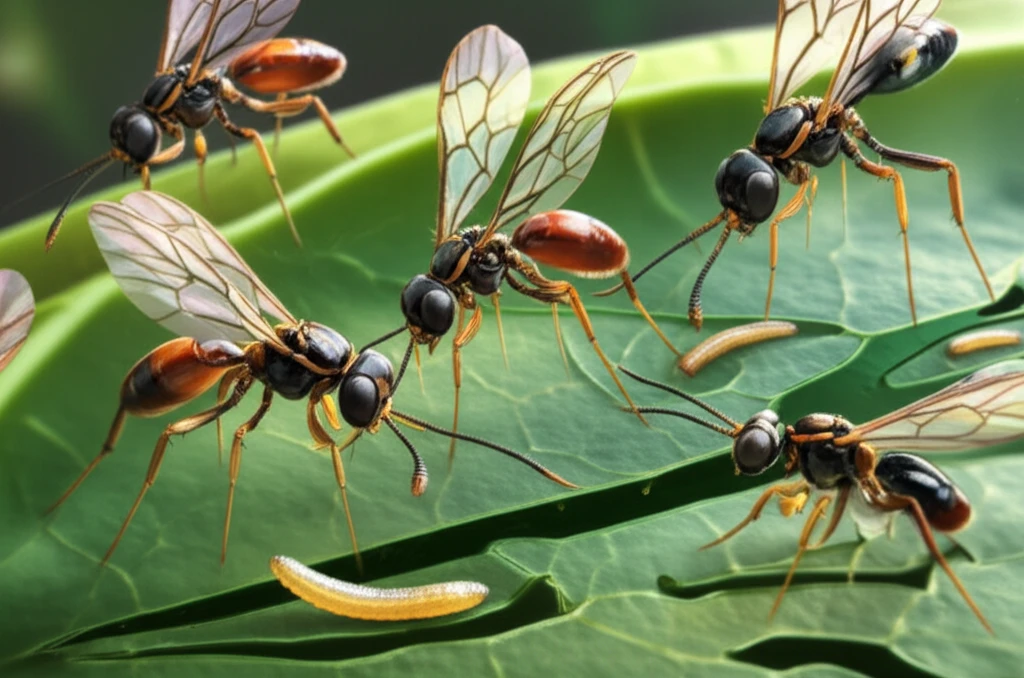
Parasitoid wasps attacking leafminers on a pea leaf.

Leafminer Wars: How Tiny Wasps Can Win the Battle for Your Pea Plants

"Discover the natural enemies of leafminers and how they can help protect your garden. Uncover the secrets of these tiny heroes and their impact on agriculture."


Leafminers, those insidious larvae that tunnel through leaves, can turn a thriving garden into a battleground. These pests feed inside the leaves, leaving unsightly trails and weakening plants. For pea plants, the agromyzid leafminer (Chromatomyia horticola) is a common foe.

But what if you could enlist a natural ally in this fight? Enter the world of parasitoid wasps—tiny insects that lay their eggs inside leafminer larvae, ultimately killing them. This natural form of pest control, known as parasitism, offers a sustainable and eco-friendly way to manage leafminer populations.

A recent study published in the African Journal of Agricultural Research investigated the natural parasitism of agromyzid leafminers on field peas in Pantnagar, Uttarakhand, India. The research sheds light on the seasonal activity of these parasitoid wasps and their effectiveness in controlling leafminer infestations.

Who Are These Tiny Protectors?

Parasitoid wasps attacking leafminers on a pea leaf.

The study identified three key species of hymenopteran parasitoids that target agromyzid leafminers:

These wasps play a crucial role in keeping leafminer populations in check. By laying their eggs inside leafminer larvae, they ensure the destruction of the pest and the continuation of their own life cycle. The researchers observed the activity of these parasitoids over two growing seasons, providing valuable insights into their effectiveness.

  • Diglyphus horticola Khan
  • Diglyphus sp.
  • Opius sp.
During the study period of 2009-2011, researchers meticulously collected leafminer-infested leaves from pea crops and monitored the emergence of both leafminer adults and parasitoid wasps. The data revealed a clear pattern of parasitoid activity, with peak parasitization rates occurring during the 9th standard week (late February to early March).

Harnessing the Power of Nature's Pest Control

While the study found that environmental factors like temperature, humidity, and rainfall didn't significantly impact parasitization rates, the presence of these beneficial wasps offers a promising avenue for sustainable pest management. By understanding the seasonal activity of parasitoid wasps and creating habitats that support their populations, gardeners and farmers can reduce their reliance on chemical pesticides and promote a healthier ecosystem.

About this Article -

This article was crafted using a human-AI hybrid and collaborative approach. AI assisted our team with initial drafting, research insights, identifying key questions, and image generation. Our human editors guided topic selection, defined the angle, structured the content, ensured factual accuracy and relevance, refined the tone, and conducted thorough editing to deliver helpful, high-quality information.See our About page for more information.

This article is based on research published under:

DOI-LINK: 10.5897/ajar12.1603, Alternate LINK

Title: Natural Parasitism Of Agromyzid Leafminer, Chromatomyia Horticola (Goureau) (Diptera: Agromyzidae) On Field Pea

Subject: General Agricultural and Biological Sciences

Journal: African Journal of Agricultural Research

Publisher: Academic Journals

Authors: Mahendran B, Agnihotri Meena

Published: 2013-04-11

Everything You Need To Know

1

What exactly are leafminers and why are they a problem for pea plants?

Leafminers are destructive larvae that tunnel through the leaves of plants, particularly pea plants. The agromyzid leafminer (Chromatomyia horticola) is a common species that attacks pea plants. Their feeding weakens plants and leaves unsightly trails. This can significantly reduce crop yield and overall plant health, making them a major concern for gardeners and farmers.

2

What are parasitoid wasps and how do they help with leafminer infestations?

Parasitoid wasps are tiny insects that act as a natural control for leafminers. They lay their eggs inside leafminer larvae, and as the wasp larvae develop, they consume the leafminer, ultimately killing it. This process, called parasitism, helps to regulate leafminer populations in an eco-friendly and sustainable manner. The study identified three species, Diglyphus horticola Khan, Diglyphus sp., and Opius sp. These wasps contribute to maintaining a healthy ecosystem.

3

Why are these parasitoid wasps considered important in managing leafminers?

The parasitoid wasps are important because they help control leafminer populations naturally, reducing the need for chemical pesticides. These wasps target and eliminate leafminers by laying eggs inside them, which supports a balanced ecosystem. The research conducted monitored these wasps and their seasonal activity to establish their effectiveness in controlling leafminer infestations.

4

When are parasitoid wasps most active and what environmental factors affect them?

The study indicated peak parasitization rates occurred during the 9th standard week, which is from late February to early March. This suggests that parasitoid wasps are most active during this time. The environmental factors studied, temperature, humidity and rainfall, didn't significantly impact parasitization rates. The seasonal activity of the wasps is vital for effective pest management.

5

How can I encourage parasitoid wasps in my garden to help control leafminers?

To promote these beneficial insects, create habitats that support their populations. This might include planting specific flowering plants that provide nectar and pollen for the adult wasps. By providing a suitable environment, gardeners and farmers can encourage parasitoid wasps to thrive and help control leafminer infestations naturally, thereby reducing reliance on chemical interventions and promoting a healthier ecosystem.

Newsletter Subscribe

Subscribe to get the latest articles and insights directly in your inbox.